
Why Cold Weather Changes Your Matcha Ritual
When the temperature drops, the last thing you want is a lukewarm cup that turned bitter on you. Cold air pulls heat out of your bowl fast, and if you're not careful, your matcha will go from vibrant to flat before you take the first sip. The good news? With a few tweaks, you can keep that spring-fresh brightness even when it's freezing outside.
I've been brewing matcha for years, and I'll admit—I've ruined plenty of bowls by rushing. But once you get the rhythm down, it's almost meditative. Here's how to do it right with BrewNova ceremonial matcha.
What You'll Need
Before you start, gather your tools. You don't need a full tea ceremony setup, but a few basics make a big difference:
- BrewNova ceremonial matcha (you'll know it's ceremonial grade by the vibrant green color and fine texture)
- Bamboo whisk (chasen) – the more tines, the better the foam
- Matcha bowl (chawan) – any wide bowl works, but a real chawan helps with whisking
- Sifter or fine mesh strainer – essential for clump-free matcha
- Kettle or pot – to heat water
- Thermometer – optional but handy, especially in cold weather
Step-by-Step: Brewing in Cold Weather
1. Warm Your Bowl and Whisk
Cold bowls steal heat from your matcha instantly. Fill your bowl with hot water (not boiling, just hot) and let it sit for a minute. Swirl it around, then pour it out. This also softens the bamboo whisk, making it more flexible and less likely to break.
2. Sift Your Matcha
Skipping this step is the #1 reason for lumpy matcha. Measure out your matcha—about 1 gram (half a teaspoon) for a thin cup—and sift it directly into the warm bowl. Use a small strainer and tap gently. This breaks up clumps and incorporates air, which helps with the foam later.
3. Heat Your Water to the Right Temp
In cold weather, it's tempting to use hotter water to compensate, but don't. Boiling water will scorch the matcha and bring out bitterness. Aim for 160-175°F (70-80°C). If you don't have a thermometer, boil water and let it sit for 2-3 minutes. In a cold room, you might need to use it sooner—around 2 minutes—to hit that range.
4. Add Water and Whisk
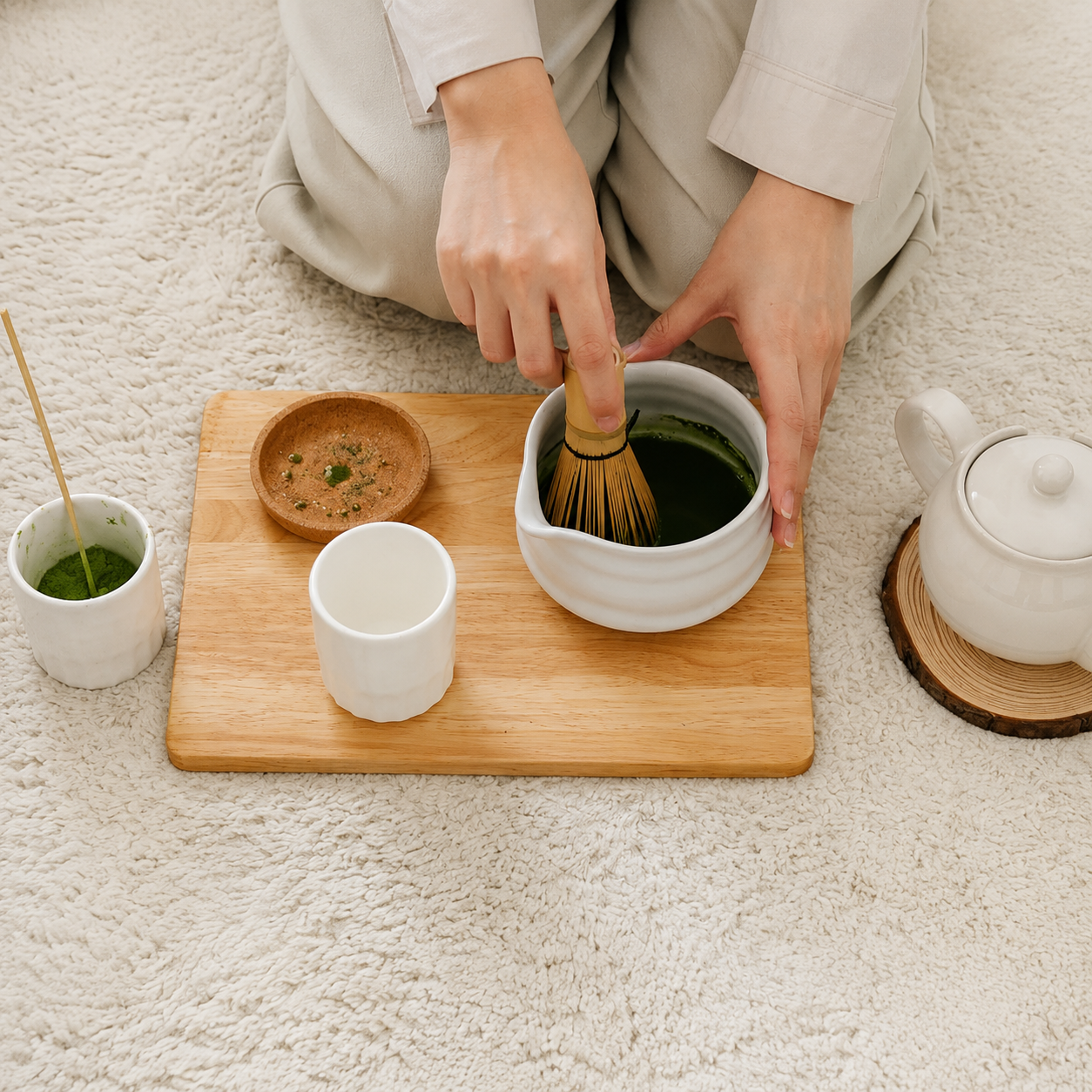
Pour about 70 ml of hot water over the matcha. Now, the fun part: whisking. Hold the bowl with one hand, and with the other, move the whisk in a quick 'W' or zigzag motion—not circular. Circular stirring creates bubbles, not foam. Whisk for 15-20 seconds until you see a fine, creamy foam on top. The foam should have small, uniform bubbles, not big soapy ones.
5. Enjoy Immediately
Matcha is best enjoyed right away. In cold weather, it cools fast, so don't let it sit. Take a moment to appreciate the color—a vibrant green that means it's fresh and high-quality.
Adjusting the Ratio for Your Taste
One of the great things about matcha is that you can tweak it to your preference. Here's a quick guide:
- Usucha (thin tea): 1 gram matcha, 70 ml water. This is the everyday style—light and refreshing.
- Koicha (thick tea): 2 grams matcha, 30 ml water. This is the ceremonial style—intense, creamy, and a bit more bitter. Use only ceremonial grade for koicha, as lower grades get harsh.
If you're new to matcha, start with usucha. You can always add more matcha next time if you want a stronger kick.
Common Mistakes to Avoid
- Using boiling water: This is the biggest mistake. It makes matcha bitter and dulls the color.
- Skipping the sift: Clumps are not just unsightly; they also don't dissolve properly, leaving a gritty texture.
- Whisking in circles: You'll get bubbles, not foam. Stick to the zigzag.
- Letting it sit: Matcha oxidizes and loses its flavor quickly. Drink it within a few minutes of whisking.
- Using too much matcha: Unless you're going for koicha, stick to 1 gram. More isn't better—it just gets bitter.
Quick Recap Checklist
- [ ] Warm your bowl and whisk with hot water
- [ ] Sift your matcha (1 gram for usucha, 2 for koicha)
- [ ] Heat water to 160-175°F (let it sit 2 min after boiling)
- [ ] Pour 70 ml water (or 30 ml for koicha)
- [ ] Whisk in a 'W' motion for 15-20 seconds until foamy
- [ ] Drink immediately and enjoy
Final Thoughts
Brewing matcha in cold weather doesn't have to be a compromise. With a little extra care on temperature and technique, you can get that same bright, grassy sweetness you love in spring. And honestly, there's something cozy about the ritual—the warmth of the bowl in your hands, the smell of fresh matcha, and the calm of a slow morning.
This guide is for informational purposes only. Always purchase matcha from reputable sources and follow any preparation instructions provided by the manufacturer. If you have health concerns, consult a healthcare professional.
Key Takeaways
- Brewing ceremonial matcha in cold weather requires careful attention to water temperature and whisking technique. For BrewNova ceremonial matcha, use water at 160-175°F (70-80°C) to avoid bitterness, and whisk in a zigzag motion until a fine foam forms. Adjust the ratio to 1-2 grams of matcha per 60-70 ml of water for a traditional thick or thin preparation.
- Use water at 160-175°F (70-80°C) for BrewNova ceremonial matcha to preserve sweetness and avoid bitterness.
- Sift your matcha before whisking to prevent clumps and ensure a smooth, frothy texture.
- Whisk in a quick 'W' or zigzag motion for 15-20 seconds until a fine, creamy foam forms.
- In cold weather, warm your bowl and whisk with hot water before brewing to keep the matcha at an ideal temperature.
- For a thicker, more ceremonial cup (koicha), use 2 grams of matcha with only 30 ml of water; for a thinner cup (usucha), use 1 gram with 70 ml.
Frequently Asked Questions
Q: What water temperature is best for BrewNova ceremonial matcha?
Aim for 160-175°F (70-80°C). Boiling water scorches the leaves and makes the matcha bitter. If you don't have a thermometer, let boiling water sit for about 2 minutes before using.
Q: How much matcha should I use for a cup?
For a standard thin tea (usucha), use about 1 gram (roughly half a teaspoon) with 70 ml of water. For a thick tea (koicha), double the matcha to 2 grams with only 30 ml of water. Adjust to your taste.
Q: Why does my matcha have clumps?
Clumps usually happen when you skip sifting. Always sift your matcha through a fine mesh strainer into the bowl before adding water. That breaks up any lumps and makes whisking much easier.
Q: How long should I whisk matcha?
Whisk for about 15-20 seconds in a quick 'W' or zigzag motion until you see a fine foam with small bubbles. Over-whisking can create large, soapy bubbles and a thin texture.
Q: Can I use a regular whisk instead of a bamboo chasen?
You can, but a bamboo chasen (whisk) is designed to create the right foam without damaging the delicate leaves. If using a regular whisk, choose one with fine wires and whisk gently to avoid a bitter taste.