
Why this matters for distributors
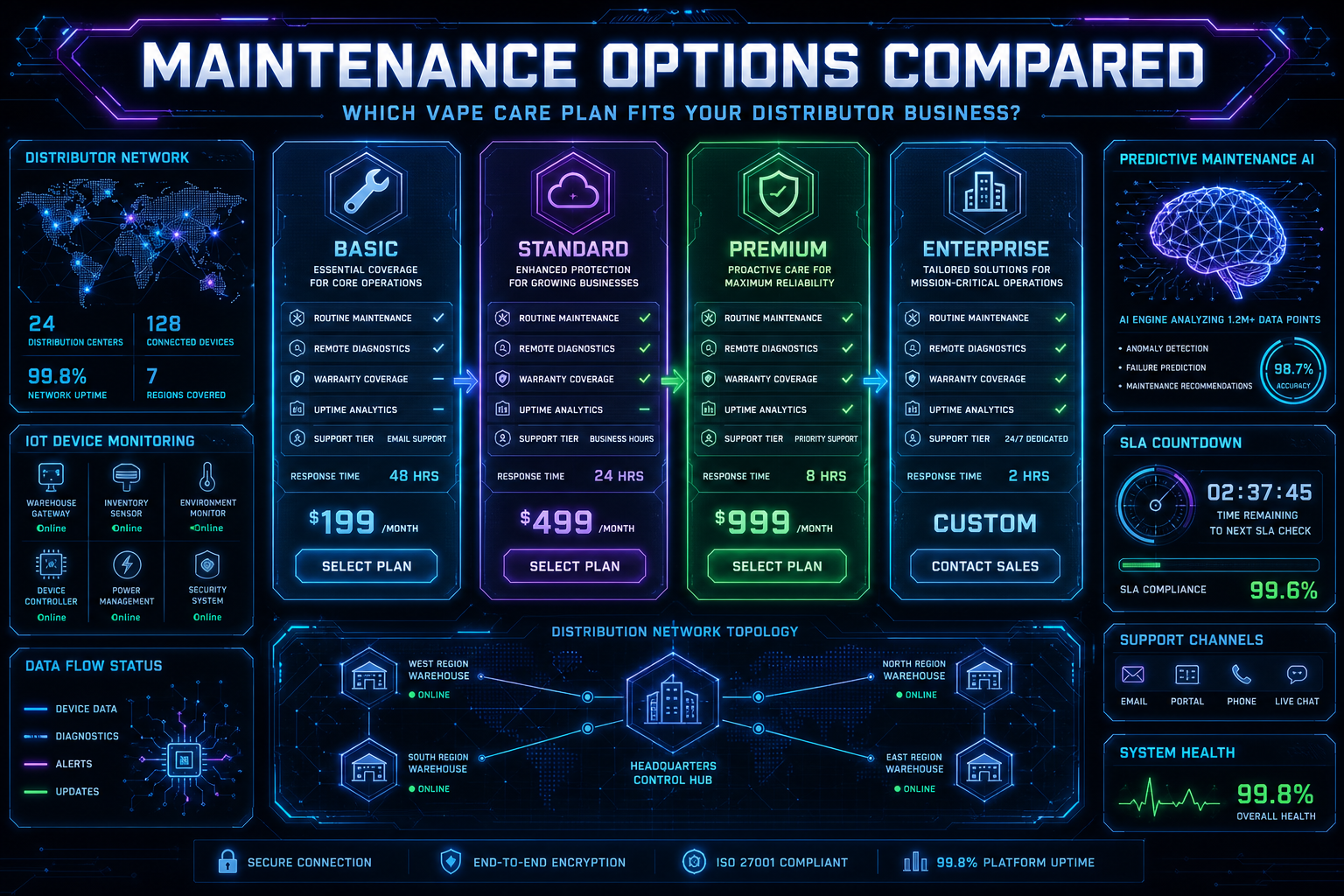
If you're a distributor, your customers rely on you to keep devices working. A weak maintenance strategy leads to returns, unhappy retailers, and lost trust. On the flip side, an over-engineered plan can eat into margins. You need a comparison that digs into what actually matters, not just marketing fluff.
Criteria we used
We scored maintenance options on four criteria that directly affect your bottom line:
- Performance impact: How much does the plan reduce device failures and downtime?
- Ease of implementation: How quickly can you train staff or set up partnerships?
- Value: Cost versus the benefit you get—not just sticker price.
- Reliability over time: Does the plan hold up as your volume grows?
These are the same criteria we'd use for any operational decision. Skip them and you're guessing.
Score: performance
In-house maintenance scores highest on performance if you have skilled staff. You control the quality of repairs and can turn devices around fast. But that assumes you can train people properly—otherwise, you're just creating a different failure point.
Partner-led programs can perform well if the partner has a proven track record. The catch: you're dependent on their turnaround times. If they're slow, your customers feel it.
Hybrid approaches usually land in the middle. Basic fixes happen in-house, complex repairs go out. That flexibility often delivers the most consistent performance for a growing distributor.
Score: ease
Ease is where in-house plans stumble. You need to invest in training, tools, and parts inventory. For a small team, that's a heavy lift.
Partner-led programs are easier to start—just sign a contract. The trade-off is less control. You're trusting someone else to represent your brand.
Hybrids are the most practical for many distributors. Start with a partner for complex repairs, then slowly bring simple tasks in-house as you build capability. It's a smoother ramp.
Score: value
Value isn't just about cost—it's about what you get for it. In-house maintenance can look expensive upfront, but if it cuts returns and keeps customers happy, the return on investment can be strong.
Partner-led plans have predictable costs, which is nice for budgeting. But watch out for hidden fees or per-repair charges that add up.
Hybrids offer the best balance. You pay a premium for the partner's expertise, but you save on the simple stuff you handle yourself. For most distributors, that's where the sweet spot is.
Who gets a high total
If you have a dedicated team member who can be trained, in-house maintenance might score highest on performance and value over time. If you're just starting or have thin margins, a partner-led plan gets you up and running with lower risk.
But the real standout for most distributors is the hybrid model. It gives you performance, keeps costs in check, and is easier to implement than going fully in-house.
Who should look elsewhere
Avoid in-house if you don't have the time or talent to train staff—it'll backfire. Skip partner-led if you need tight control over customer experience or if your volume is too small to justify the contract.
And if you're not ready to manage any maintenance process, look for distributors who offer white-label support—but that's a different comparison.
How to decide for your business
Start by mapping your current failure rates and return costs. Then score each option against the four criteria above. Talk to other distributors, check references, and run a pilot before committing. The right choice is the one that fits your team, your margins, and your customers' expectations.
FAQ
What should distributors look for in a vape maintenance plan?
Focus on scope of coverage, turnaround time, and whether the plan includes customer education. A good plan should reduce device failures and returns, not just fix them when they happen.
Is in-house maintenance worth it for a small distributor?
It can be if you have staff who can be trained and you stock common parts. But for small operations, the upfront cost might outweigh the benefits—partner-led maintenance could be more practical.
How does a hybrid maintenance approach work?
A hybrid plan mixes in-house handling for simple issues with a partner or manufacturer for complex repairs. It gives you control over basic maintenance while outsourcing the heavy lifting.
Sources & Further Reading
For regulatory context on device maintenance and compliance, check the FDA's tobacco products page. To dive deeper into maintenance schedules, see our guide on taste getting weak on a draw-activated vape, and for device selection, read the best vape for beginners. If you're new to maintenance terms, our vape glossary is a handy reference.
Scorecard gist
- When comparing vape maintenance options for distributors, four criteria matter most: performance impact, ease of implementation, value, and long-term reliability. A structured maintenance program—whether in-house training, partner-led servicing, or hybrid—can reduce returns and build customer trust, but the best fit depends on your team's capacity and customer expectations.
- Compare maintenance plans on performance, ease, value, and reliability—not just cost.
- In-house servicing gives control but needs training and parts inventory.
- Partner-led programs reduce workload but require vetting for quality.
- A hybrid approach often balances cost and service quality for growing distributors.
In this topic cluster
- Maintenance articles
- Why Tri-Blend Tees Pill at the Collar in Cold Weather (and How to Stop It)
- Spring Desk Carry: How to Choose a Discreet CBD Vaporizer for Your Workday
- Desk Carry Summer Style: Choosing a CBD-Compatible Vaporizer for Your Workspace
Related Windbar Resources
- Vape Glossary — Helps distributors and customers understand maintenance terms.