
Why getting nicotine strength right matters
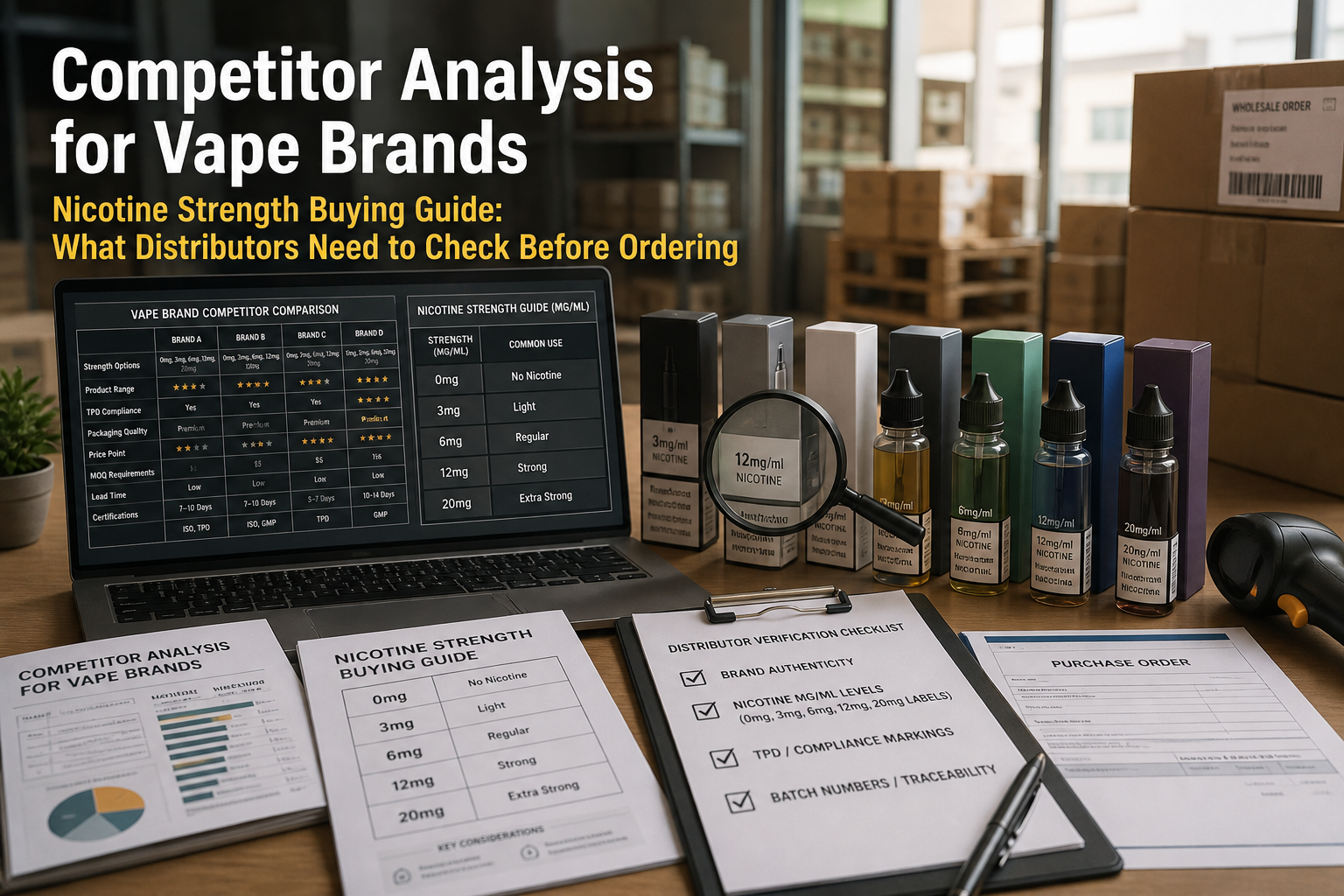
Nicotine strength is one of those details that seems simple until it goes wrong. Get it wrong on a single batch, and you're looking at mislabeled product, angry customers, or even a regulatory headache. For a brand owner, the stakes are higher because you're buying hundreds or thousands of units at once. One error multiplies fast.
Take a common scenario: you order disposables labeled 50 mg/mL. When they arrive, you test a few and find they're actually 35 mg/mL. Customers who bought them for the higher strength will feel shortchanged, and some might not reorder. On the flip side, if the product tests higher than labeled, you could be selling something that pushes users past their comfort zone—and that's a liability.
The good news? You can avoid most of these issues with a few simple checks before you commit to an order.
Before you leave
This section is about what to do before you even contact a supplier. Think of it as packing for a trip: you wouldn't head to the airport without your passport, and you shouldn't email a vendor without knowing your numbers.
First, know your target market's legal limits. If you're selling in the UK or EU, the maximum nicotine strength is 20 mg/mL (2%). In the US, there's no federal cap yet, but the FDA has proposed a 20 mg/mL standard, and some states have their own restrictions. If you're planning to cross borders, check both the origin and destination rules.
Second, decide which nicotine form you need: salts or freebase. This matters more than you think. Nicotine salts are smoother at high strengths, so they're common in disposables (often 35–50 mg/mL). Freebase is harsher, so it's usually used at lower strengths (3–12 mg/mL). If you're not sure, read our pillar guide on nicotine salts vs. freebase for a deeper breakdown.
Third, set your budget for verification. A COA costs money, but it's a few hundred dollars compared to the cost of a bad batch. Include that line item in your procurement plan.
In transit
When you're reviewing supplier quotes and samples, treat nicotine strength like a flight check—verify everything before you board. Here's a practical checklist:
- Request a COA for each batch. This is the lab report that shows the actual nicotine concentration. Don't accept a generic COA that could apply to any batch; ask for one specific to your order.
- Ask about batch-to-batch consistency. Some manufacturers have tighter quality control than others. Ask what their tolerance is—typically ±5% is acceptable, but you want to know before you sign.
- For disposables, ask for the total nicotine content per device. A 50 mg/mL strength in a 2 mL device means 100 mg of nicotine total. If the device holds 5 mL, that's 250 mg. Make sure the label is clear so customers know what they're getting.
- Test the product yourself if possible. You can buy a nicotine test kit online, but they're not as accurate as a lab. If the order is large, consider sending a sample to an independent lab for a second opinion.
- Check the label formatting. Some markets require the strength to be printed in a certain way (e.g., mg/mL and percentage). Make sure your product's label complies before you mass-produce.
At destination
So the product has arrived. Now what? Don't just slap your brand on it and ship it out. Do a final verification before it goes to customers.
Pop open a few units from different batches and check the nicotine strength yourself. If you have a test kit, use it. If not, at least visually inspect the packaging for any signs of tampering or mislabeling. For disposables, you can do a quick puff test to see if the throat hit feels consistent with the labeled strength—it's not scientific, but it catches glaring errors.
Also, keep all your COAs and test records in a folder. If a customer complains, or if a regulator asks questions, you'll have documentation to prove you did your due diligence.
Rules & restrictions awareness
You're now on the ground in a new country—or market—and the rules are different. Let's break down what you need to know about nicotine strength regulations.
In the UK and EU, the cap is 20 mg/mL. Products above that can't be sold legally. The UK also requires that nicotine products be registered with the Medicines and Healthcare products Regulatory Agency (MHRA) before they can be marketed. That process includes submitting details about the product's composition, including nicotine strength.
In the US, the FDA regulates nicotine products. There's no federal cap yet, but the agency has proposed a product standard that would set a maximum at 20 mg/mL. Some states have their own laws—for example, California and New York have considered bans on flavored products and higher nicotine strengths. If you're selling in multiple states, check each one.
Other countries have their own rules. In Australia, nicotine is heavily regulated, and in Japan, nicotine e-liquids are banned outright (though nicotine-free products are allowed). Always do your homework for your target markets.
Return-home reset
After a trip, you reset your routine. After a bulk purchase, you reset your supplier management. Here's how to make sure your next order goes even smoother.
Keep a scorecard for each supplier: how accurate were their COAs? Did the product match the label? How was their customer service when you had questions? This will help you decide who to reorder from.
Also, update your internal checklist. If you found that a particular supplier's COA was consistently off by 2%, factor that into your acceptance criteria next time. Maybe you'll ask for a tighter tolerance or require a second lab test.
Finally, consider joining the Windbar Community to share your experiences with other brand owners. You'll find tips on vendor verification, regulatory changes, and more. It's a resource that pays for itself in saved headaches.
Some final practical notes
Nicotine strength isn't just a number; it's a promise to your customers. When you verify it before you buy, you're protecting your brand's reputation and avoiding costly mistakes. Remember: always request a COA, understand your market's legal limits, and test incoming product. If you're ever unsure, our pillar guide on nicotine salts vs. freebase can help you clarify the form and strength that fits your product line.
Stay sharp, and happy sourcing.