
First glance (10 seconds)
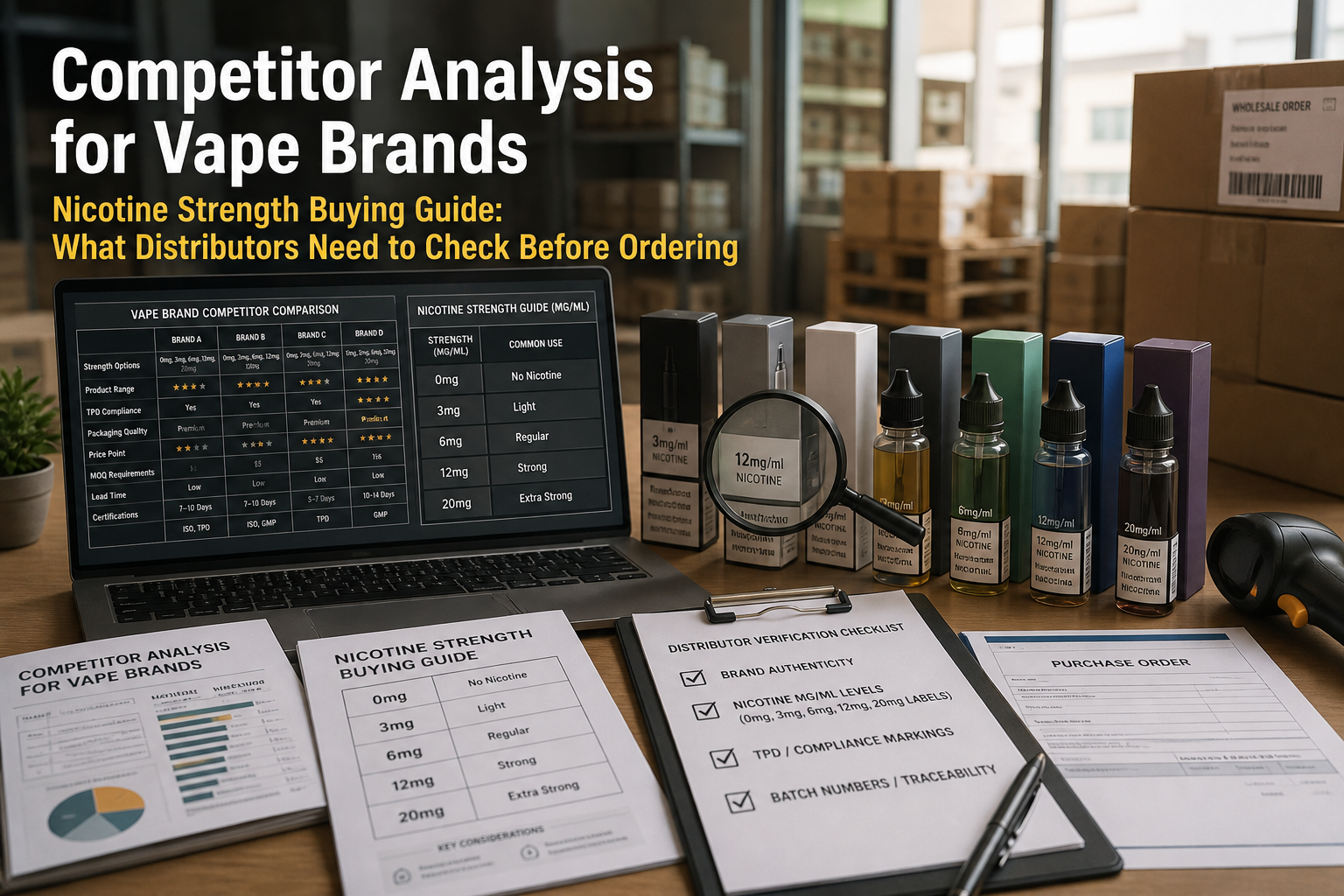
When you're walking a trade show or scrolling a supplier's catalog, the first thing you look at is the label. Does it clearly state nicotine strength? Is it in mg/mL or percent? Both are common—just make sure it's unambiguous. You'll also see whether it's salt or freebase. That matters because your customers expect a certain type. For disposables, it's usually salt. If the label is vague—like 'high' or 'medium'—that's a red flag. You can't sell something you can't describe honestly.
Also check the packaging: is there a batch number? A lot number? If it's there, good. That means you can trace issues back to a specific run. If it's not, you're stuck if something goes wrong.
Specs worth reading
Beyond the strength number, you should look at a few other specs on the box or in the spec sheet:
- Nicotine strength: Usually 20–50 mg/mL for salts, 3–18 mg/mL for freebase. Know what your market buys.
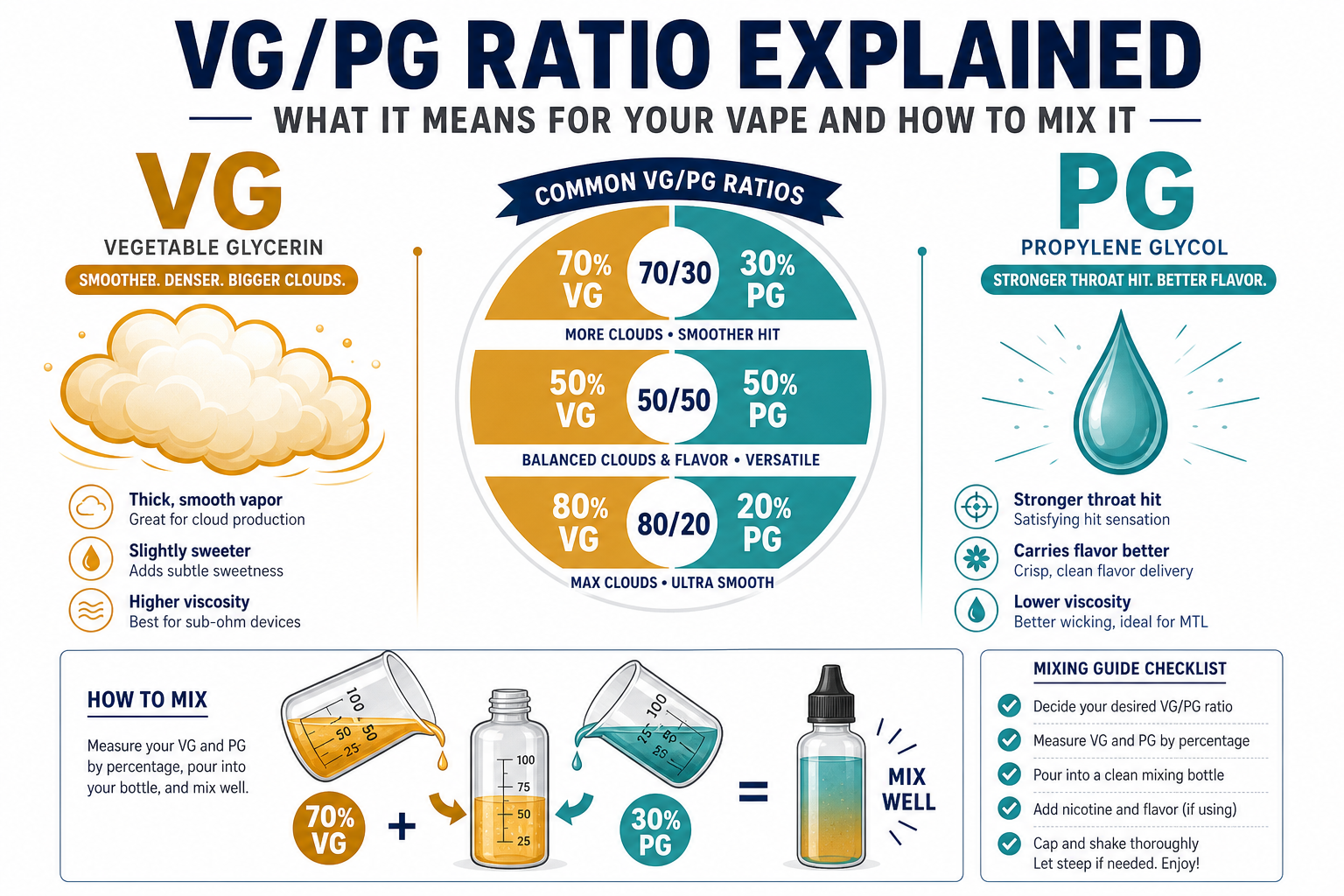
- PG/VG ratio: Higher PG means more throat hit; higher VG means more vapor. Your customers will have preferences.
- Volume (mL): This tells you how long a disposable lasts. It's not the same as puff count—don't rely on puff counts; they're marketing numbers.
- Nicotine type: Salt or freebase. Write it down.
These four specs tell you most of what you need to know before you even open a box.
Specs to ignore
Some numbers sound impressive but don't matter much in practice:
- Puff count: There's no standard for how a puff is measured. It's not a reliable indicator of lifespan. Use mL instead.
- Battery mAh: It's good to know, but it doesn't tell you how long it'll actually last. Usage patterns vary.
- 'High' or 'extra strong' labels: These are subjective. If the label doesn't have a number, it's not worth your time.
Don't let flashy specs distract you from the essentials: strength, type, and volume.
Questions for staff
When you're talking to a supplier or their rep, ask these questions directly. You're not being difficult—you're doing your job.
- Can you share the COA for this batch? If they hesitate, that's a problem.
- Is this salt or freebase nicotine? They should know without checking.
- What's the exact mg/mL strength? Not 'medium'—the number.
- How do you store these before shipping? Heat can degrade nicotine.
- What's your return policy for defective batches? You need to know before you buy.
Write down the answers. If they can't answer clearly, walk away.
Checkout decision
Before you finalize the order, do a quick mental checklist:
- COA received and verified against the product.
- Label matches the COA for strength and type.
- Batch number visible on each unit.
- Your market actually wants this strength—don't order 50 mg if your customers usually buy 20 mg.
- Storage plan is ready—cool, dry, and away from sunlight.
If you're still unsure, check out our Nicotine Strength Basics for Brand Owners for a deeper dive.
Nicotine strength is a compliance issue as much as a sales issue. Get it right, and you'll have fewer returns and more repeat customers. Get it wrong, and you'll be dealing with complaints and chargebacks. The ten minutes you spend verifying will save you hours later.
FAQ
Do I need a COA for every batch I buy?
Yes, if you want to be safe. Nicotine strengths can vary slightly between batches, and a COA confirms what's actually in the product. It also protects you if a customer complains about harshness—you can prove the product was labeled correctly.
How do I check if a batch is authentic?
Look for a batch number on the packaging and match it to the COA. Some brands have QR codes that link to verification. If you're unsure, use a vape authenticity checker tool—it can help you spot fakes.
Should I worry about nicotine strength regulations?
In many regions, there are limits on nicotine strength (e.g., 20 mg/mL in the EU). Make sure the products you buy comply with local laws. Your supplier should be able to tell you the legal status.
What if a customer says the vape is too strong?
That can happen even with correct labeling. Some people are sensitive to nicotine. But if you get repeated complaints, check the COA to see if the actual strength matches the label. If it doesn't, you might have a bad batch.
Why does salt nicotine feel smoother than freebase?
Salt nicotine is formulated to be less harsh at higher strengths, so it's popular in disposables. Freebase gives a stronger throat hit. Know which your customers prefer—it affects how they perceive the product.
Sources & Further Reading
For more on nicotine strength and what to verify, check out:
- FDA's tobacco guidance for regulatory requirements.
- Our guide on Nicotine Strength Basics for Brand Owners.
- How to check an online vape store's red flags.
Remember: nicotine strength is a promise. Verify it before you stock it.
In this topic cluster
- Nicotine Strength articles
- VG/PG Ratio Explained: What It Means for Your Vape and How to Mix It
- Nicotine Strength Basics for Brand Owners: What to Verify Before You Buy
- How Long Does a Vape Battery Last? A Plain-Language Guide for Shop Owners
Related Windbar Resources
- Windbar Community — Discuss supplier vetted experiences and share tips with other distributors.