
Simple version: The only two numbers that matter
Let's strip this down to the basics. Every e-liquid bottle has two numbers that drive everything: the total volume in milliliters (ml) and the target nicotine strength in milligrams per milliliter (mg/ml). Multiply those two together and you get the total nicotine needed for the batch.
Example: You want to make 120ml bottles of 3mg/ml juice for your shop. That's 120 × 3 = 360mg of nicotine per bottle. If your nicotine base is 100mg/ml, you'd need 3.6ml of that base per bottle. That's it. That's the core of bottle math.
Most of the time, you're not starting from zero—you're adding a nicotine base to a pre-made or house juice. So the math becomes: total nicotine needed minus the nicotine already in your base. If your base is 100mg/ml and you add 5ml, that's 500mg of nicotine. In a 100ml bottle, that gives you 5mg/ml. Simple subtraction.
The missing details: What most people get wrong
Now, the devil is in the details. Here's where shop owners usually trip up.
1. Your base strength might not be what you think. Suppliers sometimes label nicotine base in percentages instead of mg/ml. 10% is 100mg/ml. 5% is 50mg/ml. Divide the percentage by 10 to get mg/ml. Always double-check this before you mix—a wrong assumption here ruins a whole batch.
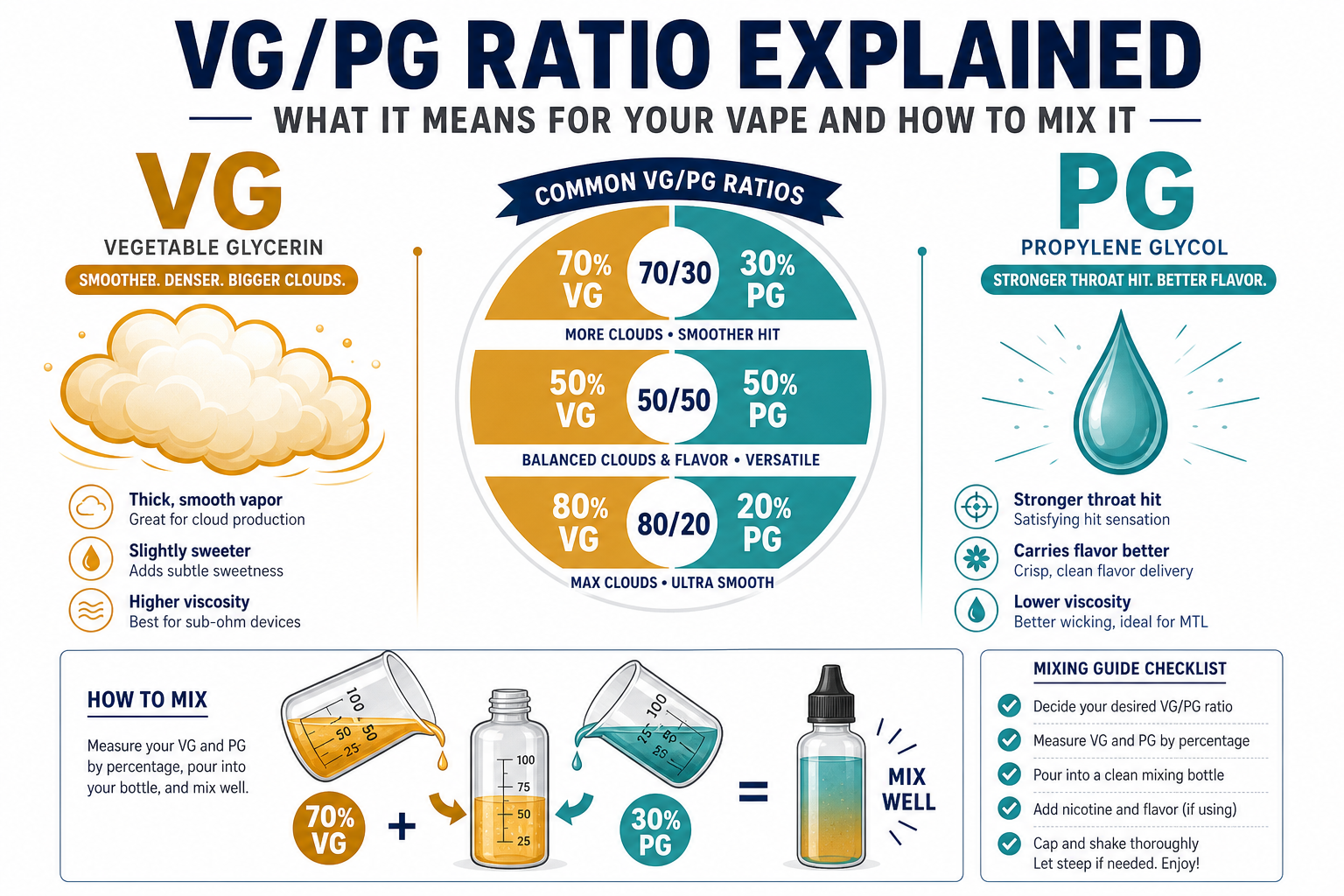
2. PG/VG ratios affect the math slightly. Nicotine is usually suspended in a carrier like PG or VG. When you add nicotine base, you're also adding extra PG or VG, which dilutes your flavor ratio. If you're mixing from scratch, factor that in. For small batches, it's negligible; for large runs, it matters. The VG/PG Ratio Explained guide covers this in more detail.
3. Nicotine salts vs. freebase. The math is identical—both are measured in mg/ml. The difference is in how they feel at higher strengths. Salts are smoother, which is why they're common in disposables and pod systems. But don't let that confuse the calculation.
4. Always work in the same units. If you're thinking in percentages, convert everything to mg/ml first. Mixing units is the fastest way to make a 6mg/ml batch turn into 60mg/ml.
Advanced only if you need it: Scaling recipes and spot checks
If you're mixing for retail, you're probably scaling up. The same multiplication applies, but now you're working with larger numbers. Let's say you want to make 5 liters (5000ml) of 6mg/ml juice. That's 5000 × 6 = 30,000mg of nicotine. If your base is 100mg/ml, you need 300ml of base. Easy enough, but mistakes happen when you're doing this in your head under pressure.
This is where a calculator comes in handy. The Windbar E-liquid Calculator at /tools/e-liquid-calculator lets you input your target strength, volume, and base strength, and it spits out the exact amount of nicotine you need. No mental math, no rounding errors, no wasted product.
Another advanced tip: keep a simple formula sheet by your mixing station. Write down the formula, a few common conversions (10% = 100mg/ml, 5% = 50mg/ml), and your go-to batch sizes. It's a safety net for those busy days when you're filling dozens of bottles.
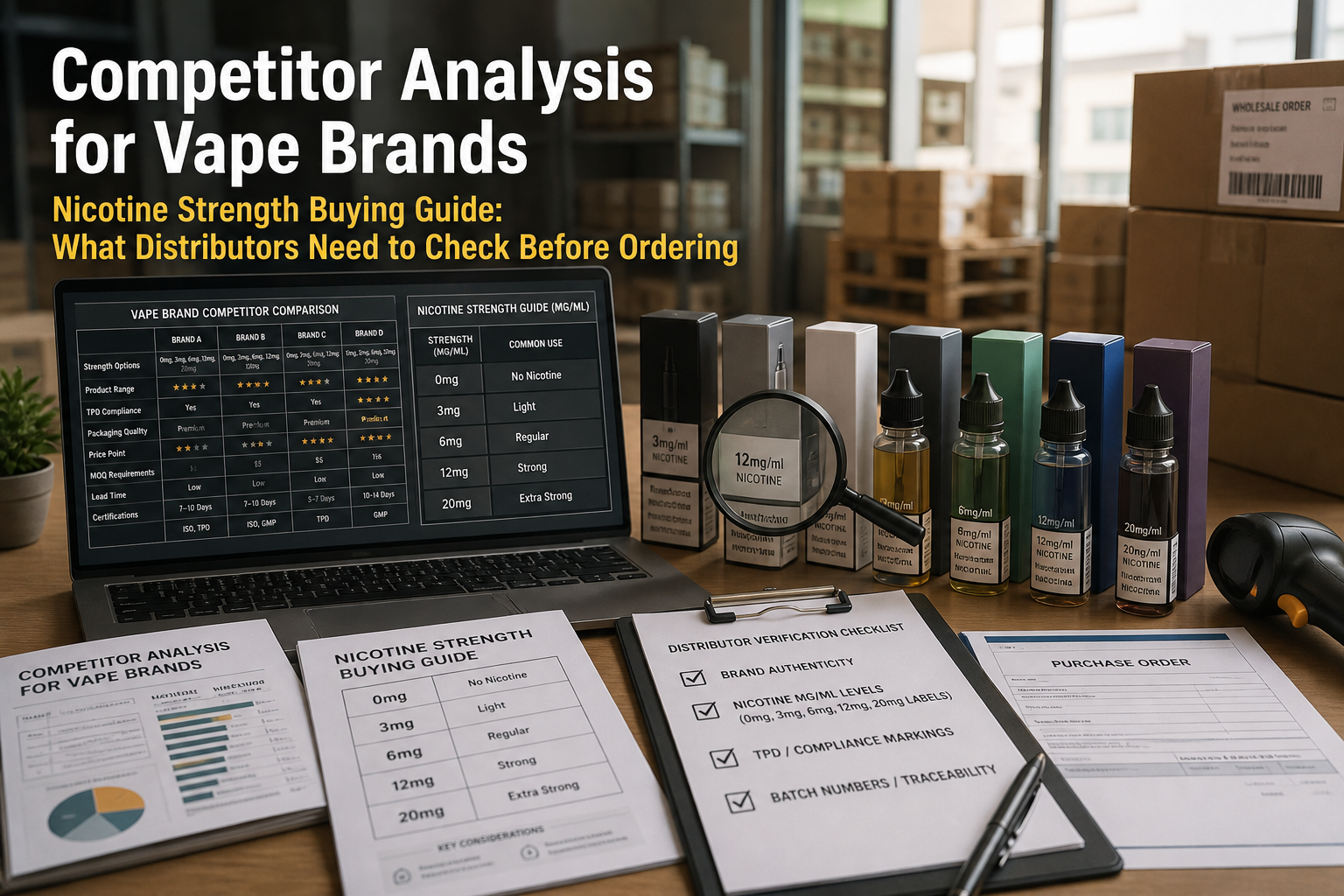
If you're also managing a lineup of disposables or pre-filled pods, remember that those devices usually come with a fixed nicotine strength—you're not mixing those yourself. But you still need to verify the strength matches what's on the label, especially if you're a distributor. The Nicotine Strength Basics for Brand Owners guide walks you through what to check before you buy.
When simple is enough: When to skip the calculator
You don't need a calculator for every little batch. If you're mixing a single 30ml bottle of 3mg/ml for a friend, you can do that in your head: 30 × 3 = 90mg, so 0.9ml of 100mg/ml base. But when you're mixing multiple batches with different strengths, or when you're scaling up to liters, the calculator saves you time and prevents costly errors.
For most shop owners, the simple version is enough for day-to-day operations. The advanced section is there for those moments when you're doing bulk production or custom orders. And when you're in doubt, just use the tool.
Glossary without the fluff
- mg/ml – Milligrams of nicotine per milliliter of liquid. The standard way to express strength.
- Nicotine base – A concentrated nicotine solution, usually in PG or VG, that you add to e-liquid.
- Freebase nicotine – The standard form of nicotine; harsher at high strengths.
- Nicotine salts – A smoother form of nicotine, often used in higher-strength products.
- PG/VG – Propylene glycol and vegetable glycerin, the two main carriers in e-liquid.
That's bottle math in a nutshell. It's not rocket science—it's multiplication and subtraction. Use the Windbar E-liquid Calculator to make it even easier, and you'll never worry about a wrong batch again.
For more context on choosing the right strength for your customers, see the Nicotine Strength Buying Guide: What Distributors Need to Check Before Ordering. And if you're curious about how PG/VG ratios affect your mixes, the VG/PG Ratio Explained article has you covered.
Keep it simple
- Bottle math for vape shops comes down to two numbers: the target nicotine strength in milligrams per milliliter (mg/ml) and the total volume you're mixing. Multiply them to get the total nicotine needed, then subtract what your nicotine base already provides. The Windbar E-liquid Calculator automates this process, reducing errors when you're scaling recipes for retail.
- Bottle math is just multiplication and subtraction—no advanced chemistry needed.
- Always double-check your nicotine base strength before mixing; a mistake here throws off the whole batch.
- Use the Windbar E-liquid Calculator for quick, accurate results every time.
- Keep a simple formula sheet by your mixing station for spot checks.
In this topic cluster
- Nicotine Strength articles
- Nicotine Strength Buying Guide: What Distributors Need to Check Before Ordering
- VG/PG Ratio Explained: What It Means for Your Vape and How to Mix It
- Nicotine Strength Basics for Brand Owners: What to Verify Before You Buy