
Walk-in #1: "I can't keep track of which coils fit which devices."
A customer walks in holding a coil and a device that clearly don't belong together. You've seen it a hundred times—they bought a replacement coil for a different pod system, and now they're frustrated.
The issue isn't the customer's memory. It's that device families look similar but aren't interchangeable. A pod system from one brand won't accept coils from another, and even within a brand, different models often use different coils.
When you're stocking your shelves, group coils by device family, not by brand. That means physical separation in your storage area and clear labeling at the point of sale. If you carry the LINQ-SLIM and LINQ-PRO, for example, their coils are not the same—even though the devices share a family name.
This is where the compatibility checker comes in. Enter the device model and the coil you're considering, and it'll tell you if they match. That saves you from the "it should fit" guesswork.
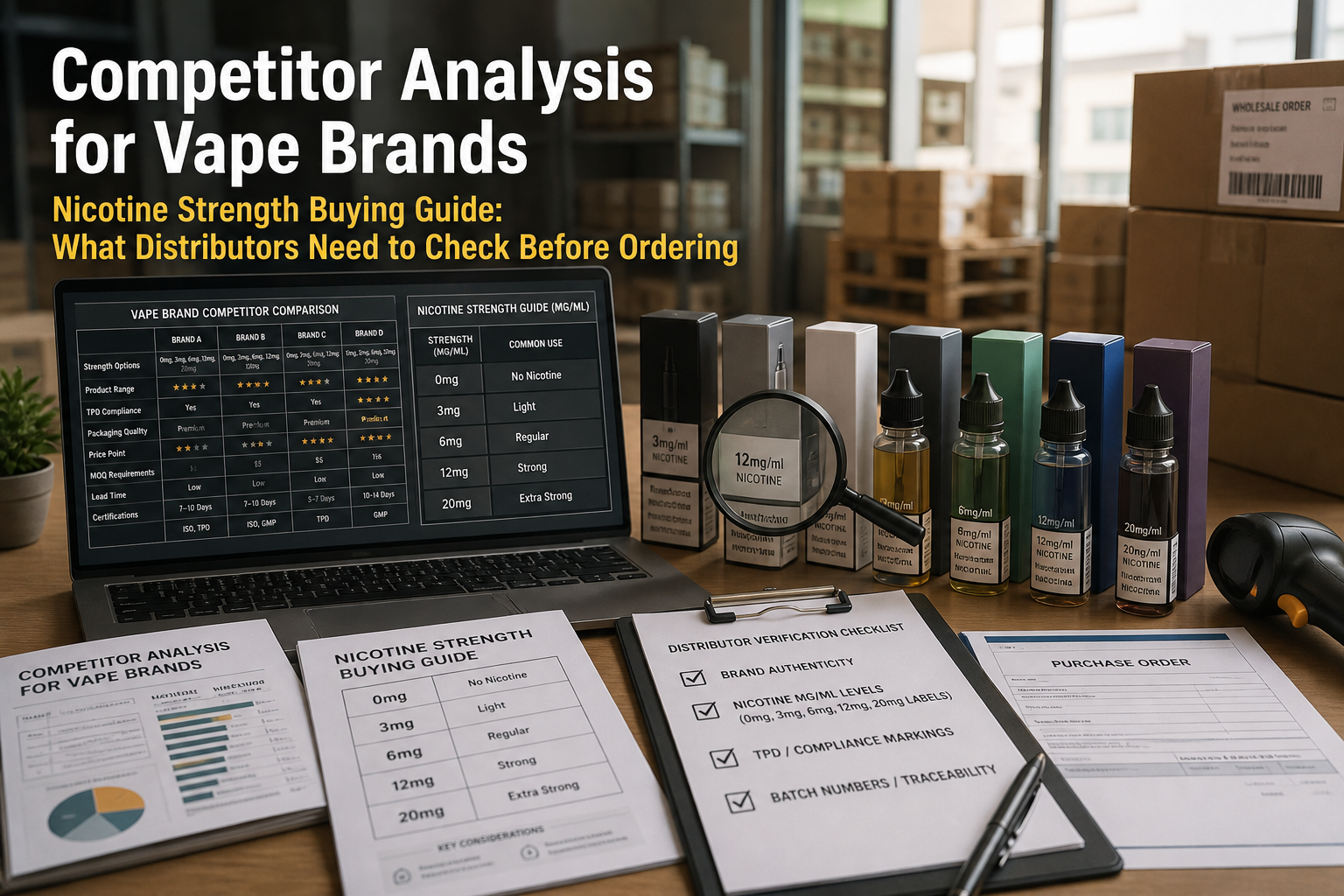
Walk-in #2: "What nicotine strength should I recommend for a pod system?"
The classic question. The answer depends on the pod's coil resistance and wattage range, not just the device shape.
Most pod systems are designed for nicotine salts at higher strengths—20 mg and up. The higher resistance coils in those pods produce less vapor, so the nicotine concentration can be higher without overwhelming the user.
But some pod systems, especially those with adjustable wattage, can handle freebase nicotine at lower strengths. If a pod supports a 0.6 ohm coil and 25 watts, it'll behave more like a small mod, and 6–12 mg freebase might work fine.
The safest advice for a shop owner: match the nicotine strength to the coil resistance. High resistance (1.0 ohm or higher) → salts. Low resistance (0.5 ohm or lower) → freebase. The compatibility checker will flag mismatches, like a high-strength salt in a low-resistance coil, which would give a harsh throat hit.
Walk-in #3: "Are disposables a device family or just a trend?"
Disposables are a family of their own, but they're a sealed one. You can't swap coils, adjust wattage, or refill them. That simplicity is the appeal—but it also means you can't fix a bad experience.
When you stock disposables like the VERTEX-15K or VERTEX-25K, you're committing to the pre-set nicotine strength and flavor. That's fine for customers who want zero maintenance, but it means you need to know your customer's preference before they buy.
A good rule: if a customer is new to vaping, start them with a disposable in a moderate nicotine strength (20–35 mg) to see if it satisfies. If they're coming from heavy smoking, they might need 50 mg. If they find it too harsh, move them to a refillable pod where you can lower the strength.
Disposables also have an environmental cost. Be ready to point customers toward recycling programs or refillable alternatives if they care about that.
The theme across all three
Every walk-in boils down to one theme: matching the right pieces. Device family, coil resistance, nicotine strength, and e-liquid type (salt vs. freebase) all have to line up. When they don't, you get leaks, burnt hits, or unsatisfying vapor.
That's why the compatibility checker isn't a luxury—it's a daily tool. Use it when you're ordering stock, when a customer asks for advice, and when you're training new staff. It doesn't replace your judgment, but it catches the mistakes that are easy to miss.
Think of it as a second set of eyes on every sale.
What we still cannot answer without your context
No tool can tell you which device family will sell best in your shop. That depends on your local customer base, price points, and what your competitors are doing.
For example, if you're near a college campus, disposables might fly off the shelf. If your clientele is older and more established, they might prefer a durable pod system they can refill. The compatibility checker won't tell you that—your sales data will.
Also, regulatory rules vary by state and locality. The FDA oversees ENDS products federally, but your state may have additional restrictions on flavors or nicotine strength. Check with your local authority before stocking new families.
If you're unsure about your market, ask in the Windbar Community. Other shop owners are usually happy to share what's working in their area.
Related reading
Once you've got the device families straight, the next question is usually nicotine type. Our guide on Nicotine Salts vs. Freebase breaks down the differences and when to use each. For the business side, our POS comparison can help you track which families are actually selling.
A quick note: no compatibility checker replaces your own diligence. Always double-check manufacturer specs, and when in doubt, ask the supplier directly. The tool is a shortcut, not a substitute for good judgment.
In this topic cluster
- Nicotine Strength articles
- Nicotine Salts vs. Freebase for Premium Vapers: Which Delivers the Better Experience?
- Photo Asset Planning for Vape Product Pages: What You Need Before Launch
- Color, Pattern, and Finish Systems: Designing a Coherent Vape Product Line
Related Windbar Guides
Related Windbar Resources
- Vape Compatibility Checker — Match device families with the right coils and e-liquids before you stock.
- Windbar Community — Ask other shop owners which device families sell best in their regions.
Keep this for later
Create an account to save your compatibility checks and build a stock list you can revisit before each reorder.