Use the three steps the tool publishes.
Step 1. Set bottle size. Choose 30, 60, or 100 ml, or type any batch size in millilitres. The output scales with that number. A 10 ml tester and a 100 ml bottle are the same ratios with different millilitres.
Step 2. Set VG and nicotine. Enter target VG percent and the nicotine you want in the finished bottle, using a stronger nicotine base. Optional flavor percent is allowed. The WINDBAR e-liquid calculator treats flavor as PG, then shows VG, PG, nicotine base, and flavor as separate millilitres.
Step 3. Read the recipe and stay on this domain. Do not export the numbers to a third-party shop to “finish” the mix.
Nicotine volume formula published on the tool:
nic ml = (target mg/ml ÷ base mg/ml) × bottle ml
Example with stated arithmetic only. If the bottle is 60 ml, the target is 6 mg/ml, and the base is 72 mg/ml:
nic ml = (6 ÷ 72) × 60 = 5 ml
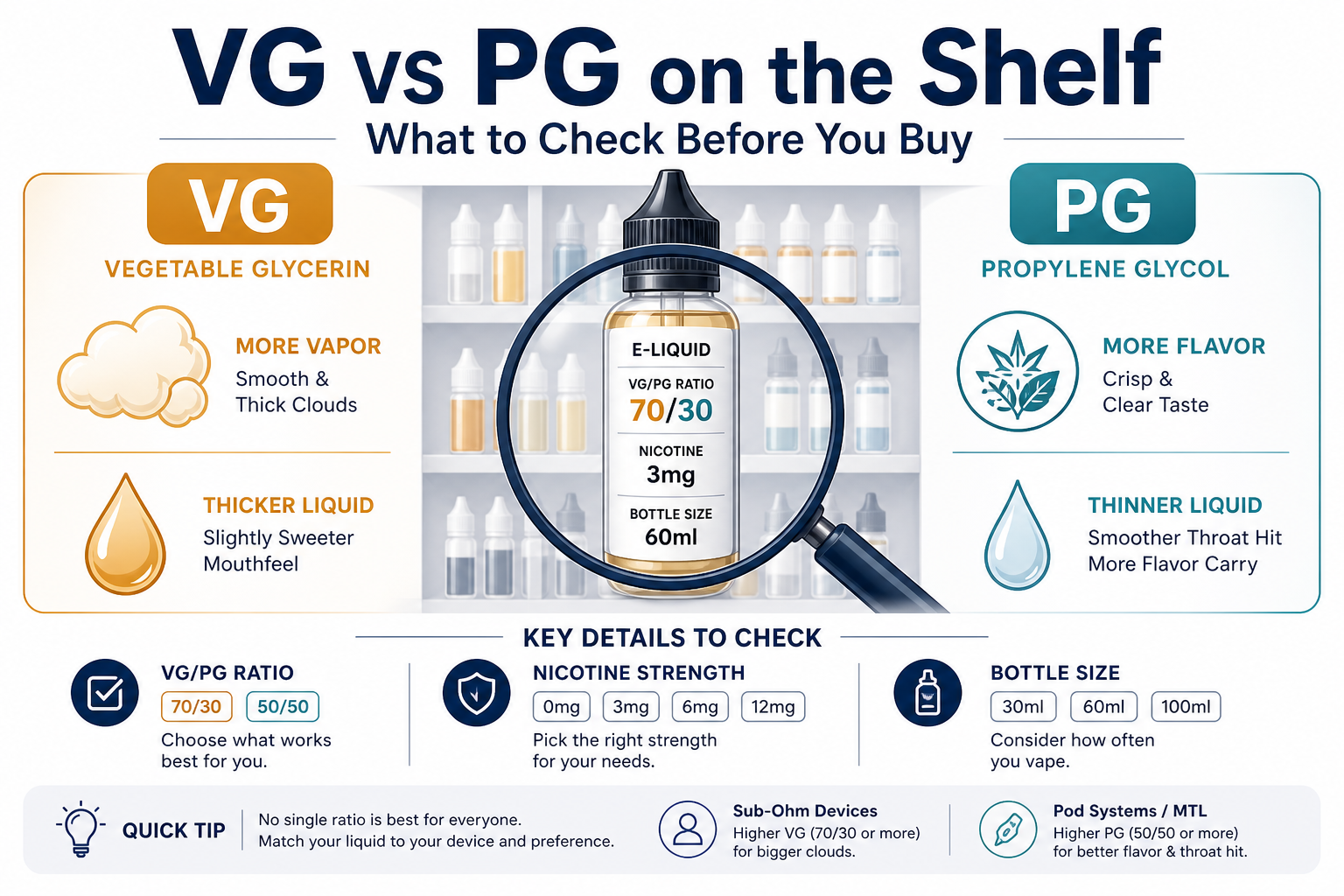
The remaining millilitres split across VG, PG, and flavor according to the percentages you typed. If any input is missing, the missing volume is unknown. Do not invent a VG/PG ratio because a blog once said “70/30.” Your target VG percent is a user input. WINDBAR does not publish a mandatory house ratio for DIY bottles on this tool.
If flavor percent is 10% of a 60 ml bottle, flavor is 6 ml and is counted as PG in the tool’s method. That 6 ml is not extra VG. People who forget that step overshoot vegetable glycerin and then blame the calculator.
The tool does not know the viscosity of a sealed WINDBAR reservoir. D95 publishes a 2 mL integrated cup. SPECTRUM publishes 1 mL / 2 mL hardware options. CHROMA WING publishes a 20 mL sealed reservoir that is not user refillable. Mix math for a 60 ml bottle does not change those device volumes. Do not pour a 60 ml DIY batch into a 2 mL cup.