

Q: The first thing people ask: “Is there a law about VG/PG ratios?”
Short answer: no. The FDA treats e-liquids as tobacco products, but it doesn't set a required ratio of vegetable glycerin to propylene glycol. That's a formulation choice made by the manufacturer, often balanced for throat hit versus vapor production. What the FDA does regulate is labeling, ingredient disclosure, and child-resistant packaging. So when you pick up a bottle, you should see the nicotine strength clearly stated, along with a warning label. The VG/PG ratio may be on there too, but it's not a legal requirement unless the brand makes a claim about it.
For you as a consumer, that means the ratio is more about your personal preference than compliance. If you're sensitive to throat hit or want bigger clouds, you'll likely lean toward higher VG. But don't assume a higher VG means 'safer' or 'more compliant'—it's just a different mix.
Q: The follow-up that matters: “What should I actually check on the label?”
When you're comparing bottles, start with the basics. The FDA requires a nicotine warning statement on all e-liquid packaging. That's the yellow or black box that says 'WARNING: This product contains nicotine.' You should also see a list of ingredients, and the packaging needs to be child-resistant—that means a push-and-turn cap or a similar mechanism.
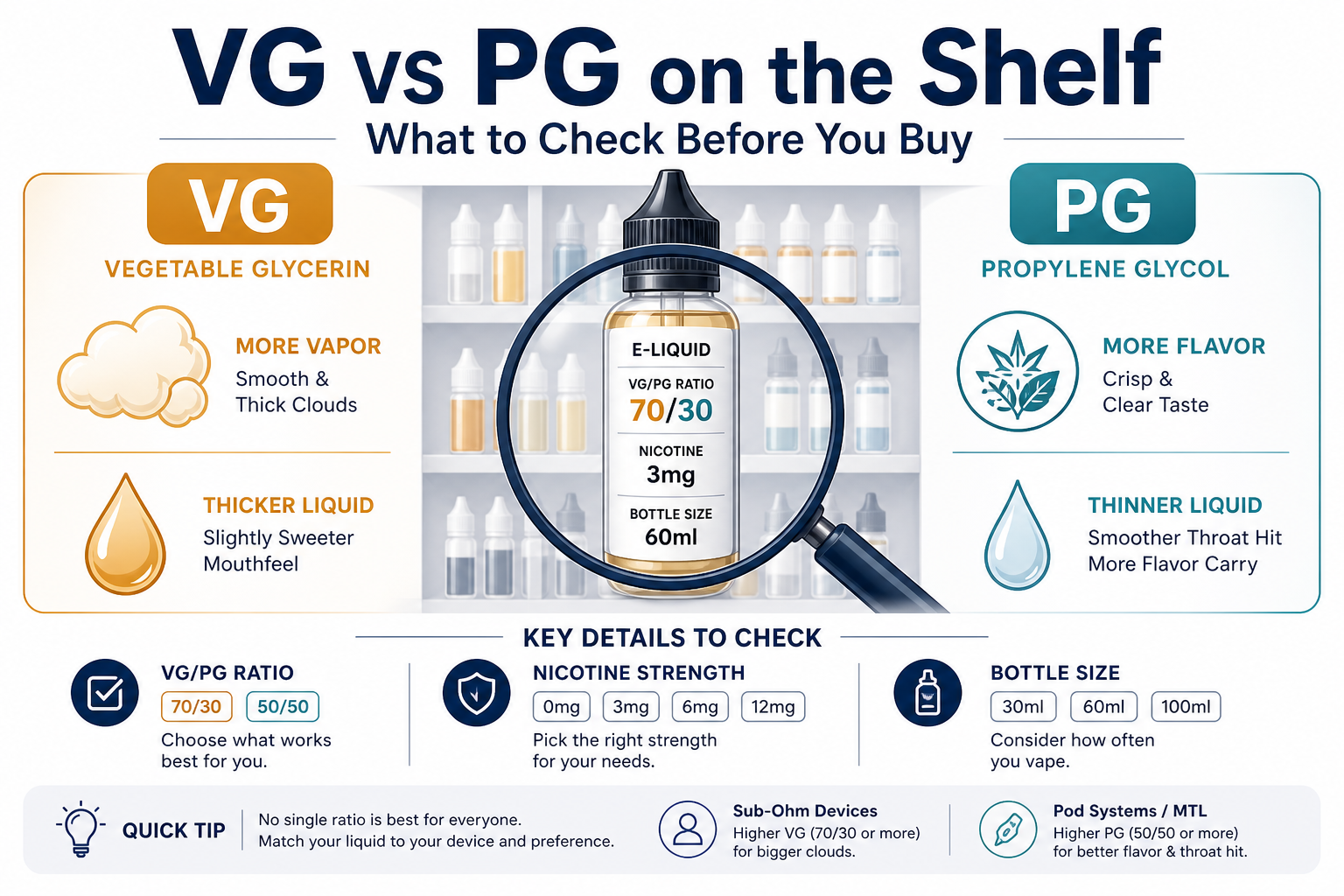
If the label lists the VG/PG ratio, make sure it's clear, like '70% VG / 30% PG.' Some brands print it on the front, others on the back. If you don't see it, that's not necessarily a red flag, but you can always check the brand's website. For a deeper dive into what to look for before you buy, our guide on VG vs PG on the Shelf: What to Check Before You Buy covers this in more detail.
Q: The awkward one: “What about state rules? Can they mess with my VG/PG choice?”
State laws can be more restrictive than federal ones. Some states require e-liquid manufacturers to register with the state, disclose ingredients, or even ban certain flavorings. A few states have tried to cap nicotine strength, and others have banned specific VG/PG ratios under the guise of public health. That's rare, but it happens.
For example, California has its own ingredient disclosure requirements, and some counties have local flavor bans. If you're buying online, the retailer should be following the laws of the state where you live, but that's not always guaranteed. The CDC's state tobacco activities page is a good starting point to see what your state requires.
If you're mixing your own e-liquid, you're stepping into a gray area. The FDA doesn't have a specific rule for DIY mixing, but you're still responsible for labeling if you sell it. And if you're just mixing for personal use, you should still follow basic safety—like using nicotine in a well-ventilated area and storing it away from kids. State laws might require a license for selling nicotine, even in small quantities.
Q: The “is it worth it” one: “Do I need to worry about this as a regular user?”
For most people, compliance is a background issue. You're not going to get in trouble for buying a 70/30 VG/PG blend. But there are two practical reasons to care. First, buying from a compliant retailer means the product is less likely to be counterfeit or mislabeled. That protects you from getting a stronger nicotine dose than you expected. Second, if you travel with e-liquid, you need to know that TSA rules apply to all liquids, regardless of VG/PG. We've covered that in Flying With a Vape: TSA, Cabin Rules, and the International Pitfalls, but the short version is: keep it in your carry-on, in a quart-sized bag, and check the rules for your destination.
If you're a retailer or a distributor, this gets more serious. You could face fines if you sell products that don't meet FDA labeling requirements. But for a consumer, the checklist is simple: check the label, verify the retailer, and know your local laws.
Closing answer
At the end of the day, the VG/PG ratio is a personal choice, not a compliance headache. The rules that do exist are about keeping products safe and honestly labeled. So the next time you pick up a bottle, spend ten seconds checking for the nicotine warning, the ingredient list, and the child-resistant cap. If those are all there, you're in good shape. If you're ever unsure, your state's health department website is a reliable source for local regulations.
This article is for educational purposes and isn't legal advice. Rules change, so always verify with official sources before making decisions.