
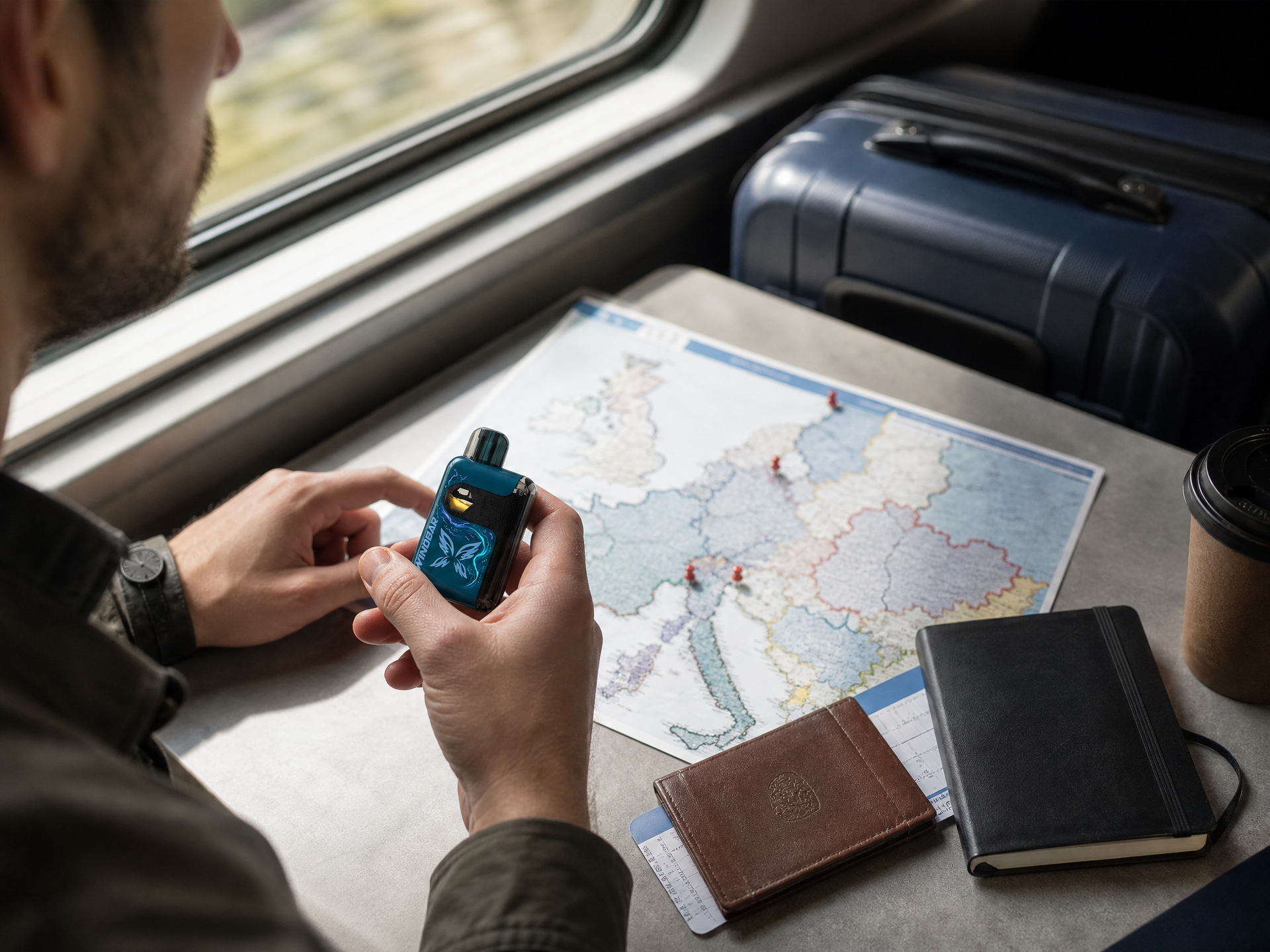
The EU has a Tobacco Products Directive. It sets a baseline. But the baseline is not the finish line. Every country builds on top of it. And what is legal in France may be illegal in Germany. What is fine in Spain may get you fined in Belgium.
Here is what actually changes at every border crossing.
The TPD baseline. The EU's Tobacco Products Directive (TPD) caps nicotine strength at 20mg/ml, limits e-liquid bottles to 10ml, and restricts tank capacity to 2ml. Every EU member state implements these rules. They are the floor. Some countries build higher walls.
France. Legal. Regulated. Vaping is treated like smoking — banned in enclosed public spaces, workplaces, and public transport. You can buy devices and e-liquid. Nicotine is capped at 20mg/ml. No flavor ban. France is one of the most permissive vaping countries in the EU. The only exception: vaping is banned on all SNCF trains and in all train stations since 2023.
Germany. Legal. Regulated. The same TPD rules apply. Germany added a tax on e-liquid in 2022 that increased prices by approximately 1.60 euros per 10ml bottle. Vaping is banned in most enclosed public spaces. The enforcement is stricter than France. Expect to be told to stop if you vape in a train station.
Spain. Legal. Regulated. But Spain is where the rules get patchy. The national government allows vaping in designated areas. Regional governments impose their own restrictions. Catalonia and Andalusia have stricter rules than Madrid. The Canary Islands are more relaxed. You cannot assume the rules in Barcelona are the same as the rules in Seville. They are not.
Belgium. Legal. Regulated. But Belgium banned online sales of vaping products in 2025. You can buy in physical shops. You cannot order online for delivery to a Belgian address. This catches travelers who assume they can restock via delivery. You cannot.
Italy. Legal. Regulated. But Italy banned online sales of nicotine-containing e-liquid in 2023. Same restriction as Belgium. Physical shops only. If you run out of liquid in Italy, you need to find a shop. You cannot order more to your hotel.
The Netherlands. Legal. Regulated. But the Netherlands banned all non-tobacco flavors in 2024. Only tobacco-flavored e-liquid can be sold. You can bring your own flavored liquid from another country. You cannot buy it there. The ban applies to sale, not possession.
Sweden. Legal. Regulated. But Sweden is considering a flavor ban. It has not passed yet. If you are traveling in 2026, flavors are still available. In 2027? Nobody knows.
The cross-border rule that matters most. You can bring your own device and liquid into any EU country for personal use. The TPD guarantees this. What you cannot do: bring more than a reasonable personal supply. Reasonable means one or two devices and enough liquid for the duration of your trip. Showing up at the border with 20 bottles and 5 devices is not personal use. It is attempted commercial import. Customs will treat it accordingly.
The takeaway: Europe is not one country. The vaping rules change at every border. Check the specific country you are visiting. The TPD is the floor. The country builds the walls. Know the walls before you cross them. This content is intended for adults 21 years of age or older. Nicotine is an addictive chemical. The information provided is for educational and informational purposes only and does not constitute medical or legal advice. If you are considering using vaping products as an alternative to smoking, consult with a qualified healthcare professional. Product reviews and recommendations are based on publicly available information and independent evaluation; Windbar makes no representation regarding the FDA marketing authorization status of any third-party products mentioned. This content is not a substitute for review by a licensed attorney.
© 2026 Windbar. All rights reserved.