
Popular advice to demote
Most spring carry guides tell you to buy the smallest, sleekest device with the biggest battery and the highest puff count. They're obsessed with specs that look good on paper but don't translate to real desk comfort. Sure, a tiny pen fits in a shirt pocket, but if it clatters on your wooden desk or feels flimsy, you'll end up shoving it in a drawer and forgetting it.
Another overhyped feature is the 'cloud chaser' airflow. Wide-open airflow produces thick clouds that hang in the air and linger. That's the opposite of what you want in a shared workspace. And the constant 'wattage wars'? Unless you're using high-viscosity CBD extracts that need a lot of heat, you don't need 40 watts to get a satisfying draw.
Under-taught habits
The real art of desk carry isn't the device—it's the routine. The first habit nobody teaches is how to control your draw. Take shorter, shallower puffs to reduce vapor volume. You'll still get the flavor and effect you want, but the cloud dissipates in seconds instead of hanging around.
Next, learn to read your device's indicator light. Many compact devices blink when the battery is low, but you can also get a sense of how much juice is left by the warmth of the mouthpiece. That's not a precise gauge, but it's a good reminder to recharge before you're caught with a dead device mid-afternoon.
Finally, build a 'stash spot' that's not a pocket. A pencil cup with a small neoprene sleeve keeps your device upright and silent. Some people use a sunglasses case. The point is to have a dedicated home that protects the device and keeps it from rolling around.
Our short contrary checklist
So what should you actually look for? Here's the short list, based on what I've seen shoppers get right and wrong:
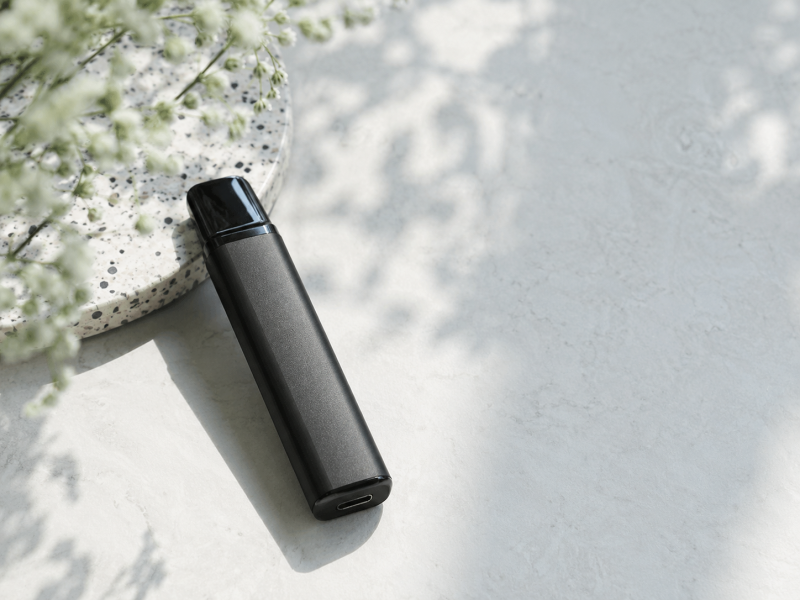
- Footprint over puff count. A device that's 4 inches long and half an inch thick will disappear in your hand or a desk drawer. Puff counts are marketing numbers that don't reflect build quality.
- Adjustable airflow. You want to dial down the airflow for a tighter draw that produces less vapor. This is a feature you'll actually use daily.
- Simple controls. One-button operation beats a fancy OLED screen when you're trying to be discreet. You don't need to fiddle with settings mid-meeting.
- Battery that lasts your workday. You don't need a 3000mAh monster. A 500mAh battery is plenty for a few puffs an hour.
- A quiet mouthpiece. Some devices make a slight whistle when you draw. That's annoying in a silent office. Give it a test draw before you buy.
Prove it in a week
Don't trust the marketing. Here's a 7-day test to see if a device works for your desk routine:
- Day 1–2: Use it only at your desk. Notice how it feels in your hand, how it sounds, and how long the battery lasts. Set a reminder to charge it at the same time each day.
- Day 3–4: Take it to a coffee shop or a park bench. Does it fit in your jacket pocket? Does it leak in your bag? This is where you'll spot problems.
- Day 5–6: Try adjusting the airflow and your draw technique. See if you can keep the vapor low enough to not bother anyone in the next cubicle.
- Day 7: Decide. If the device has become a natural part of your routine and you haven't had to baby it, keep it. If you're constantly fiddling with settings or recharging, it's not the right one.
When conventional advice still wins
There are times when the old rules make sense. If you're a heavy user who goes through a full cartridge in a day, a bigger battery and higher capacity will save you from mid-day charging. If you're always on the move between meetings, a shirt-pocket-sized pen is genuinely convenient. And if you're outdoors in spring breezes, a more open airflow can compensate for wind stealing your vapor.
But for the desk, those are edge cases. The conventional wisdom of 'smaller is always better' ignores the fact that you'll be interacting with the device dozens of times a day. A device that feels good in your hand and behaves quietly is worth more than one that hits a spec sheet.
One last note: laws about CBD products vary by region and workplace. Check your local regulations and your employer's policy before you bring any vaporizer to your desk. This isn't legal advice, but it's part of being a responsible adult.
If you're still weighing options, our guide on compact versus pod-style hardware breaks down the trade-offs for tight budgets. And once you've settled on a device, tuning your airflow for warm weather can make a real difference in how discreet it feels.
Contrarian FAQs
Q: How can I reduce the smell of my CBD vape at work?
Keep your device in a sealed pouch when not in use, and take smaller puffs to reduce vapor clouds. Some devices allow you to adjust airflow to make draws lighter, which also cuts down on lingering scent. Always check your workplace policy first.
Q: Does a smaller battery mean more frequent charging?
Not necessarily. A compact device can still have a battery that lasts all day if you're a light user. Look for a battery capacity that matches your usage—if you only take a few puffs a day, you don't need a big battery.
Q: What's the best way to store a CBD vape at my desk?
Use a small case or sleeve to keep it clean and discreet. Avoid leaving it in direct sunlight or near heat, which can degrade the hardware. A pencil cup or drawer organizer works well.
Contrary list
- Popular carry guides often overrate puff counts and flashy features, but for a desk setup, what matters is footprint, smell, and how quietly the device works. A 7-day test in your actual workspace will tell you more than any spec sheet. Start with a compact device that fits your pocket or palm, and adjust airflow for a lighter draw to minimize vapor clouds.
- Puff count is a marketing number, not a quality metric—focus on build and airflow.
- A small footprint and low odor matter more than a high-capacity battery for desk use.
- You can adjust your draw technique to reduce vapor clouds without lowering satisfaction.
- Test a device for a week in your real routine before committing.