
Entry tier: What does the cheapest compact hardware actually give you?
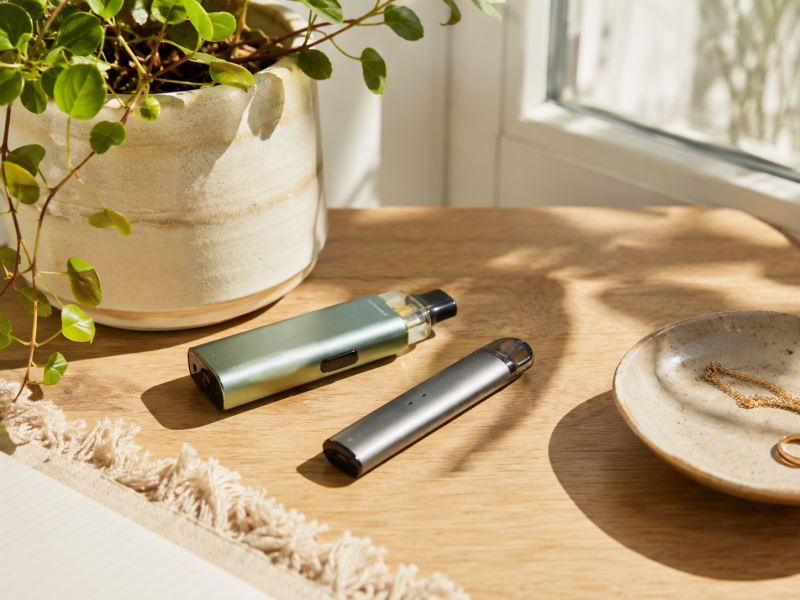
Let's be honest: entry-level compact CBD vaporizers are the budget king for a reason. You're looking at a simple pen-style device with a built-in battery and a refillable tank. One button, maybe two. No screens, no wattage adjustments, no airflow rings. That's it.
What you get for that low price:
- Lower upfront cost—often under $30
- Simple operation: fill, wait, press, inhale
- Small and discreet—fits in a pocket or small bag
- Less to go wrong: fewer parts means fewer failure points
But there are trade-offs. Battery life is usually shorter, and if the battery dies, you often replace the whole unit. You also get little control over your draw—most are draw-activated or fixed wattage, so you can't fine-tune the experience.
For someone who vapes a few times a month, this is plenty. You're not paying for features you'll never use. The risk is that if you start vaping more often, you'll outgrow it quickly and end up buying a second device anyway.
Mid tier: Is pod-style hardware worth the extra cash?
Pod-style hardware sits a step up in price—usually $30 to $60—and for that you get a modular system. Instead of a built-in tank, you use small pods that snap in and out. Some have replaceable coils; others are fully disposable pods.
The main advantages:
- Replaceable parts: when the coil wears out, you swap it instead of buying a new device
- Adjustable airflow: you can dial in a tighter or airier draw
- Better battery life: often larger batteries or replaceable batteries
- More consistency: regulated output means the hit stays the same from start to finish
What's the catch? The upfront price is higher, and you'll need to buy replacement pods or coils regularly. Over a year, that can add up. But if you vape daily or weekly, the cost per use often works out lower than replacing a compact device every few months.
There's also a learning curve. You need to prime coils, fill pods correctly, and know when to swap them. For a casual user, that's just extra hassle. For a dedicated hobbyist, it's part of the fun.
Stretch tier: When does premium hardware make sense?
At the top of the budget ladder—$60 and up—you're paying for build quality, advanced features, and often a brand name. You might get temperature control, a digital display, or a device that feels solid in the hand.
But here's the thing: for most people on a tight budget, this tier is overkill. You're paying for precision and durability that you may never fully use. If you're a tinkerer who likes to dial in every variable, sure, go for it. If you're just trying to vape without spending much, save your money.
The only time I'd recommend stretching is if you know you'll use the device heavily for years. A well-built device can outlast several cheap ones, so the cost per year might actually be lower. But that's a bet on your own habits—if you're not sure, don't take it.
What you actually pay for
When you compare compact and pod-style hardware, the price difference comes down to three things:
- Replaceability: Can you fix it or swap parts, or is it a throwaway?
- Control: Do you get adjustable airflow, wattage, or temperature?
- Battery and build: Larger batteries and metal construction cost more.
Entry-tier compacts are cheap because they're disposable by design. Mid-tier pods cost more because they're meant to last longer with proper care. Stretch-tier devices justify their price with premium materials and advanced features that most casual users won't notice.
One thing to watch: don't assume that a higher price means better vapor quality. The quality of your CBD extract and the coil design matter more than the price tag. A well-made $30 device can outperform a $80 device with a poor coil.
When upgrading is pointless
Upgrading from a compact to a pod-style device only makes sense if you hit one of these situations:
- You're replacing hardware more than twice a year
- You want more consistent draws (regulated output)
- You're tired of limited airflow and want to adjust it
- You're planning to vape regularly for the next year or more
If you're a seasonal shopper—someone who picks up a device for a few months and then forgets about it—don't bother. Stick with a compact. It'll do the job without draining your wallet.
Also, remember that no hardware upgrade will change the fact that you need to buy your own CBD e-liquid or cartridges. The device is only half the equation. If you're on a tight budget, put your money into a decent device and save for quality fill—that matters more than any feature.
Bottom line
For a tight budget, start with a compact CBD vaporizer. It's cheap, simple, and covers the basics. If you find yourself vaping more often and want more control, then consider a pod-style system. Don't stretch to premium unless you're sure you'll use it for years.
And before you buy anything, check your local age verification rules. Laws vary by state, and some require ID for any vaping hardware. A few minutes of research can save you a headache at checkout.
If you're still unsure, ask other adults in the Windbar community what they've found reliable on a budget—real experiences are more useful than any spec sheet.
Spend smart
- When budgeting for CBD vaporizer hardware, compact devices typically offer the lowest entry cost and simple one-button operation, while pod-style hardware introduces replaceable parts and adjustable airflow for a slightly higher price. The real difference isn't the upfront price but how much you value customization and long-term maintenance. For most tight-budget shoppers, a compact vaporizer is the practical choice unless you plan to use the device heavily year-round.
- Compact CBD vaporizers cost less upfront and are simpler to use, making them ideal for tight budgets and occasional use.
- Pod-style hardware offers replaceable coils and adjustable airflow, which can save money over time if you vape regularly.
- The main cost difference is not the device price but the replacement parts and maintenance you'll need.
- For seasonal or occasional use, a compact device is usually enough; upgrading to pod systems only pays off with frequent use.
- Check local regulations before buying—age verification laws vary by region, and hardware compatibility matters.