The core loop of battery safety verification is a cycle of check, test, and document. You repeat it for every new product batch.
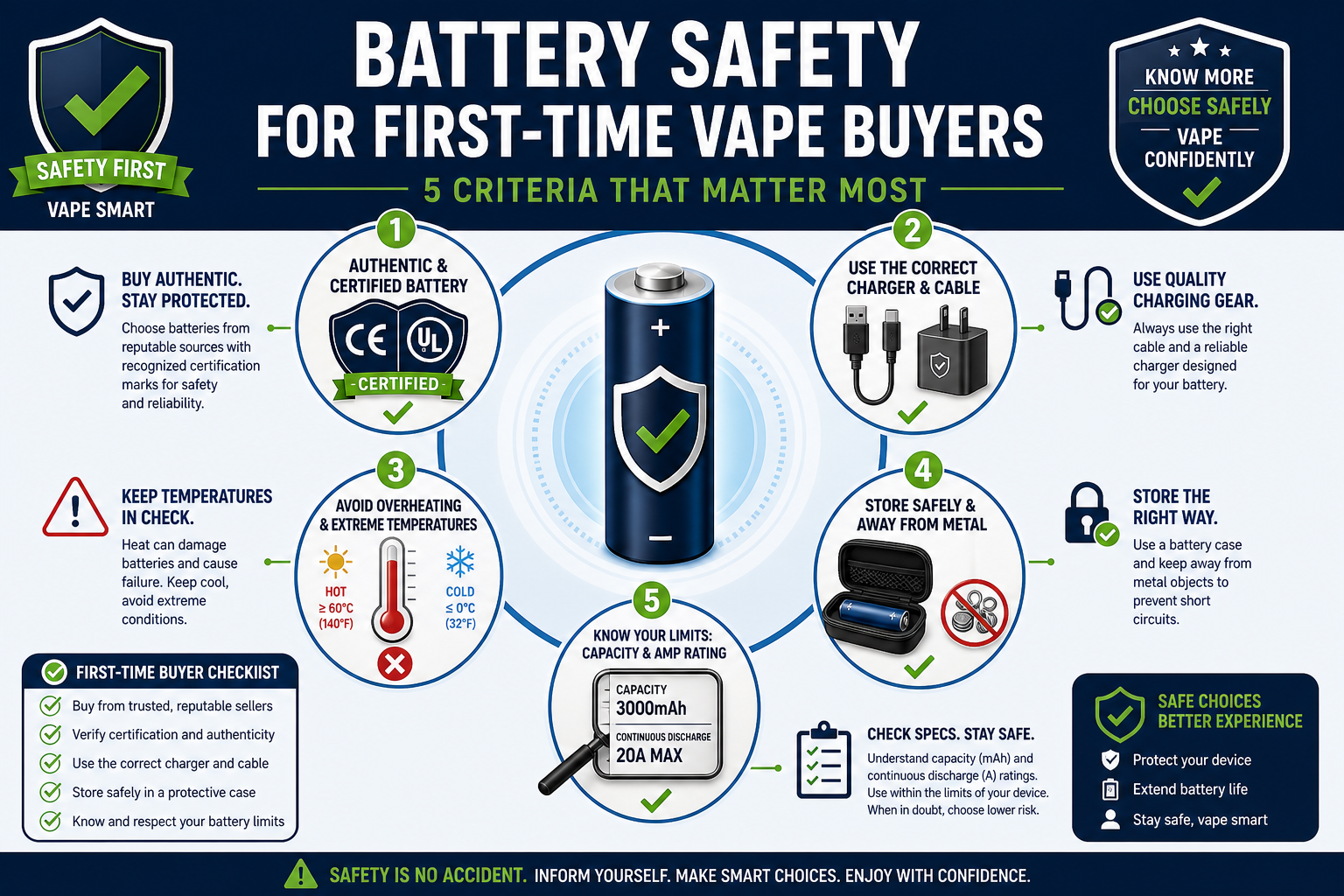
Check the CDR. The continuous discharge rating is the maximum current the battery can safely deliver without overheating. For vape devices, you need to know the device's maximum power draw. Use the Coil Resistance Calculator to figure out the current draw from your wattage and coil resistance. If the current draw exceeds the CDR, you're asking for trouble—the battery will heat up, and in extreme cases, it can go into thermal runaway.
Verify protection circuits. Most internal batteries have a protection circuit board (PCB) that prevents overcharge, overdischarge, and short circuits. For removable cells, some have built-in protection, but many don't—you have to rely on the device's circuitry. Ask the manufacturer what protections are built in. If they can't tell you, that's a red flag.
Look for certifications. UL, CE, and other marks indicate the battery has passed safety testing. But don't just take the mark at face value—ask for the test report. A legitimate manufacturer will have it on hand. If they can't provide one, consider that a warning sign.
Document everything. Keep a file with datasheets, test reports, and correspondence about battery specs. This is your evidence if something goes wrong, and it helps you compare suppliers.