
Why does my matcha clump even when I sift it?
So you sift, you whisk, and still—lumps. That's frustrating, especially when you've set aside a quiet Sunday morning for a perfect bowl. The truth is, sifting helps, but it's just one piece of the puzzle. If clumps keep appearing, the likely culprits are moisture, static, or water that's too hot.
Let's break it down.
The moisture problem (and how to beat it)
Organic matcha is a hygroscopic powder—fancy way of saying it loves to absorb water from the air. If your tin has been open too long, or you're scooping with a damp spoon, you're inviting clumps. Even a few hours in a humid kitchen can start the process.
Fix: Keep your matcha in an airtight container, and if you live somewhere humid, store it in the fridge. Let it warm up to room temperature before opening to avoid condensation. Also, always use a dry spoon—never dip a wet one in.
Static electricity: the hidden clump maker
Ever notice your matcha sticking to the side of the bowl or the whisk? That's static. It makes fine particles cling together, forming tiny lumps that are hard to break. This is more common in dry climates or during winter.
Fix: Before whisking, give your bowl and whisk a quick rinse and dry them thoroughly. A tiny bit of moisture on the surface (not wet, just barely damp) can reduce static. Or you can try tapping the whisk to release static, but the rinse method is more reliable.
Water temperature: too hot and it clumps
Water that's too hot—like boiling—can cause the matcha to 'cook' slightly, making it sticky and clumpy. Ideal temperature is around 175°F (80°C). If you don't have a thermometer, boil water and let it sit for a minute or two.
Fix: Use a thermometer or just let boiling water cool for 2 minutes. Then pour a small amount over the matcha and whisk gently before adding the rest.
Whisking technique: are you doing it wrong?
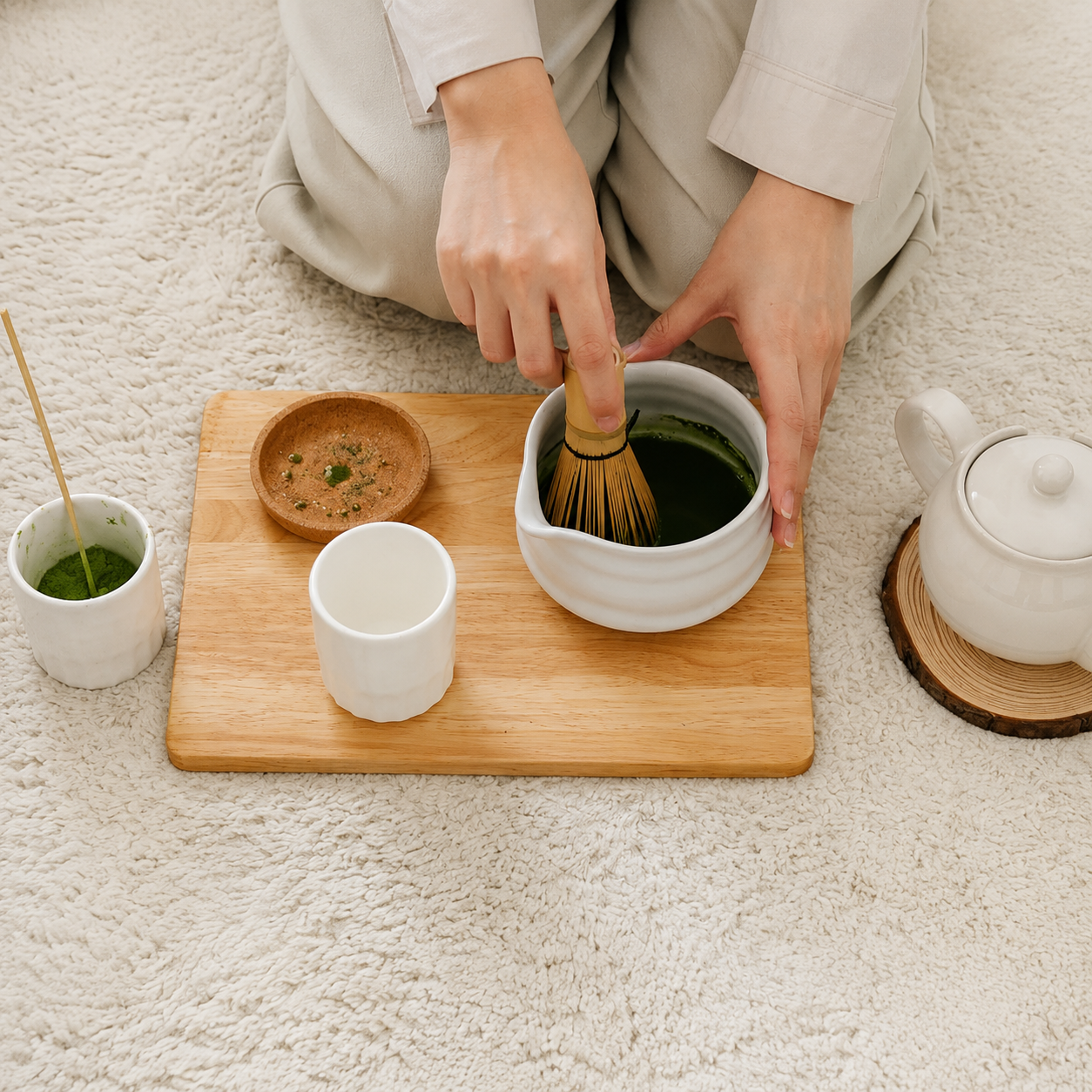
If you're stirring in circles, you're not whisking. A proper chasen (bamboo whisk) should be moved in a quick zigzag or 'W' motion, which aerates and breaks up clumps. Also, don't press too hard—let the whisk do the work.
Fix: Use a chasen if you have one. Start with a small amount of water, whisk in a zigzag until smooth, then add the rest.
Detection cues: how to tell if it's just a clump or something worse
Not every clump is fixable. If your matcha has a dull color, off smell, or tastes bitter and flat, it's likely lost its freshness. Clumps that don't break after sifting and whisking might indicate moisture damage that's already affected the quality.
Check: Look for a vibrant green color and a sweet, grassy aroma. If it's yellow-brown or smells musty, it's time to replace.
Mitigation order: what to do first, second, third
- Sift the matcha into your bowl.
- Add a small amount of water (about 2 oz) at the right temperature.
- Whisk in a zigzag motion until smooth.
- Add the rest of the water and whisk again.
- If still clumpy, check your storage and adjust.
If you've tried all this and still see clumps, your matcha might just be old. A fresh tin from a trusted source—like BrewNova Matcha—will make a world of difference.
When to stop using it: a note on safety
If you notice mold, an off smell, or any signs of moisture damage beyond simple clumping, don't use it. Consuming spoiled matcha can make you sick. When in doubt, throw it out and get a fresh batch.
Matcha is a pleasure, not a chore. With these fixes, your weekend ritual should come together smoothly. And if you're still struggling, the Windbar community is full of folks who've been there—ask them for tips.
Happy brewing!
Failure catalog
- Clumping in organic matcha is typically caused by moisture exposure, static electricity, or whisking technique. Simple fixes like sifting, proper storage, and using a bamboo whisk can prevent most clumps. If clumping persists, the matcha may be too old or stored improperly, so consider replacing it.
- Moisture is the main culprit—store matcha in an airtight container away from humidity.
- Always sift matcha before whisking to break up any clumps.
- Use a bamboo whisk (chasen) with a gentle zigzag motion, not a circular stir.
- Water temperature should be around 175°F (80°C)—too hot causes clumping.
- If matcha is old or smells dull, it's time for a fresh tin.
Related Windbar Resources
- Windbar Community — Ask other matcha lovers for their weekend brewing tips.