
The 5-Minute Path: What to Verify Before You Pay
Before you even talk pricing, run through this quick checklist. It takes five minutes and can save you from a costly mistake.
- Seller's license: Ask for their business license and, if required, a wholesale or retail tobacco permit. A legitimate seller will have these ready.
- Product documentation: Request the FDA marketing authorization status for each product. If they can't provide it, that's a red flag.
- Packaging labels: Check that each product has the required health warnings and ingredient lists. Missing labels are a quick no.
- Local rules: Look up your city or state's regulations on vape sales. Some areas have flavor bans or specific packaging rules.
If all four check out, you can move forward with more confidence.
The 20-Minute Path: Deeper Checks Before You Commit
If the quick pass feels thin, or if you're buying a large order, take the longer path. This is where you protect your business from future headaches.
- Verify the license with the issuer: Don't just accept a photocopy. Call the issuing agency or check an online database to confirm it's active and matches the seller's name.
- Ask for certificates of analysis (COAs): These lab reports confirm what's in the product. They're standard in the industry, and a serious supplier will have them for every batch.
- Cross-check the FDA marketing status: Some products have received marketing authorization, others haven't. The FDA's website lets you search for authorized products. If a product isn't authorized, it might still be legal, but you need to understand the risk.
- Review the supply chain: Ask who the manufacturer is and whether the product was imported. Imported products can face extra scrutiny, and you need to know if they meet US standards.
Taking 20 minutes here can save you from stocking products that end up recalled or banned.
What You Skip on Purpose (And Why)
Speed-running your due diligence means cutting corners that aren't essential for a first small order. Here's what you can skip on purpose:
- Deep cost analysis: Don't obsess over getting the absolute lowest price. You're not buying at scale yet. Focus on legitimacy first.
- Extensive flavor testing: You don't need to sample every flavor. Pick two or three popular ones and move on.
- Negotiating payment terms: For a first order, paying upfront is fine. Don't waste time trying to net-30 a small supplier.
- Building a full compliance manual: You don't need a binder of policies yet. Just keep the documents you've collected in a folder.
Skipping these saves time without risking your business.
When Speed-Running Fails: Red Flags That Should Stop You Cold
There are moments when you should abandon the fast path entirely. If you see any of these, walk away:
- The seller can't or won't provide documentation. That's the single biggest red flag. A legitimate seller will understand your need to verify.
- The price seems too good to be true. If a product is significantly cheaper than everywhere else, ask why. Often, it's because it's counterfeit or non-compliant.
- The packaging is missing labels or looks off. If the warning labels are missing or the printing looks cheap, it's likely not a legitimate product.
- The seller pressures you to decide quickly. Legitimate sellers don't rush you. High-pressure tactics are a sign they're hiding something.
Trust your gut. If something feels off, it probably is.
Expand Only If Needed: When to Dig Deeper
There are times when you should expand your due diligence beyond the basics. For example:
- You're planning a large order. If you're spending significant money, take the time to do a full audit.
- You're expanding to multiple locations. More locations mean more compliance risk. Dig deeper on every supplier.
- You're entering a highly regulated market. Some states and cities have strict rules. Check local laws carefully.
Expanding your checks is about protecting your investment. It's worth the extra time.
Your Next Step: Verify, Then Buy
Now you know the fastest path to a safe first purchase. Start with the quick five-minute check, and if anything looks shaky, move to the 20-minute deep dive. Remember, a legitimate seller will welcome your questions. If they don't, find another supplier.
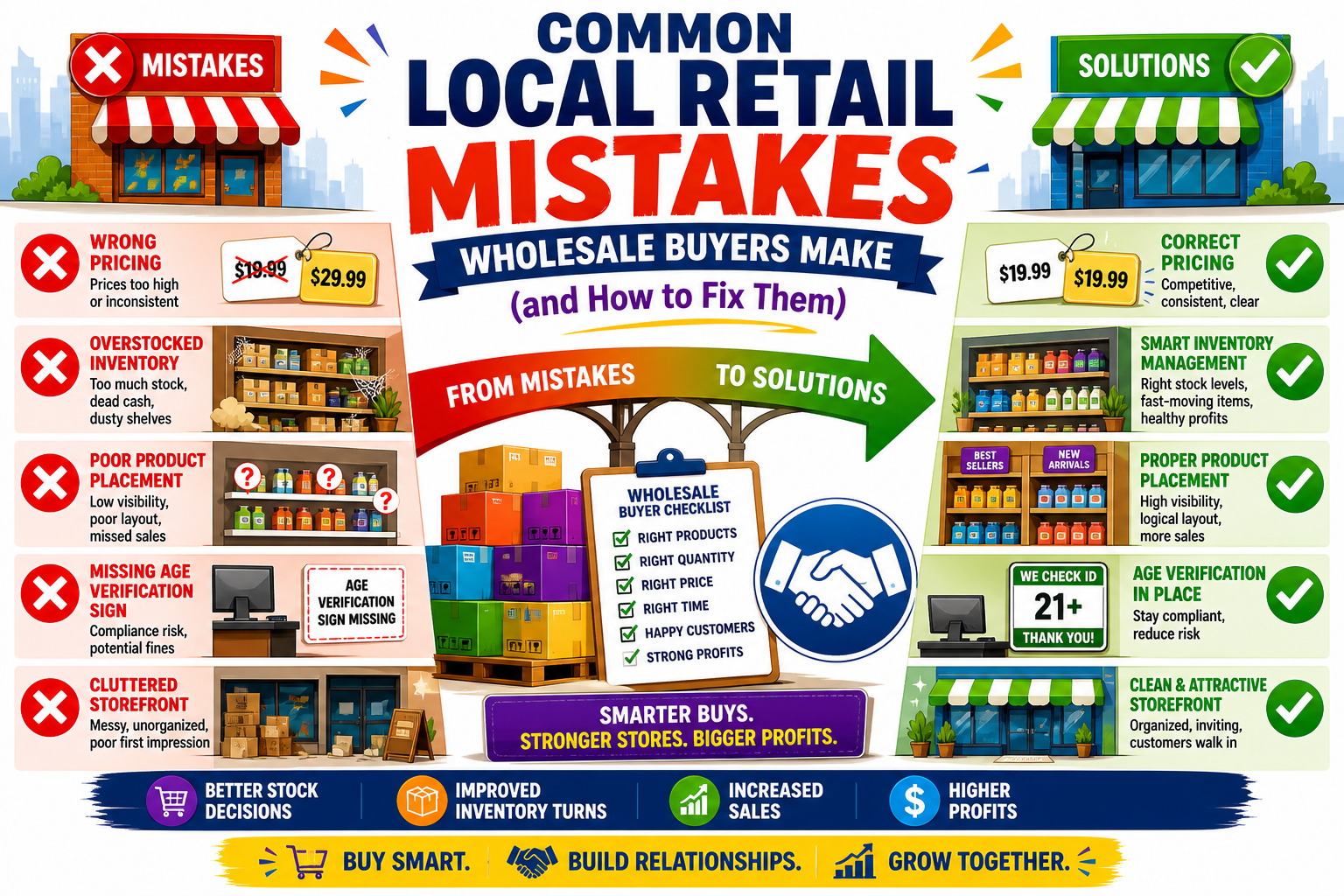
For more on this topic, check out our guide on common local retail mistakes wholesale buyers make and the California license map if you're on the West Coast. And don't forget to join the Windbar Community to ask questions and learn from other retailers.
Stay safe out there, and happy selling.
This article is for educational purposes only and does not constitute legal advice. Always consult with a qualified professional for guidance on your specific situation.
In this topic cluster
- Local Retail articles
- How Dolly Parton Wrote 3,000 Songs: Her Method, Her Masterpieces, and the Stories Behind Them
- California Vape Retail License Map: How E-Commerce Sellers Can Verify Local Rules
- Common Local Retail Mistakes Wholesale Buyers Make (and How to Fix Them)
Related Windbar Resources
- Windbar Community — Connect with other retailers to share insights and learn from their experiences.