
Why does this happen?
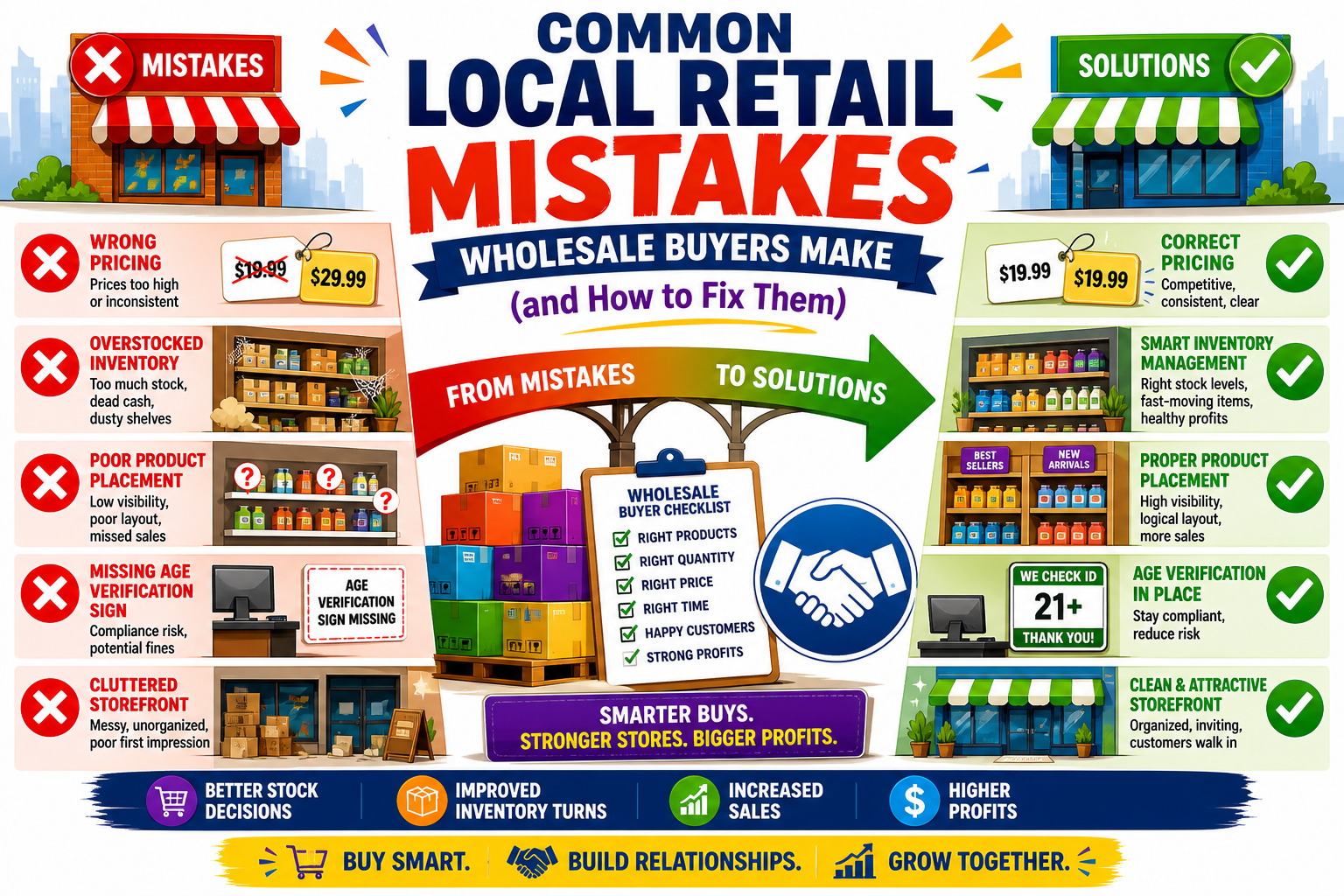
Every shop owner has that shelf of dusty devices they thought would fly. It's not because you're bad at this. It's because buying wholesale is a different skill than running a storefront. You're making calls weeks before you see real customer behavior. And when you're juggling vendor reps, seasonal trends, and cash flow, it's easy to fall into the same traps everyone else does.
Early-life issues
You just took delivery. Everything looks great in the box. But how did it get to you? Shipping delays, sitting in a hot warehouse, or rough handling can all shorten a device's life before it even hits your shelf.
Check the packaging for damage. Toss anything that looks crushed or damp. And don't just set boxes in the sun near your front window. Heat and humidity are the enemies of vape hardware. Store devices in a cool, dry place, ideally between 60-75°F. If your shop gets warm in summer, invest in a small climate-controlled storage area.
Another early mistake: not tracking lot numbers or expiration dates. Yes, vape hardware has a shelf life, especially batteries and coils. Set up a simple log so you know what came in and when. That way you can rotate stock and avoid selling stale product.
Mid-life wear signs
You've had the stock for a few weeks. Now you start seeing patterns. Some devices sell fast, others sit. This is when you should be paying attention to your sales data.
Look at your point-of-sale reports. Which models are repeat purchases? Which ones only sold because you discounted them? That's your signal. If something isn't moving at full price after a month, it's not going to. Cut your losses and don't reorder.
Also watch for customer complaints. If a specific device keeps coming back with issues—leaking, battery problems, charging port failures—that's a red flag. It might be a bad batch, or the product just isn't reliable. Either way, stop promoting it and talk to your vendor about a return or credit.
End-of-life signals
Eventually, every product line reaches its end. Maybe the manufacturer discontinues it. Maybe your customers have moved on. Or maybe you're sitting on a pile of devices that just won't move.
Here's how to know it's time to stop ordering: you've had the same stock for over 90 days, you've marked it down twice, and it's still not selling. At that point, you're not making money. You're just paying storage costs.
Do a clear-out sale if you can, or bundle slow movers with popular items. But after that, let it go. Don't reorder out of loyalty to a product that your market has already voted against.
Repair vs replace math
When a device comes back from a customer, you have a choice: repair or replace. For most disposable-style products, repair isn't worth it. The cost of labor and parts usually exceeds the price of a new unit. And if you're dealing with a sealed device, opening it can void any warranty and create liability.
Instead, have a clear return policy that covers manufacturer defects. If the device fails within a reasonable period, replace it. If it's customer damage, that's a different conversation. But don't get into the habit of repairing things that are designed to be thrown away. It's not worth your time.
How to dispose / recycle responsibly
When you do write off dead stock, don't just toss it in the trash. Vape devices contain lithium batteries and electronic components. Many local municipalities have specific rules for e-waste and battery disposal.
Check with your local waste authority about battery recycling programs. Some manufacturers have take-back programs. Also, never throw devices into regular recycling bins—they can cause fires at recycling facilities.
If you're unsure, call your local fire department's environmental line or search for 'battery recycling near me.' It's a small step that keeps you compliant and shows your customers you care about safety.
FAQ
What's the biggest mistake wholesale buyers make for local vape shops?
Overstocking based on what's trendy rather than what your customers actually buy. That ties up cash and leaves you with unsold inventory.
How do I know which devices to order for my shop?
Look at your sales reports from the last few months. What are your repeat buyers purchasing? Stick to those items and only test new ones in small batches.
Do I need to verify local retail license requirements before buying wholesale?
Yes. Requirements vary by state and even by city. Check with your local licensing board and keep records. Our public data guide can help you start.
Related Reading
For more on staying compliant, see our guide on How to Verify Retail License Requirement Maps for Vape Shops. It walks you through the public data sources you need.
And if you want to connect with other shop owners who've been through this, the Windbar Community is a good place to ask questions and share what's working.
Note: This article is for educational purposes and does not replace local legal advice. Always check your local regulations before making business decisions.
Replace FAQs
Q: What's the biggest mistake wholesale buyers make for local vape shops?
Overstocking based on what's trendy rather than what your customers actually buy. That ties up cash and leaves you with unsold inventory.
Q: How do I know which devices to order for my shop?
Look at your sales reports from the last few months. What are your repeat buyers purchasing? Stick to those items and only test new ones in small batches.
Q: Do I need to verify local retail license requirements before buying wholesale?
Yes. Requirements vary by state and even by city. Check with your local licensing board and keep records. Our public data guide can help you start.
Replace timing
- Wholesale buyers in local retail often repeat the same costly errors: ordering too much of unproven stock, neglecting license checks, and mishandling product storage. By using real sales data, verifying local rules, and following storage best practices, they can avoid most of these pitfalls and run a healthier shop.
- Use sales data to guide stocking decisions—don't just chase trends.
- Verify local retail license requirements before placing orders.
- Store devices correctly to avoid damage from heat or humidity.
- Rotate stock FIFO (first in, first out) to keep products fresh.
- Train staff to spot and report issues early.