

Daily (30 seconds)
Spring mornings can be chaotic, but your matcha ritual shouldn't add to that. If you're keeping things minimal, you only need three things: your BrewNova ceremonial matcha, a bowl, and a whisk.
Start by heating water to about 75-80°C. If you don't have a thermometer, let boiling water sit for a minute. That's the sweet spot—hot enough to extract flavor, cool enough not to scorch the leaves.
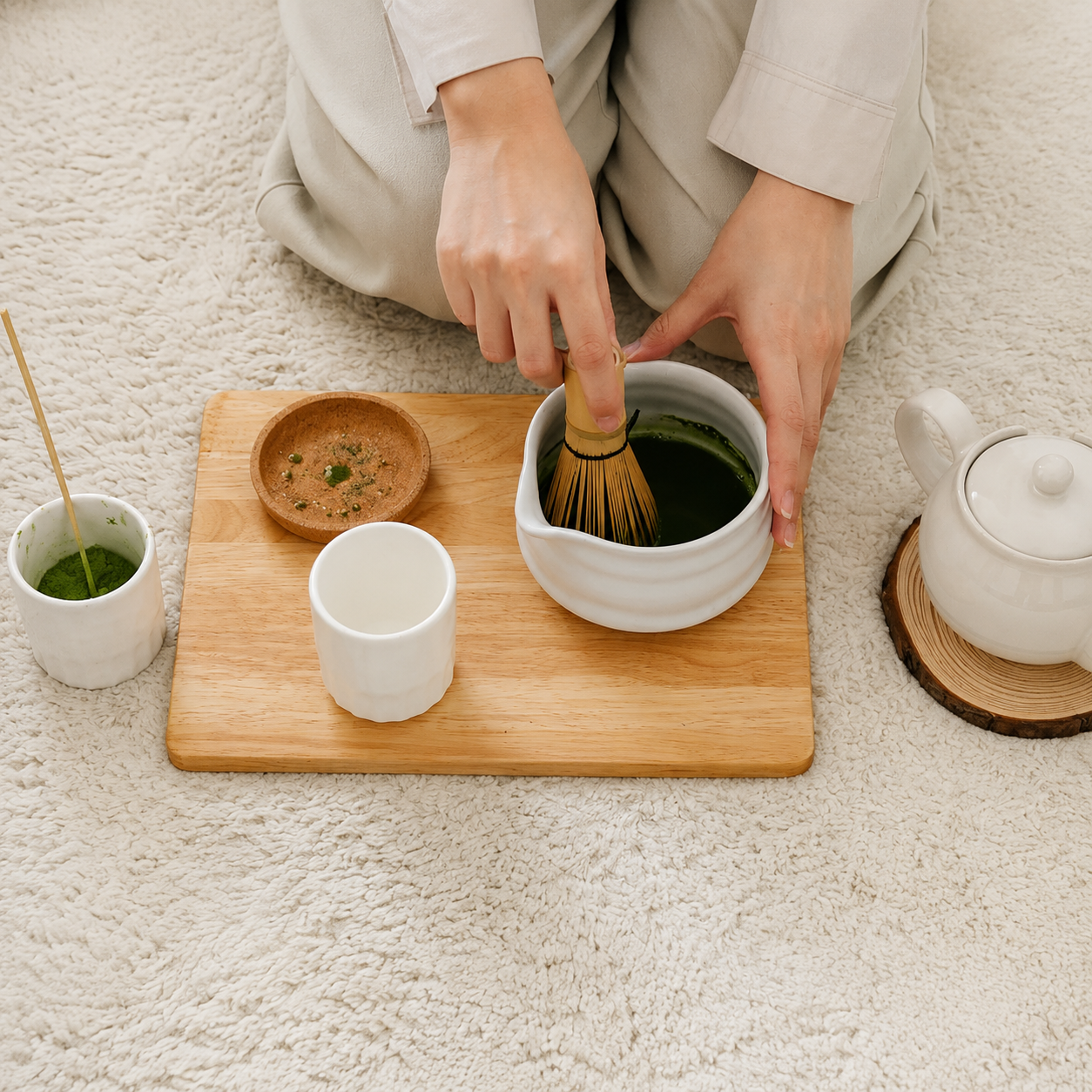
Measure out 2 grams of matcha (roughly half a teaspoon). If you're skipping the scale, that's fine—just be consistent. Add a splash of water and whisk in an M or W motion for 15-20 seconds. You're looking for a uniform foam, not a milk-frother explosion.
That's it. No sifting needed every day if you store your matcha properly. Your daily cup is done before your kettle cools down.
Weekly
Once a week, take a moment to sift your matcha. This is the step most people skip, and it's the one that makes the biggest difference. Clumps form even in a good airtight tin, especially as the weather warms. A fine-mesh strainer costs $5 and takes ten seconds.
While you're at it, check your whisk. If the tines have splayed outward, soak it in warm water for a minute to help them spring back. This keeps your foam consistent and your whisk lasting longer.
Don't overthink it. This is a maintenance ritual, not a chore. If you're drinking matcha daily, this weekly reset prevents the little annoyances that make you reach for a coffee shop.
Monthly
Once a month, give your tools a real look. Rinse your bowl and whisk with warm water—no soap, it'll strip the bamboo. Check for any cracks in the bowl or loose tines.
If you're using a tin, wipe the rim and lid. Humidity is the enemy of matcha, and spring showers can sneak in moisture. A dry cloth is enough.
This is also a good time to assess your stash. If you're down to the last few grams, order a fresh bag so you're never stuck with stale powder. Matcha is best within a month of opening, so keep the rotation moving.
Skip-safe items
Not everything in a matcha kit is essential. Here's what you can skip without sacrificing quality:
- Bamboo scoop (chashaku): A regular teaspoon works fine. The scoop is just for tradition.
- Electric frother: It's faster, but it also over-aerates and can make a bitter cup. Hand whisking is more forgiving.
- Scale: If you're consistent with your spoon, you'll be close enough. Only buy a scale if you're chasing exactness.
- Sifter: You can skip daily sifting if you store your matcha airtight. Weekly is enough.
The point is to strip away the extra gear and keep the ritual simple. You'll enjoy it more, and your wallet will thank you.
Signs you are under-maintaining
How do you know if you've let things slide? Here are the warning signs:
- Your matcha tastes flat or a bit bitter—likely old powder or water that's too hot.
- The foam is weak or disappears quickly—your whisk may be splayed or your water temp is off.
- There are clumps in the bottom of your bowl—you're skipping the sifting too often.
- Your whisk smells musty—it's time to soak and air-dry it.
If any of these sound familiar, don't panic. The fix is usually just one of the monthly checks above. Adjust your routine and you'll be back to a clean cup by tomorrow.
A quick note: this is about brewing technique, not health claims. Matcha contains caffeine, so enjoy it in moderation. If you're sensitive, consider a smaller serving or a later-afternoon cutoff.
Calendar gist
- Brewing ceremonial matcha doesn't require a cabinet full of tools. A minimalist spring routine comes down to three touches: daily whisking at the right temperature, a weekly sift of your powder, and a monthly check of your chasen. The goal is consistent flavor with less clutter—you'll get a smoother cup without the extra gear.
- Use 2g (about half a teaspoon) of ceremonial matcha per 60-70ml of water at 75-80°C (167-176°F).
- Whisk in an M or W motion for 15-20 seconds—no need for a fancy electric frother.
- Sift your matcha weekly to prevent clumps and keep the powder fresh.
- Check your chasen monthly for spreading tines; soak in warm water if they splay.
- You can skip the bamboo scoop and scale if you're comfortable with a teaspoon—just be consistent.
Sources & Further Reading
- Matcha Source — Provides general guidance on matcha brewing temperatures and ratios.
Cadence FAQs
Q: Do I need a bamboo whisk to brew ceremonial matcha?
Not strictly, but a bamboo chasen is the easiest way to get a smooth, frothy cup without lumps. If you don't have one, a small kitchen whisk works in a pinch. Just whisk in a zigzag motion instead of circles.
Q: Can I use tap water for matcha?
Yes, but filtered or bottled water is better. Hard tap water can add off-flavors. Heat it to just below boiling—around 75-80°C—and wait a minute after boiling to let it cool.
Q: How do I store my matcha for the spring?
Keep it in an airtight container in a cool, dark place, away from sunlight and strong odors. Avoid the fridge unless your kitchen runs hot—condensation can degrade the powder.