
Home baseline
Let's be honest: most matcha guides make this sound like a chemistry lab. But the baseline for a solid ceremonial bowl is just three things: good powder, water at the right temperature, and a whisking motion that doesn't beat the life out of it.
Start with water at 175°F. Boiling water is the fastest way to bitter, flat-tasting matcha. If you don't have a thermometer, let water sit for two minutes after boiling. That's the rule I give everyone who asks.
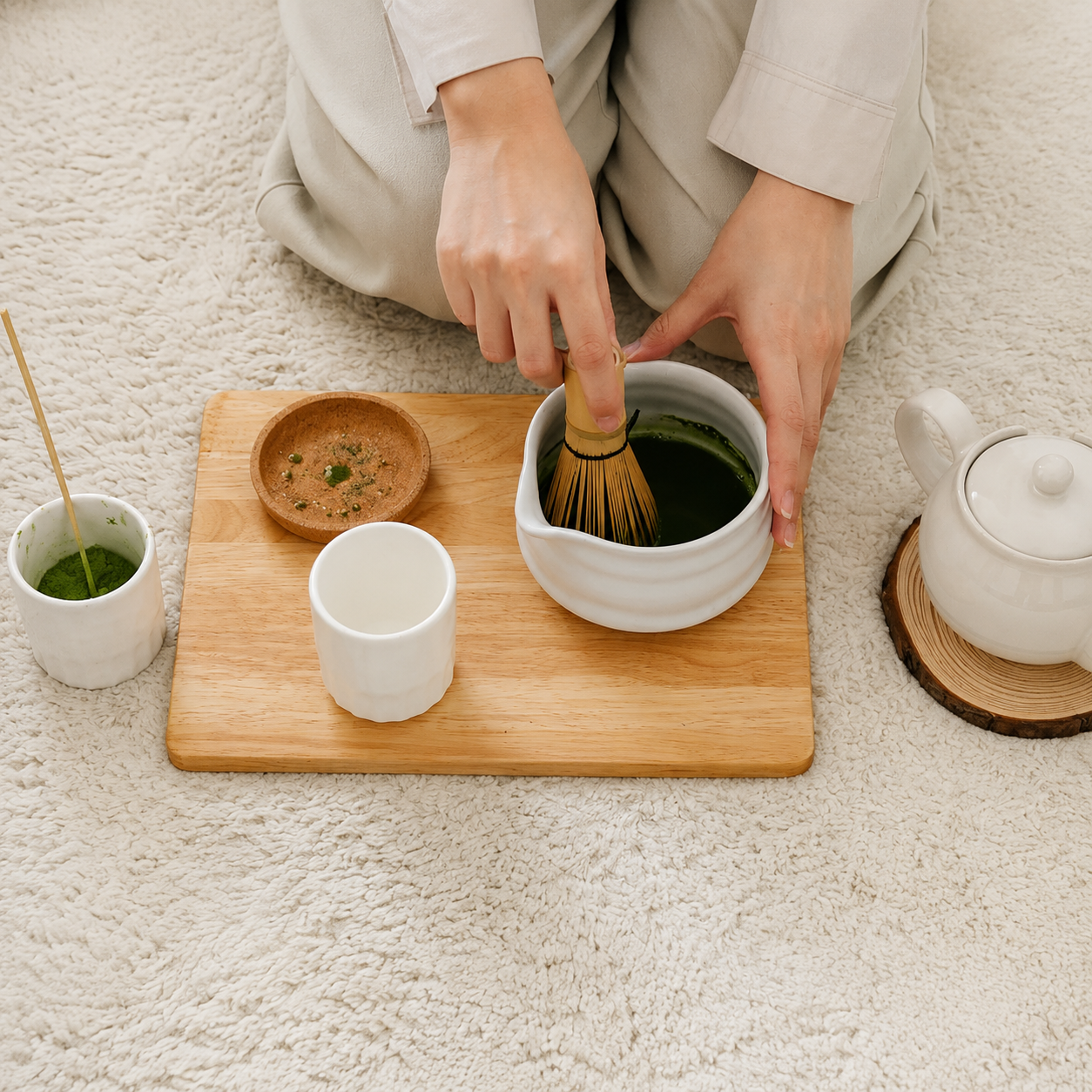
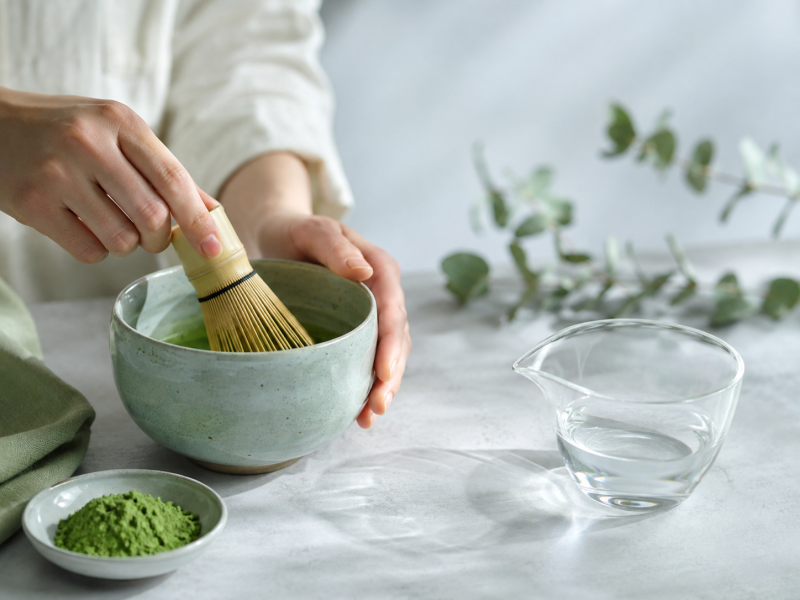
For the powder, stick to a 2-gram scoop (about half a teaspoon) to 70 ml of water. That's roughly a 1:35 ratio, and it gives you a balanced bowl—not too thick, not too watery. If you're using a chawan (matcha bowl), fill it about a third full. If you're using a regular mug, that's fine too. The bowl shape helps with whisking, but it's not a dealbreaker.
Whisk in a W or M motion, not circles. Circles create clumps and uneven foam. You want the whisk to move through the mixture like you're drawing a zigzag on a chalkboard. Fifteen to twenty seconds is usually enough. You're looking for a fine, creamy foam on top—not a soapy froth.
That's it. That's the baseline. You can stop here and have a genuinely good cup.
Workday mode
During the week, you don't always have time for a sit-down bowl. Here's the shortcut without sacrificing quality: make a matcha shot.
Use the same 2 grams, but only 50 ml of water. Whisk it into a paste first, then top with hot water or milk. This gives you a concentrated base that mixes well with anything. It's not ceremonial in the traditional sense, but it keeps the flavor clean and fast.
Another workday tip: prep your tools the night before. Rinse your whisk and bowl the evening prior, so they're ready to go. If you're commuting, BrewNova's ceremonial grade tins fit easily in a bag, and you can whisk in a wide-mouth thermos lid in a pinch. Just remember to keep the water under 175°F.
The key is to not overcomplicate it. Five minutes from kettle to cup is realistic, and you get the same bright flavor that a longer session would give you.
Travel mode
Traveling with matcha tends to fall into two camps: the over-packers who bring a full kit, and the under-packers who end up with a clumpy mess. Both are avoidable.
For a weekend trip, you need three things: a small tin of BrewNova, a portable whisk (the electric ones work better than the manual kind for travel), and a way to heat water—even a hotel coffee maker works if you're careful with temperature.
Here's the travel hack: pre-sift your matcha into a single-serving packet. A small paper envelope or a pill organizer works. When you're ready, pour the powder into a cup, add a splash of hot water (about 170°F), whisk to a paste, then add the rest. This avoids the dreaded clump that forms when you pour water directly onto unsifted powder.
If you're on a plane, you can't bring boiling water, but most flight attendants will give you hot water from the coffee maker. It's usually around 170°F, which is perfect. Don't bother with the plastic stirrer—just use a fork or a chopstick to whisk. It's not pretty, but it works.
Hot / cold weather tweaks
Spring is when I adjust my water temperature down a notch. The leaves from the first harvest tend to be more delicate, so 170°F instead of 175°F brings out a sweeter, more vegetal note without any astringency. It's a subtle change, but if you're doing a side-by-side, you'll notice the difference.
For iced matcha, don't just pour hot matcha over ice—that dilutes it. Instead, whisk the matcha with half the water (cold) until frothy, then top with cold water or milk and ice. The cold water preserves the foam, and you get a creamier texture. I've seen people skip the whisk entirely and shake it in a jar—that works too, but you'll get a less stable foam.
If it's a hot day, you can also add a few ice cubes to the bowl before whisking. That cools the water quickly, but be careful: it makes the whisking harder. I prefer the two-step method: whisk at room temperature, then transfer to a glass with ice.
Reset to baseline
After weeks of cold brews and travel shortcuts, it's worth going back to the classic bowl. This is your reset ritual: take ten minutes, use the proper chawan, sift your powder, and whisk with intention.
Why bother? Because the discipline of the basic routine teaches you to notice when you're rushing. The foam tells you if your water was too hot (large bubbles) or your whisking was too aggressive (thin, watery foam). After a few resets, you'll know exactly where to adjust.
Here's a simple reset routine: warm the bowl with hot water, empty it, add your sifted matcha, pour in 70 ml of water at 170°F, whisk in a W motion for 20 seconds, and drink without sugar or milk. That's the pure experience. If it tastes bitter, your water was too hot. If it's thin, you whisked too short. If it's clumpy, you didn't sift.
This is also the moment to check your gear. A worn-out whisk won't create the same foam, and a chipped bowl can affect the pour. Replace what's worn—it's a small cost for a better daily cup.
That's the full cycle: baseline, workday, travel, seasonal tweaks, and reset. You don't need a cabinet full of tools to drink good ceremonial matcha. You need a bowl, a whisk, and the discipline to get the water right. The rest is just distraction.