
The Repair Bucket: Free Tweaks to Try First
You don't need to buy anything to improve your froth. The most common culprits are easy to fix with what you already have.
Water temperature is the biggest offender. If your water is boiling or even just above 175°F, you're scalding the matcha. That kills the delicate compounds that create foam. Let your water sit for a couple of minutes after boiling, or use a thermometer if you have one. Aim for 160–170°F—that's the sweet spot.
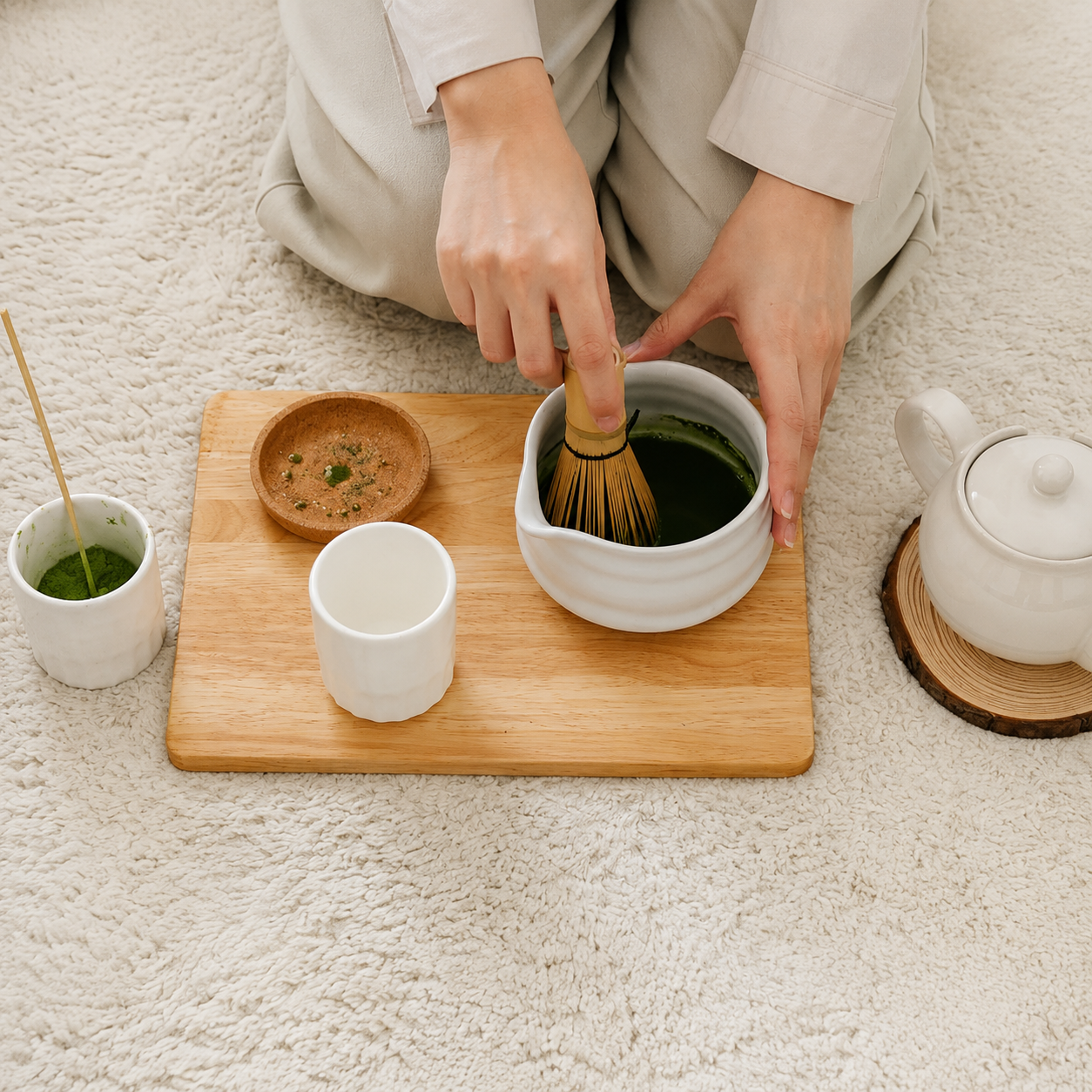
Whisking technique matters more than you think. Circles create a vortex that spins the matcha around but doesn't incorporate air. Instead, move your whisk in a rapid W or zigzag pattern. This pulls air into the liquid and builds that frothy layer. Keep it up for 30–45 seconds, until you see a creamy foam on top.
Sift before you whisk. Clumps in matcha powder won't froth properly—they just sink. Use a small strainer to sift your matcha into the bowl first. This takes ten seconds and makes a world of difference.
Check your bowl shape. A wide, shallow bowl gives you room to whisk effectively. If you're using a narrow cup, the whisk can't move freely. That doesn't mean you need a fancy chawan—just something wider than a typical mug.
The Replace Bucket: When Your Gear or Matcha Is the Problem
If the free tweaks don't help, you might be working with something that needs upgrading. But that doesn't mean you need to splurge.
Your matcha might be old or low-quality. Ceremonial matcha that's been opened for more than two months loses its vibrancy and frothing ability. Oxygen and light degrade it. If your matcha looks dull or smells grassy rather than sweet, it's likely past its prime. Consider buying smaller tins so you finish them before they go stale.
Your whisk might not be up to the task. A bamboo chasen with many flexible tines is ideal, but a basic kitchen whisk can work too. If your whisk is too stiff or has too few tines, you'll struggle to get froth. You can buy a decent bamboo whisk for a few dollars, or try an electric milk frother—even a cheap one can whip up matcha foam quickly.
Your water might be too hard. Mineral-heavy water can affect froth stability. If you have hard tap water, try filtered or bottled water. It's not a guarantee, but it can make a difference.
The Retire Bucket: When to Stop and Start Fresh
Sometimes, no amount of tweaking will fix the problem. Here's when to accept the loss and move on.
Your matcha tastes bitter or flat. If every cup comes out bitter or just 'meh' despite your best technique, the powder itself is likely poor quality or too old. It's time to toss it and buy fresh. Reputable brands often sell sample sizes, so you can test without committing to a big tin.
Your whisk is falling apart. If your bamboo chasen has broken tines or is starting to smell musty, replace it. A worn whisk can't aerate properly. They're inexpensive, so it's not a big investment.
You're using culinary-grade matcha for ceremonial purposes. Culinary matcha is more bitter and less vibrant—it's meant for baking and lattes, not traditional tea ceremony. If that's what you're using, you'll never get that sweet, frothy top. Save it for smoothies and switch to ceremonial for drinking straight.
Decision Worksheet: Repair, Replace, or Retire
Use this quick checklist to decide your next move.
- Repair: Water temp too high? Whisking in circles? Clumps? Sifting? → All free fixes. Try them first.
- Replace: Matcha older than 2 months? Whisk broken or too stiff? → Invest in a fresh small tin or a new whisk (under $10).
- Retire: Matcha tastes bitter, looks dull, or is culinary grade? → Let it go and buy ceremonial-grade from a trusted source.
If you're still unsure, ask yourself: Is the problem consistent, or does it happen sometimes? If it's intermittent, it's likely your technique or water temp that day. If it's every time, the powder or equipment is the weak link.
The Emotional Sunk-Cost Trap
It's easy to keep using that $40 tin of matcha even when it's clearly past its prime, just because you paid for it. But here's the thing: you're not saving money by drinking bad matcha. You're wasting good effort on a mediocre cup. Buying a smaller, fresher tin might cost a bit more upfront, but it'll taste better and froth better, and you'll actually enjoy your ritual.
Same goes for gear. If your whisk is falling apart, you don't need a $50 ceremonial set—a simple bamboo whisk and a decent bowl are enough. You're not being wasteful; you're investing in your daily moment of calm.
The Bottom Line
Weak froth is usually a technique issue, not a budget issue. Try the free fixes first. If that doesn't work, a small upgrade to fresher matcha or a better whisk will likely do the trick. And if all else fails, it's okay to retire that old tin and start clean. Your taste buds will thank you.
For more brewing tips, check out our related guides on froth fixes and matcha quality signals. And if you're looking for a reliable ceremonial matcha that froths beautifully, explore the BrewNova Matcha collection—we've done the sourcing so you can enjoy the ritual without the guesswork.
Happy whisking!
Sources & Further Reading
- U.S. National Library of Medicine — General reference for matcha preparation and health aspects.
Bucket FAQs
Q: Why does my ceremonial matcha have no foam?
The most common reasons are water that's too hot (over 175°F), whisking in circles instead of a W-shape, or matcha that's been sitting around and lost its vibrancy. Try cooling your water, sifting your powder, and whisking vigorously in a zigzag for 30–45 seconds.
Q: Can I get good froth with cheap matcha?
Yes, to a point. Even budget-friendly ceremonial matcha can froth decently if your technique is right. But if your matcha is very old or low-quality (more culinary-grade), you'll get less froth. Focus on technique first, then consider upgrading your matcha source.
Q: Is a bamboo whisk necessary for matcha froth?
Not strictly—a regular kitchen whisk or a small electric frother can work. But a bamboo chasen (whisk) is designed with many tines to aerate matcha efficiently. If you're on a tight budget, a standard whisk can still produce froth, just maybe a bit less.