
Why Your Siphon Coffee Tastes Sour
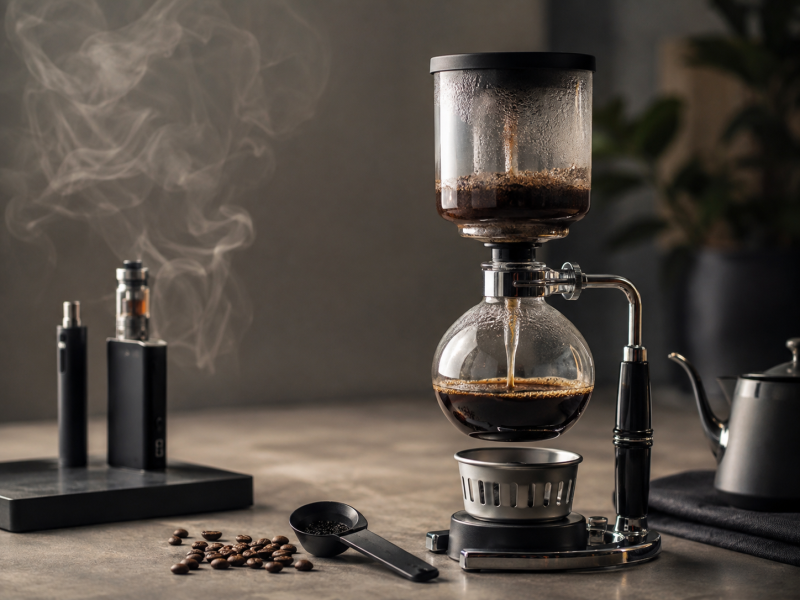
So you got a siphon brewer because it looks cool and makes a clean cup. But the first few batches taste sharp, almost like lemon juice with a coffee background. Don't toss the brewer. Sour siphon coffee is a fixable problem, and it's usually simpler than you think.
The culprit is under-extraction. That's a fancy way of saying the water didn't pull enough flavor out of the grounds. When that happens, the bright, acidic notes dominate, and you get that sour punch. It's not a bad bean problem—it's a technique problem.
Here's how to fix it, step by step.
Step 1: Grind Finer (Most Common Fix)
If your coffee tastes sour, the first thing to check is your grind size. Siphon coffee needs a medium-fine grind, something like table salt. If you're using pre-ground coffee or a coarse grind, the water flows through too fast and doesn't extract enough.
If you have a burr grinder, set it a notch or two finer than you would for a pour-over. If you don't have a grinder, get one—it makes a bigger difference than any other upgrade.
Try that first. It solves most sourness issues.
Step 2: Check Your Brew Time
Siphon brewing looks like a science experiment, but the timing matters. Once the water rises to the top chamber, you need to let the coffee steep for 60 to 90 seconds. If you cut it short, you're under-extracting.
Use a timer or your phone. It's easy to get distracted watching the water bubble. Set a timer for 75 seconds and start it when the water has fully risen.
Step 3: Water Temperature Matters
Siphon brewers get hot, but not all of them get hot enough. The water should be between 195-205°F (90-96°C). If you're using a gas stove, you might be fine. If you're using a halogen or butane burner, check the flame.
A quick way to tell: if the water is boiling violently, it's too hot. You want a gentle simmer. If you have a thermometer, use it. If not, let the water come to a boil, then wait a few seconds before adding the coffee.
Step 4: Adjust Your Coffee-to-Water Ratio
If you're using too little coffee, you'll get a weak, sour cup. A standard ratio is 1:15 (coffee to water). For a 400ml brew, that's about 27 grams of coffee. If you're using a scoop, that's roughly 2.5 tablespoons.
Weigh your coffee if you can. It's the only way to be consistent.
When to Replace vs. Repair
Siphon brewers are pretty durable. If your coffee still tastes sour after trying all the steps above, check the filter. A clogged or worn cloth filter can slow the drawdown, which affects extraction. Replace the filter if it looks stained or torn.
If the brewer itself is damaged—cracked glass or a warped gasket—replace it. Don't try to repair a cracked chamber; it's not safe.
Prevention Tips for Next Time
- Keep a log of your brews: grind size, time, ratio, and how it tasted. It helps you dial in faster.
- Buy fresh beans. Stale coffee extracts poorly and can taste sour or flat.
- Clean your siphon after every use. Residue can affect flavor.
Key Takeaways
- Sour siphon coffee is a sign of under-extraction, meaning the water didn't pull enough flavor from the grounds.
- The most common fix is to grind your coffee finer, which increases surface area and extraction.
- Check your brew time: siphon coffee should steep for 60-90 seconds after the water rises to the top chamber.
- Water temperature matters—aim for 195-205°F (90-96°C), which is just below boiling.
- Adjust your coffee-to-water ratio: starting with 1:15 (coffee to water) gives a balanced cup.
FAQ
Q: Why does my siphon coffee taste sour?
A: Sourness usually means your coffee is under-extracted. That happens when the water doesn't dissolve enough of the coffee's flavors, often because the grind is too coarse, the brew time is too short, or the water isn't hot enough.
Q: How do I fix sour siphon coffee?
A: Start by grinding your coffee finer—like table salt instead of sea salt. Then make sure your brew time is at least 60 seconds after the water rises. Also, check that your water is between 195-205°F (90-96°C). Change one thing at a time and taste as you go.
Q: What is the best grind size for siphon coffee?
A: Medium-fine is a good starting point, similar to sand or table salt. If it's too coarse, you'll get sour, weak coffee. If it's too fine, you might get bitterness.
Q: How long should siphon coffee brew?
A: After the water rises to the top chamber, let the coffee steep for 60-90 seconds. Any shorter and you risk sourness; any longer and it could get bitter.
Q: Can the coffee-to-water ratio affect sourness?
A: Yes. If you use too little coffee relative to water, the brew will be weak and sour. A standard ratio is 1:15 (one part coffee to 15 parts water). For a 400ml brew, that's about 27g of coffee.
Sources & Further Reading
- National Coffee Association: https://www.ncausa.org/ - Brewing guides and ratio recommendations.
- Specialty Coffee Association: https://sca.coffee/ - Brewing standards and extraction science.
Disclaimer: This article is for educational purposes. Always follow the manufacturer's instructions for your siphon brewer and ensure you're using it safely.
Frequently Asked Questions
Q: Why does my siphon coffee taste sour?
Sourness usually means your coffee is under-extracted. That happens when the water doesn't dissolve enough of the coffee's flavors, often because the grind is too coarse, the brew time is too short, or the water isn't hot enough.
Q: How do I fix sour siphon coffee?
Start by grinding your coffee finer—like table salt instead of sea salt. Then make sure your brew time is at least 60 seconds after the water rises. Also, check that your water is between 195-205°F (90-96°C). Change one thing at a time and taste as you go.
Q: What is the best grind size for siphon coffee?
Medium-fine is a good starting point, similar to sand or table salt. If it's too coarse, you'll get sour, weak coffee. If it's too fine, you might get bitterness.
Q: How long should siphon coffee brew?
After the water rises to the top chamber, let the coffee steep for 60-90 seconds. Any shorter and you risk sourness; any longer and it could get bitter.
Q: Can the coffee-to-water ratio affect sourness?
Yes. If you use too little coffee relative to water, the brew will be weak and sour. A standard ratio is 1:15 (one part coffee to 15 parts water). For a 400ml brew, that's about 27g of coffee.