
Case setup
It's Sunday morning. You pull out your premium culinary matcha, the one you saved for the weekend, and whisk up a bowl. First sip is fine, but by the second, you notice it: that sandy, gritty texture that coats your tongue. It's not the bitter, grassy edge you expect from matcha—it's just gritty. You start to wonder if you wasted money on a bad batch.
Here's the thing: premium culinary matcha can feel gritty even when it's high quality. The problem isn't always the powder. It's how you're preparing it. Over the years, I've helped people troubleshoot this exact issue, and the fix is usually simpler than you think.
What was tried
Let's walk through what most people try first, and why it doesn't always work.
Whisking harder. You think, "Maybe I just need to whisk more." So you whisk furiously for a minute. The result? More bubbles, but the grit stays. That's because whisking harder doesn't break up clumps that are already stuck together. It just agitates them.
Using hotter water. Some folks think hotter water will dissolve the powder better. It doesn't. Boiling water actually makes matcha clump more, because the fine particles stick together when hit with high heat. Plus, it makes the matcha bitter.
Adding more matcha. If the texture is off, adding more powder seems logical—more flavor, maybe it'll smooth out. But it just makes the grit more noticeable.
None of these moves the needle. That's frustrating, because you want your weekend ritual to feel special, not like you're chewing sand.
What actually fixed it
The breakthrough came when I broke the process down into three simple steps. Each one addresses a specific cause of grittiness.
Step 1: Sift the matcha
This is the game-changer. Before you even heat the water, sift your matcha through a fine-mesh strainer into your bowl. You'll see it: tiny lumps that look like powder but are actually clumps. Sifting breaks them up before they hit water. Use a small whisk or spoon to push it through. Takes ten seconds, and it prevents most grittiness.
Step 2: Cool your water
Aim for about 175°F (80°C). If you don't have a thermometer, let boiling water sit for a minute or two. The cooler water doesn't shock the powder, so it disperses more evenly. This also avoids the bitter edge, which can mask the texture issue.
Step 3: Whisk properly
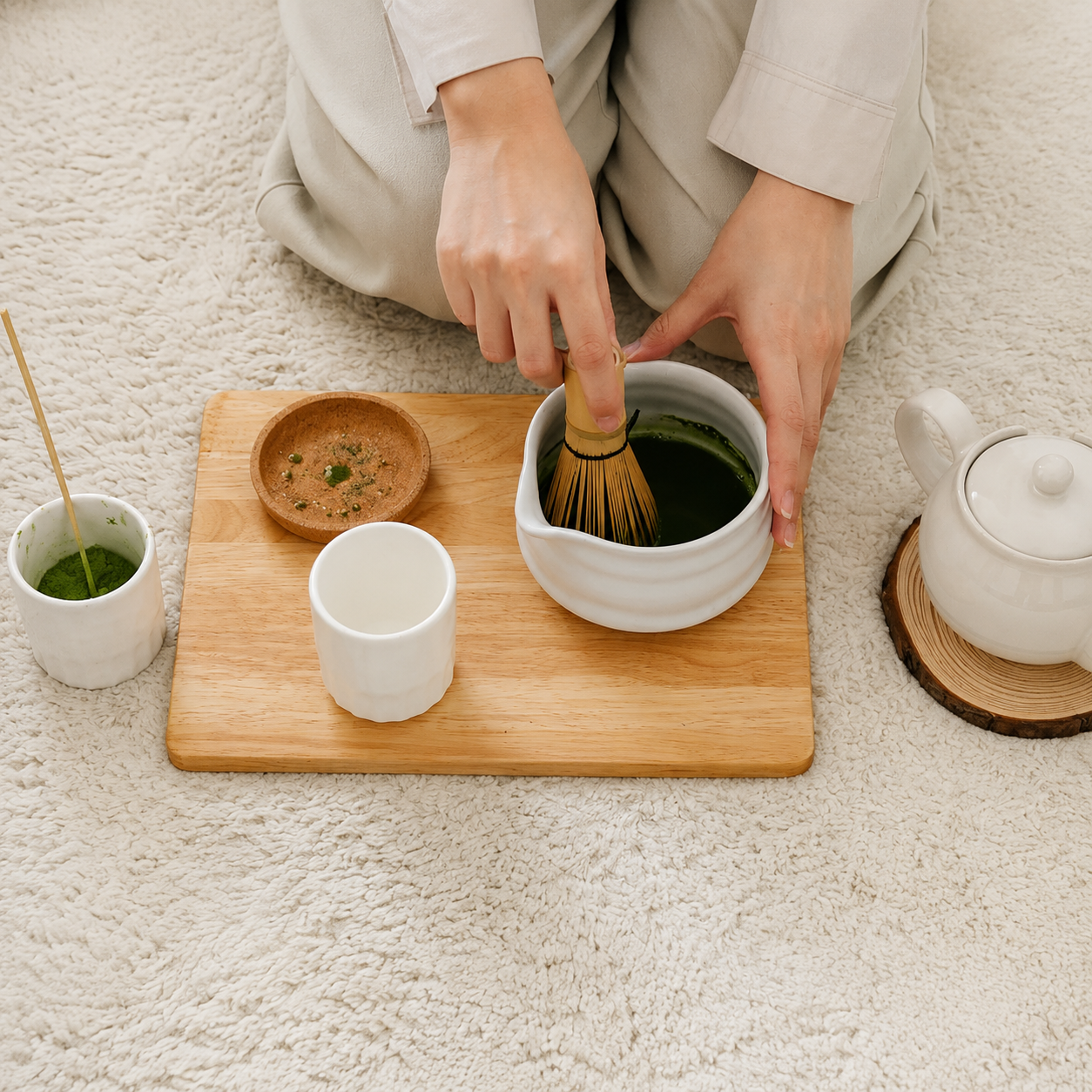
Use a bamboo chasen if you have one—it has dozens of fine tines that create a vigorous, even agitation. Whisk in a zigzag (W or M) motion, not a circular one. Go for at least 30 seconds, or until you see a fine froth on top. The movement breaks up any remaining clumps and emulsifies the matcha into the water.
That's it. Sift, cool water, proper whisking. When I did this, the grittiness vanished. The first cup was smooth, with a pleasant umami richness, and the weekend ritual felt worth it again.
Lessons transferable
These fixes aren't just for culinary matcha—they apply to any matcha you're drinking. But they're especially relevant for culinary grade because it's ground a bit coarser than ceremonial. That means it's more prone to clumping, but also more forgiving once you get the technique right.
Another thing: don't blame the powder right away. A lot of people assume premium culinary matcha is supposed to be gritty. It's not. It should be smooth, just with a slightly more robust flavor profile that works well in lattes or baking.
If you've tried all three steps and still feel grit, then check your whisk. A cheap bamboo whisk might have broken tines, or you might be using a fork (which won't cut it). One more thing: make sure your matcha is fresh. Old matcha loses its fine texture and can clump more.
What we would try sooner next time
Looking back, I'd sift first and skip the harder whisking. That's the fastest fix. But I'd also suggest experimenting with a bit more water if you're making a thin drink—sometimes a thicker consistency makes grit more noticeable. And if you're whisking by hand, consider a small electric frother; it can work in a pinch, though it won't give you the same control as a chasen.
One more tip: warm your bowl before whisking. A cold bowl can cause the matcha to stick and clump. Rinse your bowl with hot water and dry it before you start. It's a small step, but it helps.
Gritty matcha is a fixable problem. With the right technique, your weekend brew will be smooth, satisfying, and worth the extra minutes.
Case lessons
- Premium culinary matcha can feel gritty even when it's high quality. The most common culprit is insufficient sifting before whisking, which leaves clumps that never dissolve. Using water that's too hot or a whisk that doesn't create enough agitation also contributes. A few simple technique adjustments—sift, moderate temperature, thorough whisking—can transform the texture.
- Sift your matcha before whisking to break up clumps.
- Use water around 175°F (80°C)—boiling water makes it bitter and clumpy.
- Whisk in a zigzag motion for at least 30 seconds to get a smooth, frothy texture.
- If you're using a spoon or fork, switch to a bamboo chasen for better results.