
Case setup
You've got a beautiful tin of BrewNova Matcha, the ceremonial grade, all set to gift. The packaging is spot-on, the color in the tin is that deep, almost neon green. But when you brew a test cup, it comes out pale, almost yellowish. Panic sets in. You're about to gift something that looks like watered-down grass.
I've seen this happen a lot behind the counter. People come in, frustrated, thinking they bought a bad batch. Nine times out of ten, it's not the matcha—it's the brewing. Let's walk through what we tried and what fixed it.
What was tried
First, we checked the basics. The water. That's the usual suspect. Matcha is delicate. If your water is boiling, you're literally cooking the leaves. The chlorophyll breaks down, and you get a dull, brownish-green. We started with water straight off the boil—bad move. The matcha turned a sad, pale yellow.
Next, we looked at the whisking. If you're using a spoon or a fork, or even a whisk but in a circular motion, you're not getting the aeration that brings out the bright green. The powder needs to be suspended evenly, not clumped at the bottom. We tried a lazy whisk, and sure enough, the color was patchy and pale.
Then we considered the bowl. A shallow, wide bowl is ideal. If you're using a narrow mug, the powder doesn't disperse well. We tried a deep mug, and the color was off. Also, sifting the powder can help. Lumps don't dissolve, they just sit there, making the brew look uneven.
Finally, we looked at storage. If the tin has been open for a while or exposed to light, the matcha oxidizes. That dulls the color. We tested a fresh tin versus one that had been sitting on the shelf for a month—the difference was obvious. The older one was noticeably paler.
What actually fixed it
Here's what worked, in order:
- Water temperature. Let that boiling water sit for two to three minutes. You want it around 160–175°F. If you don't have a thermometer, a good rule is the water should be steaming, not bubbling. That alone brought the color back to a lively green.
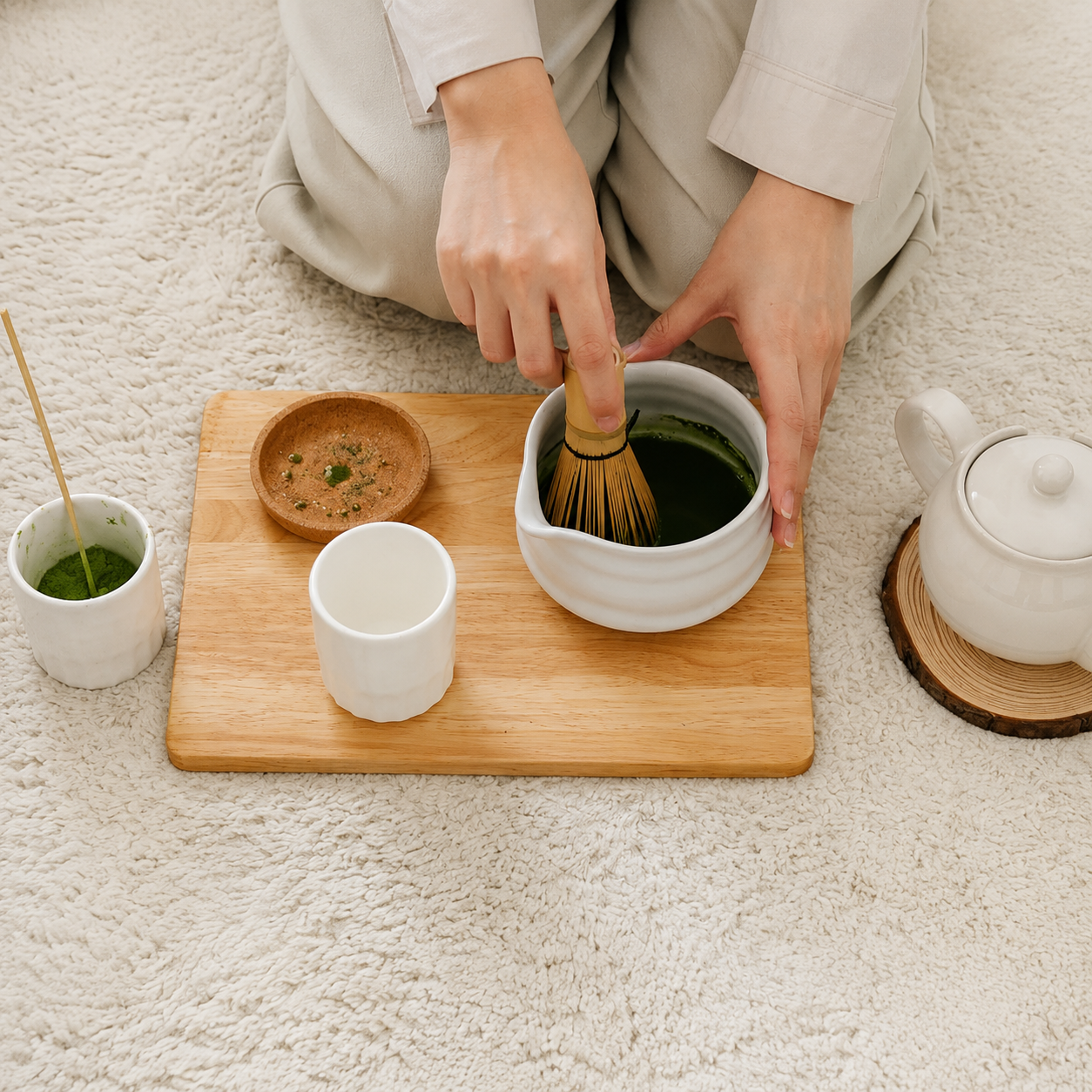
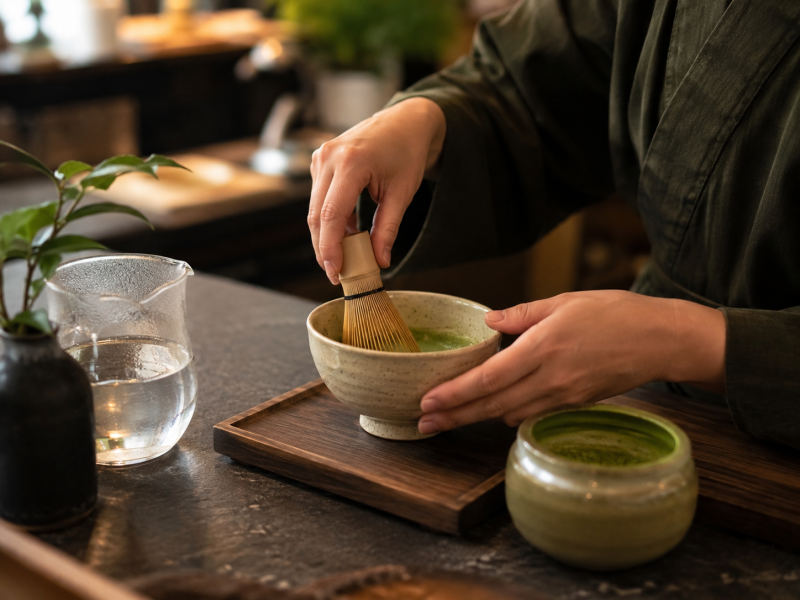
- Whisking technique. Use a bamboo whisk (chasen) if you have one, and whisk in a zigzag motion, back and forth, not circles. Do it briskly for about 15-20 seconds until you see a fine froth. This aerates the matcha and brightens the color.
- Sift the powder. Before whisking, push the matcha through a fine-mesh strainer. It takes ten seconds and prevents clumps. Clumps don't dissolve, they just sit there, making the brew look uneven.
- Use the right bowl. A wide, shallow bowl lets the whisk move freely. A mug works in a pinch, but you won't get the same froth or color.
- Freshness matters. If your matcha has been open for more than a month, it might be oxidized. For gifting, always open a fresh tin right before you brew. Store the rest in an airtight container, away from light and heat.
We also tried adjusting the ratio. Sometimes people add too much water. For ceremonial grade, you want about 2 grams (roughly half a teaspoon) to 60-70 ml of water. That's a concentrated shot. If you're making a larger cup, the color will naturally be lighter, but it should still be vibrant, not muddy.
Lessons transferable
What we learned here applies beyond just this one batch. For anyone gifting matcha, the color is a big deal. It's the first thing the recipient sees. But it's also a reflection of how they're going to brew it. If you're gifting a tin, consider including a little care card with the water temperature and whisking tips. It's a small touch that shows you care about the experience, not just the product.
Also, don't panic if the first cup isn't perfect. Brewing matcha is a skill. It takes a few tries to get the rhythm. The same tin that looks pale one day can be vibrant the next if you adjust your method.
What we would try sooner next time
If I were doing this over, I'd start with the water temperature immediately. It's the most common mistake, and it's the easiest fix. I'd also check the freshness of the tin before anything else. A quick look at the color of the powder in the tin—if it's already dull, it's probably oxidized, and no amount of whisking will fix that.
Another thing: when testing, use cold water to dissolve the matcha first. A little cold water mixed into a paste before adding hot water can help it dissolve more evenly, which also helps the color. We didn't try that until later, but it made a noticeable difference.
And if you're buying matcha specifically for gifting, go with a brand that seals it in a nitrogen-flushed tin. That preserves the color and freshness for longer. BrewNova's tins are like that, which is why they're a safe bet for a gift.
So, if your matcha looks pale, don't blame the powder. Look at your water, your whisk, and your bowl. Fix those, and you'll have a cup that looks as good as it tastes. And that's the kind of gift that lands.
Note: Matcha contains caffeine; enjoy it as part of a balanced lifestyle. If you're sensitive to caffeine, check with your healthcare provider.
Case lessons
- Pale ceremonial matcha is usually a brewing issue, not a quality one. Overheating water, skimpy whisking, or using the wrong bowl can dull the color. Fixing these steps restores that vibrant green, making your gift look as premium as it tastes.
- Water temperature above 175°F is the top culprit for pale matcha.
- Whisking in a zigzag motion, not circles, creates that frothy green.
- Matcha fades after opening—store it airtight and cool.