
Hard stops
Some habits will kill your graphic tee faster than a bad concert. If you're doing any of these, stop. Right now.
Never use fabric softener or dryer sheets. They leave a waxy film on the fabric that actually breaks down the ink over time. Same goes for bleach—even a little bit. That's a direct line to cracked, faded prints.
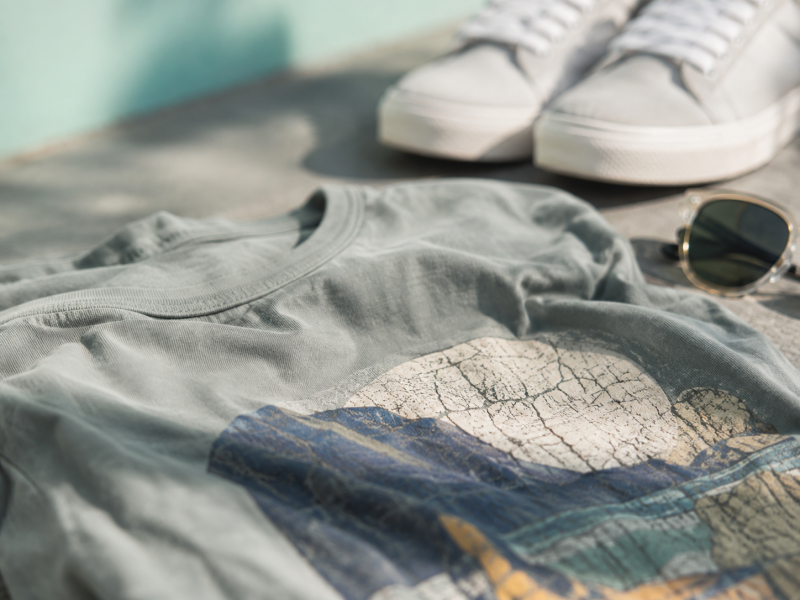
Don't crank the heat. Hot water in the wash and high heat in the dryer are the two biggest crack culprits. The ink expands, the cotton shrinks, and the print can't keep up. That's when you see those little spiderweb lines.
Skip the iron. If you're ironing over the print, you're literally melting the plastic film that holds the graphic. One pass and you'll have a shiny, cracked mess. If you must de-wrinkle, turn it inside out and use a pressing cloth.
Soft warnings
These aren't deal-breakers, but they're worth keeping in mind if you want your tee to last.
Washing too often. Every wash wears down the print a little. Unless it's actually dirty or sweaty, you can wear a tee a few times between washes. Airing it out overnight works wonders.
Rough fabrics. Zippers, buttons, or even a rough backpack strap can abrade the print over time. That's not a flaw—it's just physics. Be mindful when you're layering.
Low-quality ink. Sometimes the problem isn't you. If the print feels thick and plasticky, it's likely a cheaper vinyl. That'll crack no matter what you do. You can't fix it, but you can avoid it next time.
Common misuse patterns
Here's what 'normal' wear and tear really looks like, and what to do about it.
The dryer habit. You wash your tee, then toss it in the dryer on high because you're in a hurry. That's the #1 killer. The heat stresses the ink, and the tumbling creates friction. Over time, those micro-fractures become full-blown cracks.
The inside-out mistake. You've heard 'wash inside out' but you don't always do it. Actually, inside-out is the single best thing you can do. It keeps the print from rubbing against other clothes and the drum. Make it a habit—it takes two seconds.
The wrong detergent. Heavy-duty detergents with enzymes or optical brighteners can be harsh on prints. You don't need a special 'gentle' soap, but you do want something mild. Also, skip the bleach—even the color-safe kind.
Safer defaults
If you want your graphic tee to look good past the first season, here's your new routine.
Wash cold, always. Cold water is gentle on ink and prevents shrinking. Use a gentle or normal cycle—that's fine. Just keep the temperature down.
Turn it inside out. This is non-negotiable. It protects the print from friction and keeps it looking sharper for longer.
Air-dry flat or hang. The dryer is the enemy. Hang your tee on a hanger or lay it flat to dry. It takes longer, but it's the single biggest difference-maker. If you must use a dryer, use low heat and take it out while it's still slightly damp.
Use mild detergent. A basic liquid detergent without bleach or fabric softener is all you need. Avoid anything with 'whitening' or 'brightening' claims.
Store it right. Fold your tees rather than hanging them if the print is stiff. Hanging can stretch the fabric and put stress on the print. A drawer or shelf is better.
Where to verify rules
You don't have to take my word for it. Here's where you can check the official word.
- The care label on your tee. That little tag isn't just a suggestion—it's the manufacturer's recommendation. Follow it, and you'll avoid most problems.
- The FTC's care labeling rules. They require brands to put accurate care instructions on clothing. If you're curious, the FTC's website has the details.
- The American Cleaning Institute. They publish guidelines on laundry practices and how to read care labels.
A quick note on retiring a tee: once the print cracks enough that you can see the fabric underneath, it's not going to get better. The ink will keep flaking, and the cotton will fade. That's your cue to turn it into a cleaning rag, a quilt square, or just a keepsake. You've gotten your money's worth.
If you're shopping for a new tee and want one that'll hold up, look for ring-spun cotton with a soft hand feel. Windbar's tees use that construction, and they're a solid choice for everyday wear. Just remember: even the best print will crack if you put it in a hot dryer.
Take care of your tees, and they'll take care of you.
Warning recap
- Graphic cracking on ring-spun cotton tees is usually caused by heat, harsh detergents, or over-drying. Washing inside out in cold water and air-drying can extend the life of the print significantly. Once cracks start letting moisture reach the fabric, the print will continue to degrade, so it's best to retire the tee or turn it into a keepsake.
- Wash inside out in cold water to protect the print.
- Never use fabric softener or bleach on graphic tees.
- Air-dry flat or hang dry instead of using the dryer.
- Retire the tee when cracks expose the fabric underneath.
Safety questions
Q: Can I iron a graphic tee?
Ironing directly on the print will melt or crack it. If you must iron, turn the tee inside out and use a pressing cloth over the print. Better yet, skip the iron and steam it while hanging.
Q: Why does my tee crack after the first wash?
Usually it's the heat from a dryer or hot water. The ink expands and contracts too fast, causing micro-cracks. Always wash cold and air-dry to give the print a fighting chance.
Q: Is cracked print a sign of bad quality?
Not always. Even high-quality prints will crack eventually with wear and washing. It's a natural part of the garment's life. The key is how you care for it.
Sources & Further Reading
- FTC Care Label Rules — Official guidance on care labels, so you know what the manufacturer recommends.
- American Cleaning Institute — General guidance on laundry detergents and care practices.