
Disposable vapes are an environmental disaster. Refillable pod systems are not. Here's the math.
A single disposable vape contains a lithium-ion battery, a circuit board, a plastic shell, a metal coil, and residual e-liquid. None of it is biodegradable. Most of it ends up in landfills. The UK's disposable ban was driven as much by the environmental impact as by youth vaping concerns. An estimated 5 million disposables were thrown away every week in the UK before the ban.
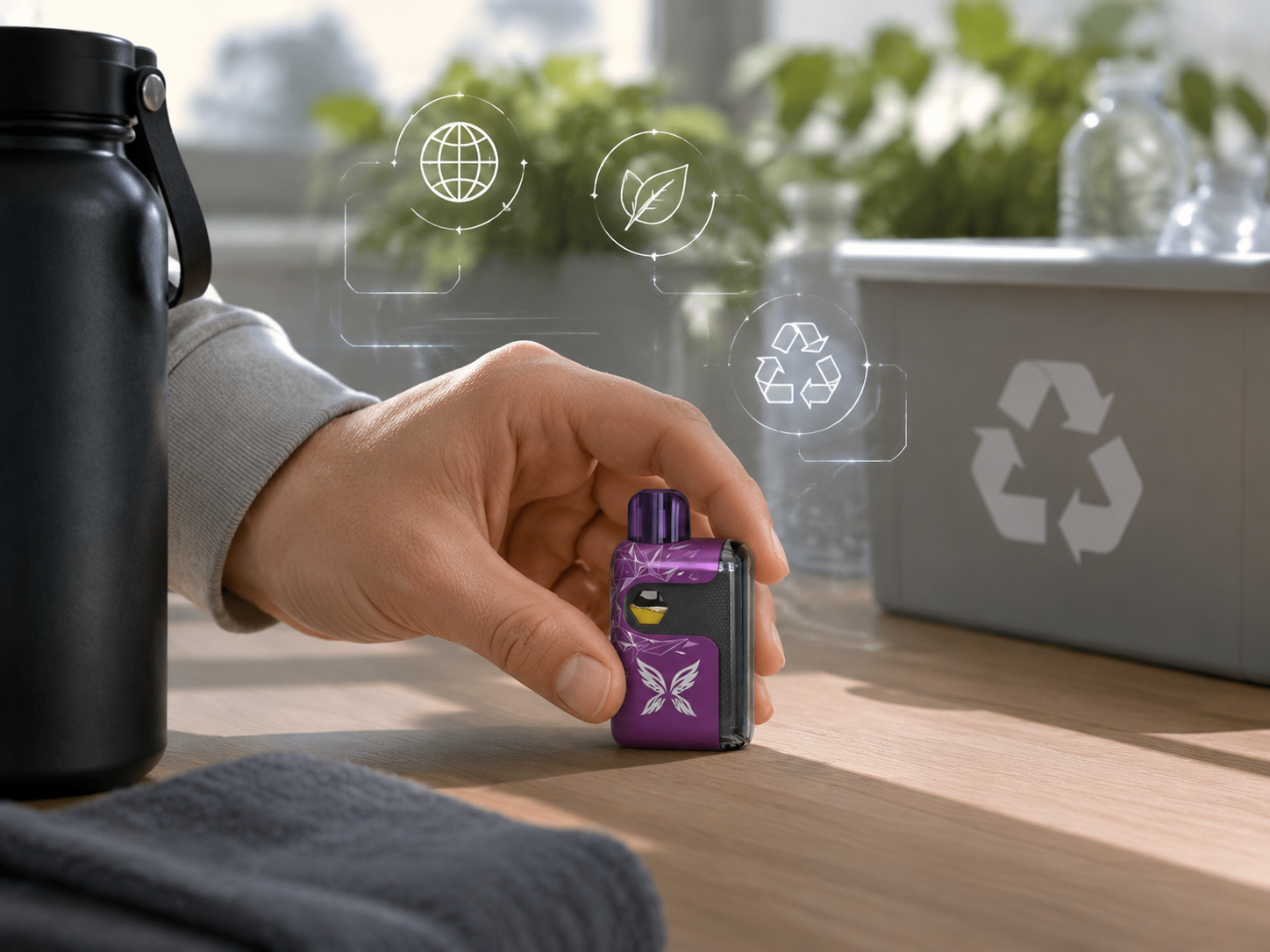
A refillable pod system produces dramatically less waste. The device lasts 1-2 years. The pods are replaced every 2 weeks. The e-liquid bottles are recyclable. The total waste over a year of vaping on a pod system is about 26 pods, 12-24 e-liquid bottles, and one device. A disposable vaper produces 52-104 disposable devices in the same period.
The lithium in a disposable vape is enough to power the device for about 10 charge cycles. The battery is thrown away after one cycle. That's a 90% waste of lithium. The battery in a refillable pod system is charged 300-500 times before the device is replaced.
The environmental argument for refillable vaping is overwhelming. A disposable vaper produces 50x more electronic waste than a refillable vaper. If you're still using disposables, switch to a refillable device. The environment is the reason, the cost savings are the bonus.
This content is intended for adults 21 years of age or older. Nicotine is an addictive chemical. The information provided is for educational and informational purposes only and does not constitute medical or legal advice. If you are considering using vaping products as an alternative to smoking, consult with a qualified healthcare professional. Product reviews and recommendations are based on publicly available information and independent evaluation; Windbar makes no representation regarding the FDA marketing authorization status of any third-party products mentioned. This content is not a substitute for review by a licensed attorney.
© 2026 Windbar. All rights reserved.