
Loud features
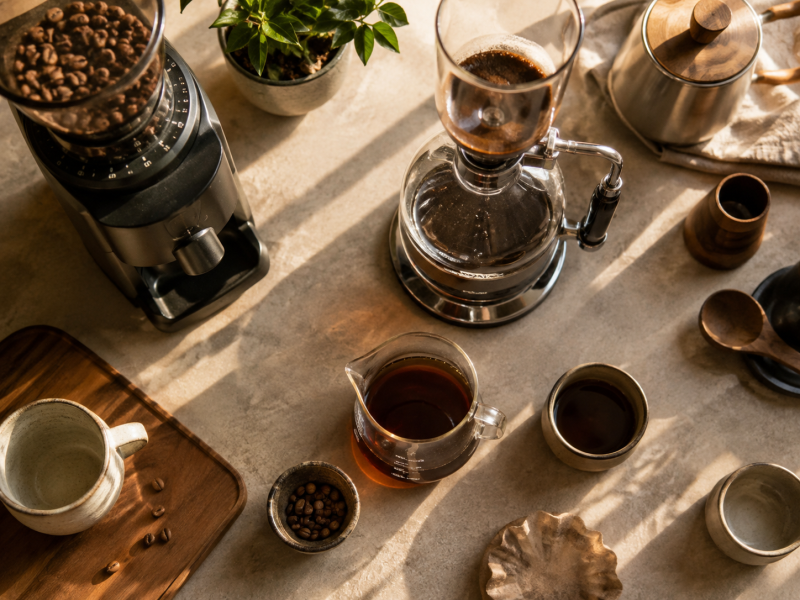
Walk into any coffee shop or scroll through gear sites and you'll see siphon brewers that look like laboratory experiments. Big halogen lamps, dual burners, glass-and-metal towers. It's impressive, sure. But when you're shelling out for a premium experience, do those features actually make the coffee better?
Loud features are the ones that sell the product. They're visible, they sound impressive, and they make you feel like you're buying a piece of craft. Think: built-in scales, digital timers, fancy valves, and multiple heat settings. All nice to have, but here's the thing—most of them don't touch the flavor directly.
Take the burner, for example. A powerful burner heats water fast. But fast heating isn't the goal. The goal is controlled heating. You want to bring water to boil, then drop the heat to maintain a steady extraction temperature. A loud burner that goes full-blast will overshoot and leave you with bitter notes. A quieter, more adjustable heat source is what you actually need.
Same with the glass. Some siphon pots boast triple-layered borosilicate glass. That's fine, but glass is just the vessel. It doesn't impact taste unless it's dirty or cracked. What matters is the filter—the cloth or mesh that separates grounds from the brew. That's a whisper feature.
Whisper features
Whisper features are the ones that don't make the spec sheet flashy, but they change the cup. For siphon brewing, the filter is number one. A fine cloth filter lets oils and fine particles through, giving a fuller body. A metal mesh is cleaner but can leave sediment. Neither is wrong, but it's a choice that affects mouthfeel. Premium seekers should care about that.
Another whisper feature is the heat source. As I said, control is everything. Butane burners give you fine adjustment with a valve. Halogen lamps are pricier but offer consistent, even heat that's easy to control. If you're new to siphon, a halogen lamp is forgiving. If you're on a budget, a good butane burner works—just practice with the valve.
Then there's the gasket and the seal between chambers. A tight seal means stable pressure and no drips. It sounds minor, but if it's loose, your brew time gets inconsistent. You end up with a cup that's over or under extracted without knowing why.
And the carafe? A thick glass with a good handle isn't just aesthetics. It holds heat during the brew, so your coffee doesn't stall. That's a quiet detail, but it shows up in the taste.
Which predict satisfaction
If you're buying a siphon for premium coffee, what actually makes you happy long-term? In my experience, it's the ability to dial in your brew. That means:
- Adjustable heat – either a valve on a burner or a dimmer on a lamp
- A filter you can replace – cloth filters wear out; you'll want to buy spares
- Stable construction – no wobbling, no leaking, easy to clean
Those features don't make the box look exciting, but they're the ones you'll use every day. Features like a built-in scale or a fancy timer? You can buy a separate scale for less than the upgrade cost, and a timer on your phone works fine.
Another predictor is how easy it is to clean. Siphon brewers have multiple parts, and if they're a pain to take apart, you'll stop using them. Look for models that separate into a few pieces and have wide openings. That's a whisper feature that keeps your ritual enjoyable.
How to prefer whisper
So how do you train yourself to look past the shiny specs? Start by asking what each feature does for the flavor. If you can't answer in one sentence, it's probably loud. Then, think about your routine. Are you the kind of person who weighs beans and tracks time? Then a built-in timer might save you a step. Are you more laid-back? Then a simple model with a good filter is plenty.
When you're reading product descriptions, ignore words like "pro-grade" or "barista-tested." Instead, look for specific claims: "cloth filter included" or "heat-resistant glass." Those are hints of quality. Also, check reviews for comments on temperature control and cleanup. Those are the details real users care about.
Another tip: try before you buy. Some coffee shops offer siphon-brewed coffee. Order one and watch the barista. Notice what parts they touch and what they adjust. That'll teach you more than any spec sheet.
Finally, budget for accessories. A decent burr grinder is non-negotiable—medium roast needs consistent grounds. And a gooseneck kettle for pouring hot water into the top chamber? Not essential, but it helps. If you have to choose between a fancier siphon and a better grinder, get the grinder. That's a whisper move.
When loud is fine
Okay, so loud features aren't all bad. Sometimes they genuinely help. If you're brewing for a crowd, a larger siphon with a sturdy stand is practical. If you're gadget-inclined, a digital thermometer that clips onto the chamber can take guesswork out. But these are conveniences, not essentials.
For a premium experience, the ritual matters as much as the gear. The siphon's theatrical rise and fall is part of the charm. If that spectacle is what you're after, then a visually impressive model is fine. Just know that the coffee will taste the same as from a simpler pot—if you control the same variables.
There's also the gifting angle. If you're buying a siphon for someone who loves coffee but isn't a tinkerer, a loud feature like an automatic shutoff might prevent accidents. That's a safety plus, not a flavor feature. So, choose accordingly.
At the end of the day, the best siphon for you is the one that fits your workflow and makes you want to brew. If that's a basic model, great. If it's a flashy one, also great—as long as you know what you're paying for.
Disclaimer: This article is for general information only. Product choices should be based on your own needs and preferences, not on marketing claims. Always follow manufacturer instructions.