
Must-haves
Before you stock a new disposable, there are a few non-negotiables you should verify. These aren't luxuries—they're the minimum bar for trusting a product enough to sell it.
- Spec sheet honesty: Cross-check puff counts and battery capacities against independent teardowns. If a 15K puff device claims a 400mAh battery, something's off.
- Batch consistency: Buy 3–5 units from different production lots. Vape quality can drift between batches, and you need to know if it's stable.
- Charging behavior: Test how long it takes to charge and whether it gets hot. A device that heats up during charging is a safety red flag.
- Leak resistance: Even if you can't vape it, you can inspect the mouthpiece and airflow holes for signs of e-liquid seepage.
- Customer feedback loop: Set up a system to track complaints about specific models. Patterns matter more than one-off rants.
Nice-to-haves
Once you've covered the basics, these extras can give you a competitive edge—but they're not deal-breakers.
- Third-party lab results: Some manufacturers publish nicotine and e-liquid analysis. If they do, that's a trust signal.
- Teardown videos: Even if you don't open the device yourself, watching a teardown can reveal build quality issues.
- Fast charging support: Not essential, but nice to know for your marketing if the device supports it.
- Replaceable coils: For disposables, this is rare, but if a model offers it, it's a selling point.
Red flags
Knowing what to avoid is half the battle. Here are the warning signs that should make you drop a product from your shortlist.
- Inflated specs: If the puff count seems too good for the battery size, it's marketing fluff. A 25K puff device needs a substantial battery, typically 800mAh or more.
- Mixed batch reviews: If customer reviews swing wildly between 'works great' and 'died in a day,' that's a consistency problem.
- Charging complaints: Multiple reports of the device not holding a charge or overheating? Walk away.
- Discontinued without notice: If a manufacturer stops a model abruptly, you're stuck with inventory and no support.
Budget tiers explained
Not all comparison tests need the same budget. Here's how to scale your testing based on your operation.
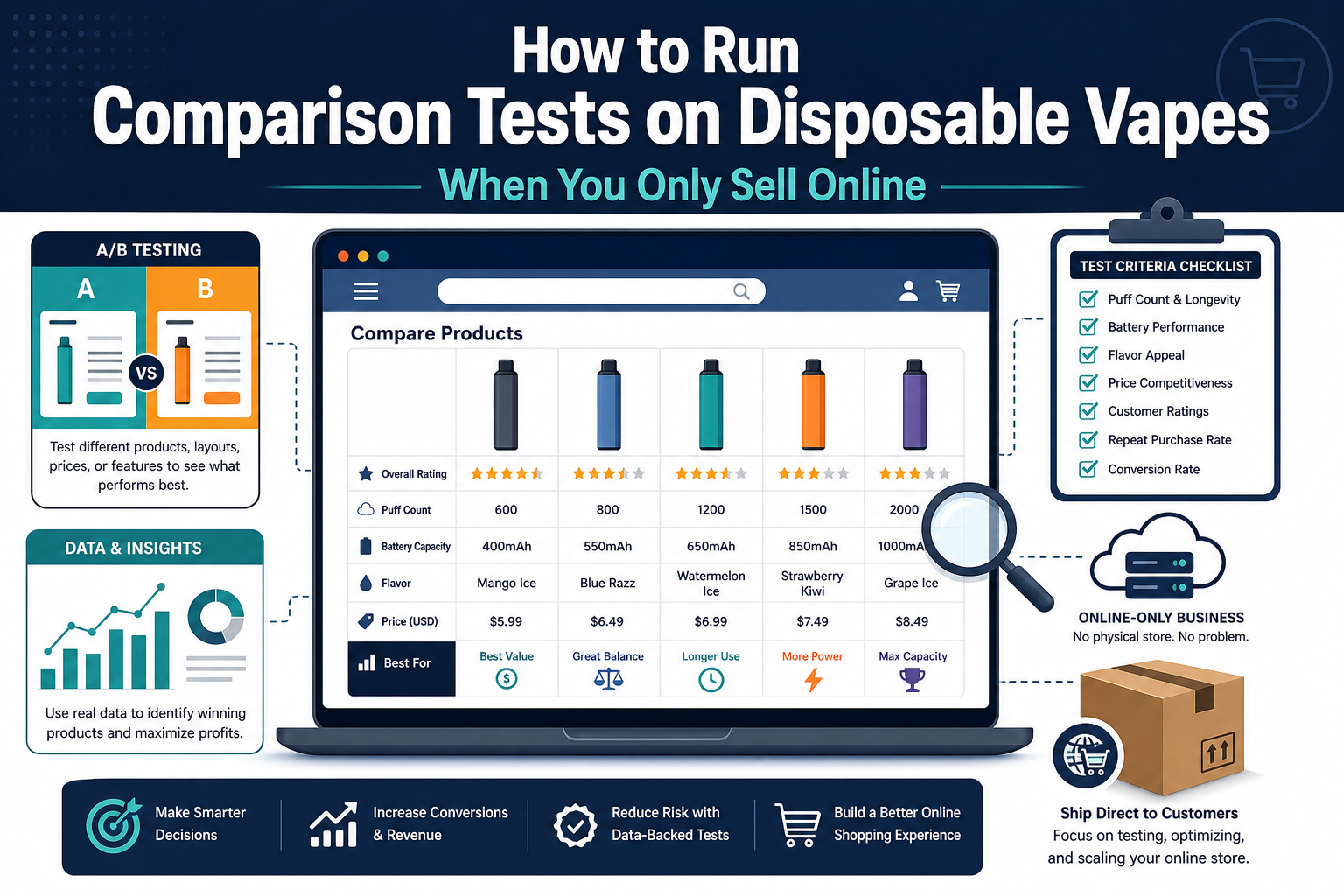
- Under $100: Sample 2–3 units of a single model, focus on basic functionality (draw activation, charge, puff count), and rely on online reviews for deeper insights.
- $100–$300: Expand to multiple models, test across batches, and start tracking performance metrics like battery drain over time.
- $300+: You can afford to buy a full case, test randomly, and even do basic teardowns if you're handy. This tier gives you the most confidence.
Who should wait and save
If you're just starting out online, don't blow your budget on extensive testing right away. Start with a few units from one or two models, get customer feedback, and reinvest profits into more rigorous testing later. Also, if you're selling only one or two SKUs, comprehensive testing is overkill—focus on what you have.
Final step: Build a feedback loop
Your comparison tests don't end when you place the order. The real data comes from your customers. Encourage reviews, monitor social media mentions, and keep a simple spreadsheet of common issues. Over time, you'll build a mental database of what works and what doesn't.
For more on what to check before you stock a device, see our guide on choosing disposable vapes for retail staff. And if you're comparing coil types, don't miss our mesh coils vs standard coils breakdown.
Remember: you're not just selling a product—you're selling the confidence that it'll work. That's what your comparison tests deliver.
Shortlist summary
- Online-only vape retailers need a different comparison-test playbook than physical shops. Instead of relying on in-store feel, you verify specs, sample batches, and mine customer reviews for patterns. This approach catches reliability issues early and builds trust with buyers who can't inspect products before purchase.
- Verify battery and puff-count specs against independent teardowns, not just the box.
- Sample multiple units from different batches to catch quality drift.
- Track customer complaints about leaks, charging, and coil taste to prioritize fixes.
- Use calculators and community forums to cross-check performance claims.
Before you buy
Q: How do you test a vape you can't physically handle?
You can't do hands-on testing online, so you rely on spec verification, batch sampling (buy a few units from different lots), and customer feedback. Look for consistent performance issues across reviews, and check if the manufacturer provides third-party lab results.
Q: What specs matter most when comparing disposable vapes online?
Battery capacity (mAh), puff count, coil resistance, and e-liquid volume are the big ones. But make sure you compare like-for-like: a 15K puff device with a 650mAh battery isn't the same as a 25K with 800mAh. Also, check charging port type and whether it supports fast charging.
Q: How can I spot a fake or mislabeled vape spec sheet?
Cross-check with independent teardowns or reputable reviewers. If the puff count seems inflated for the battery size, it's probably marketing fluff. Also, check for typos or inconsistencies in the spec sheet—real manufacturers usually have clean documentation.
Q: Should I trust customer reviews for comparison tests?
Use them as a signal, not gospel. Look for patterns—if many reviewers mention leaking or burnt taste, that's a red flag. But remember, angry customers are louder than satisfied ones, so weigh the ratio of complaints to total reviews.
In this topic cluster
- Comparison Tests articles
- Choosing Disposable Vapes for Retail Staff: 5 Criteria That Beat Any Spec Sheet
- Mesh Coils vs Standard Coils on a Tight Budget: What First-Time Buyers Should Check
- Charging Port Types and Cable Quality: What to Check Before Buying a CBD Vaporizer