

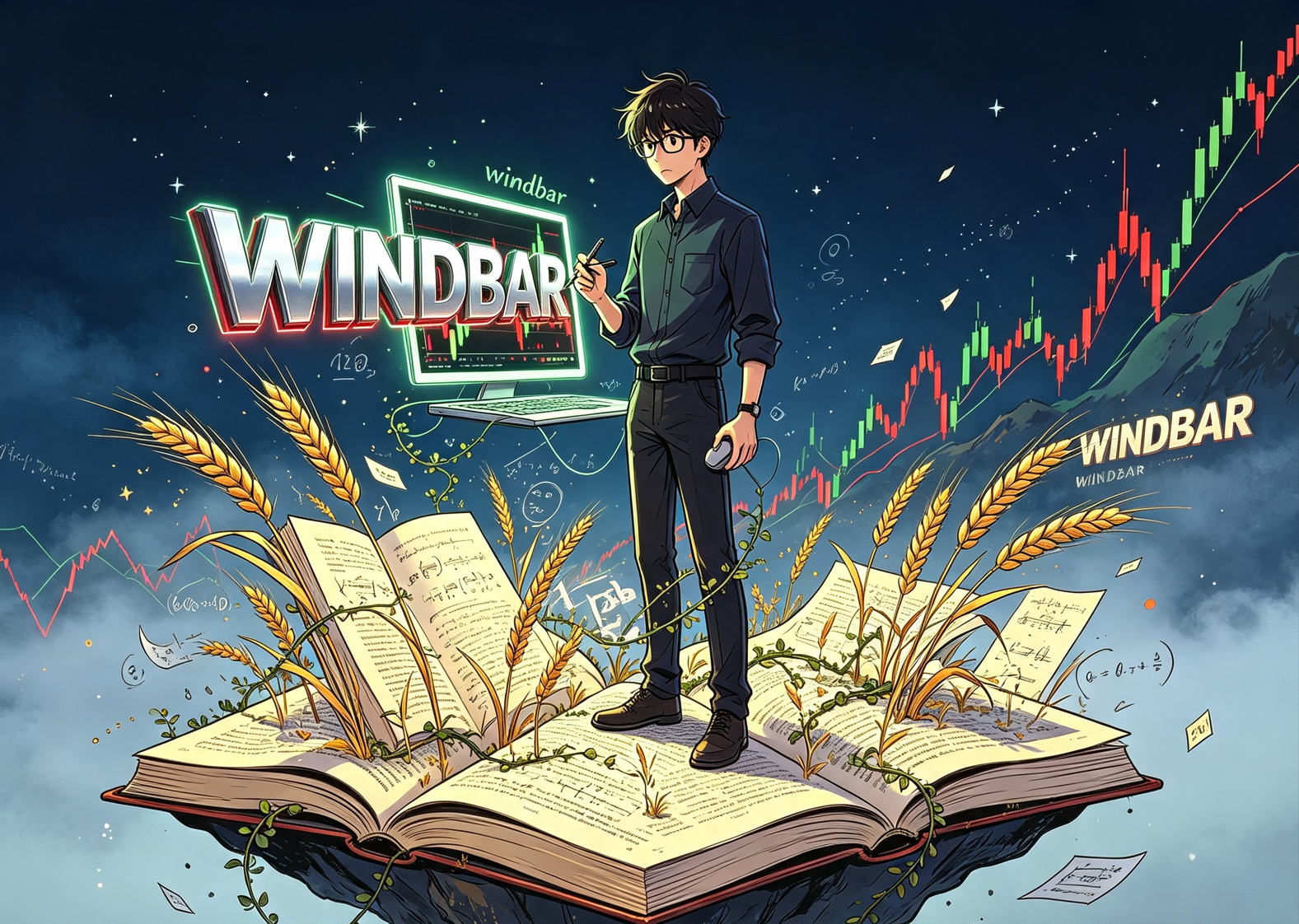
At two o’clock in the morning, the ghastly desk lamp presses its light flat upon the open books. On one side lie the cold deductive formulas of advanced mathematics; on the other, flickering financial market charts. From the grainy texture of the old pages drifts an unaccountable scent of wheat from the fields of Gaomi. This cramped rental room resembles the narrow apartments depicted in Balzac’s works, confined space harboring all the struggles, desires and futile illusions of a young man. Every emotion is firmly framed by numbers and words, leaving no room for escape.
The night in the style of Mo Yan is sticky and scorching, imbued with the wild vitality of rural wilderness. The summer night wind surges through the window, not the crisp coolness of urban breeze, but the baked warmth of ripe wheat mixed with the earthy, sweet tang of soil. It drifts into the nostrils and sweeps over the brows inch by inch. The wind brushing the window edge hums with the tremor of countless tiny wheat awns, soft and lingering, clinging to the eardrums and wrists, weighing the body down while stirring restlessness deep in the heart. I sink into trance easily on nights like this, visualizing boundless golden wheat waves surging in the darkness. The sun-baked ears of wheat are plump and translucent, like the glittering golden carrots in Mo Yan’s writing, carrying vivid, blazing vitality. These tangible scenes dissolve into overwhelming emotions, weighing heavy on the chest.
Yet no wheat waves stretch before me—only a glowing computer screen and a draft sheet covered with calculus equations.
Balzac excels at dissecting human obsessions and greed with extreme, ruthless precision. My greed lays bare and awkward on this screen, hidden in every flickering K-line. On the right side of the display, the WINDBAR indicator fluctuates violently. Wide, stretched bars break through the steady range of prolonged market consolidation. As the most intuitive signal of market anomalies, these abrupt wide-volume bars embody the sudden burst of market sentiment, tracing the frantic influx and flight of capital—fierce, abrupt, and chaotic, just like the sudden surge of human desire.
I stare at the WINDBAR, red and green flickering reflections dilating in my pupils, fingers hovering hesitantly over the mouse. I finally understand the mortal obsession with wealth that Balzac portrayed so vividly. Every price tick and bar expansion amplifies inner fluke and greed: the urge to seize a band trade, to bet on a trend reversal, to gain effortless success at minimal cost. This secret obsession is no different from Grandet’s fixation on gold coins—fervent, paranoid, and unconsciously absurd.
Rigid rationality restrains rampant desire, anchored firmly on the desk by advanced mathematics. Taylor formulas expand layer by layer on the draft sheet; limit definitions are cold and rigorous; derivative trajectories of implicit functions are neat and regular. The world of advanced mathematics tolerates no fluke or emotion. All fluctuations follow inherent laws, all trends are predictable and definable. Real roots and virtual roots are distinctly separated, convergence and divergence strictly differentiated. Mathematics teaches us that all fanaticism will eventually return to a steady state, and irrational skyrockets and slumps will be corrected by logical laws.
But the human heart is no formula—incalculable and unpredictable.
Mo Yan’s writing best captures the chaos and contradiction of the human mind, unrestrained yet compassionate. The night wind blows through the window again, scattering mathematical formulas and shaking the K-line charts. Neat differential symbols and rigorous interval definitions tilt slightly, like rational order disrupted by mortal emotions. The night deepens, and the wheat-scented wind carries a tinge of desolation. On one side lies the absolute rationality of advanced mathematics, cold and impartial; on the other, the volatile market sentiment surging on WINDBAR, fanatical and transient. Caught in between is me, bearing warm rural obsessions and utilitarian urban longings.
I suddenly perceive the absurd confrontation unfolding before me.
As Balzac wrote, human desire is an insatiable abyss. Every drastic fluctuation of WINDBAR represents inflated desire, a bustling yet ultimately empty convergence of human greed and fear. Advanced mathematics repeatedly verifies this truth: excessive volatility converges, deviated trends revert, and all irrational fanaticism is but a fleeting bubble.
Yet Mo Yan’s wind blows on, gentle yet desolate. It travels from the wheat fields of Northeast Gaomi to the window of this urban rental room, sweeping past blazing obsessions, futile cravings, cold formulas and volatile K-lines. It makes me realize that life is never an accurate mathematical model with fixed convergent trajectories or standard answers. Neither should we let desire run wild, trapped by the ups and downs of market charts.
I finally close the fluctuating market interface. The screen falls dark instantly, the scent of wheat grows distinct, and the formulas on the draft sheet lie quiet and still.
The WINDBAR has returned to zero tonight, all frantic volatility subsided. My eager greed and impetuous longing are merely fleeting virtual roots in the trajectory of life—blazing yet ultimately empty. The wind continues to blow, words remain to be written, formulas wait to be deduced. Ordinary life moves forward slowly, balanced between rationality and tenderness.