
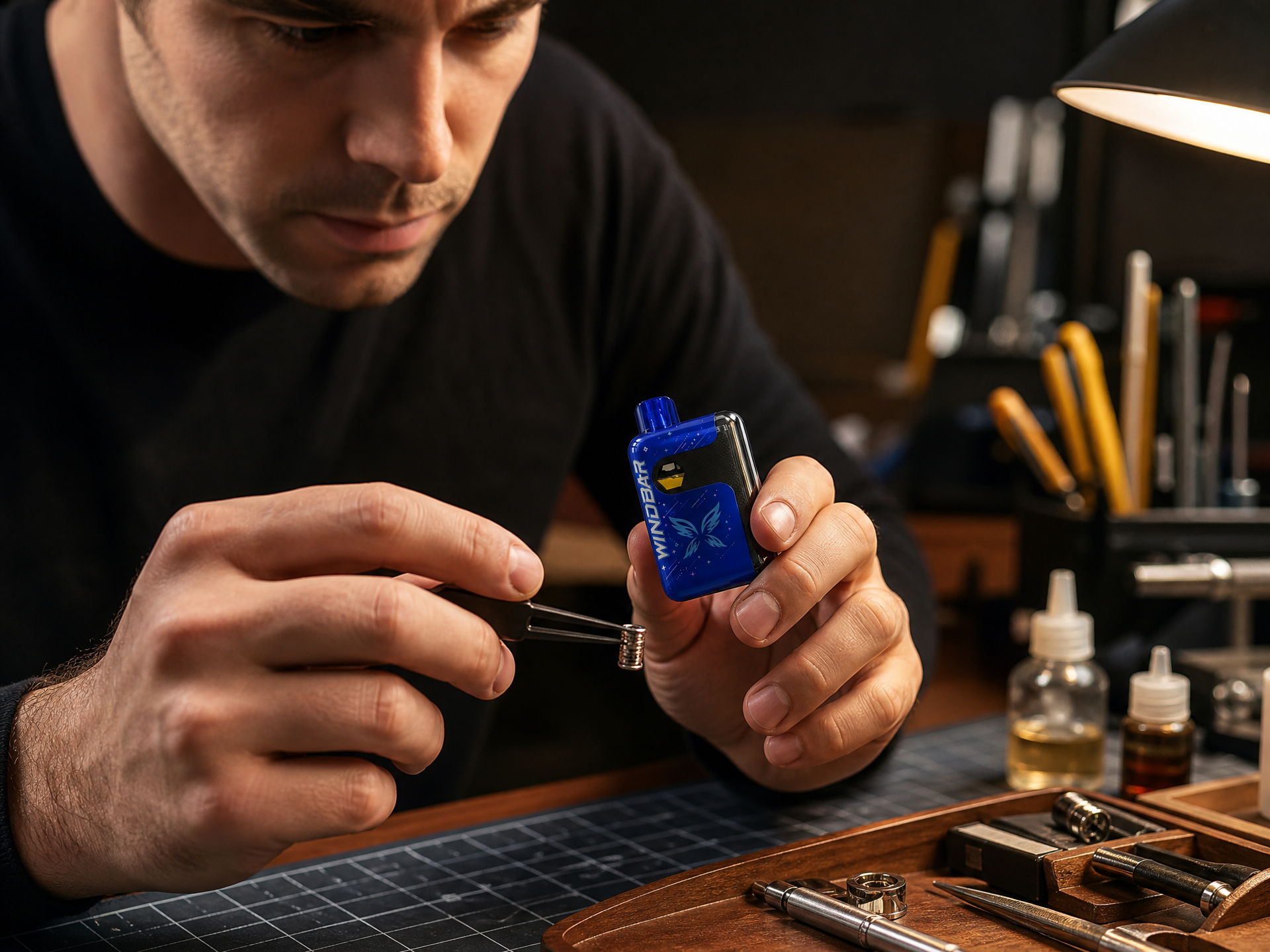
PG/VG ratio, coil resistance, and wattage are three variables that interact. Change one, and the other two need to change with it. Here's how they work together.
PG/VG ratio determines wicking speed. High-PG juice (50%+) is thin and wicks fast. It works in any coil. High-VG juice (70%+) is thick and wicks slowly. It needs large wicking ports and higher wattage to vaporize efficiently. Put 80% VG in a pod system and you'll get dry hits within three puffs.
Coil resistance determines the wattage range. A 0.15-ohm coil runs at 60-80W. A 0.4-ohm coil runs at 25-35W. A 1.0-ohm coil runs at 10-15W. The lower the resistance, the more power the coil needs, and the more juice it consumes.
Temperature is the result of wattage and airflow. More wattage = hotter coil. More airflow = cooler coil. A 0.4-ohm coil at 35W with the airflow closed is hotter than a 0.15-ohm coil at 70W with the airflow wide open. Airflow matters more than wattage for temperature control.
The balanced setup: 70/30 VG/PG, 0.3-0.4 ohm coil, 40-50W, airflow three-quarters open. This is the sweet spot for flavor, cloud, and coil longevity. It's why most sub-ohm kits ship with a 0.4-ohm coil and a 50W recommended setting.
This content is intended for adults 21 years of age or older. Nicotine is an addictive chemical. The information provided is for educational and informational purposes only and does not constitute medical or legal advice. If you are considering using vaping products as an alternative to smoking, consult with a qualified healthcare professional. Product reviews and recommendations are based on publicly available information and independent evaluation; Windbar makes no representation regarding the FDA marketing authorization status of any third-party products mentioned. This content is not a substitute for review by a licensed attorney.
© 2026 Windbar. All rights reserved.