
Most buyers ask about coil resistance. That is the wrong question.
Resistance tells you the electrical load. It tells you nothing about how the coil heats the liquid, how evenly it wicks, or whether it will burn out after 400 puffs or 600. The spec that actually matters — and the one suppliers almost never volunteer — is the coil-to-wick contact surface area ratio.
Here is the difference. A mesh coil with 0.8mm of contact width delivers heat across a broad, shallow surface. It vaporizes liquid quickly and evenly, producing more vapor per second and less risk of localized hot spots. A traditional wire coil with the same resistance but narrower contact width concentrates heat in a smaller zone. It produces a sharper throat hit but can degrade the wick faster, especially with high-VG liquids that flow slower.
The wicking system is what separates a device that tastes consistent from puff one to puff 400 from one that starts harsh and gets worse. Cotton density, grain orientation, and compression ratio all affect how fast liquid reaches the coil. Too tight, and the wick starves. Too loose, and it floods. The sweet spot is a compression tolerance of roughly 15-20% — and yes, you should be asking your supplier to quantify that.
Liquid delivery efficiency is not just about the wick. It is about the reservoir design. A gravity-fed reservoir pushes liquid toward the coil consistently. A dead-end reservoir relies on capillary action alone. The gravity-fed design costs more to tool but delivers 30-40% fewer dry hits in production units. That is not a component cost. It is a return-rate cost.
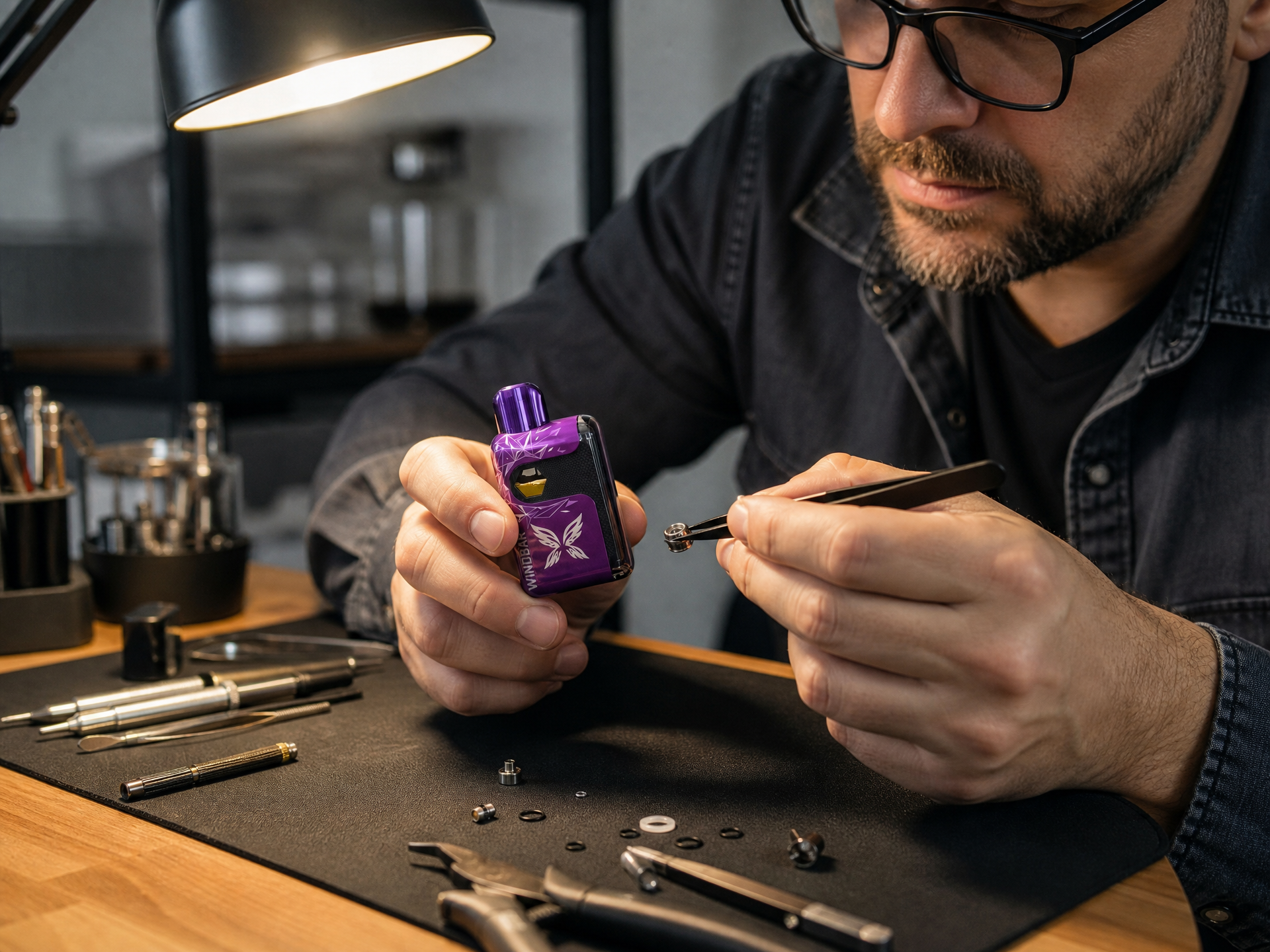
When you sit across from a supplier, ask about contact surface area, wick compression ratio, and reservoir architecture. If they cannot answer all three, they are assembling components, not engineering them. This content is intended for adults 21 years of age or older. Nicotine is an addictive chemical. The information provided is for educational and informational purposes only and does not constitute medical or legal advice. If you are considering using vaping products as an alternative to smoking, consult with a qualified healthcare professional. Product reviews and recommendations are based on publicly available information and independent evaluation; Windbar makes no representation regarding the FDA marketing authorization status of any third-party products mentioned. This content is not a substitute for review by a licensed attorney.
© 2026 Windbar. All rights reserved.