
Most people pick draw-activated or button-fired based on what feels familiar. Former smokers gravitate toward draw-activated because it mimics a cigarette. Tech enthusiasts gravitate toward button-fired because it feels more precise. Both camps are missing the real trade-offs.
Draw-activated devices use a pressure sensor inside the body. When you inhale, the change in air pressure triggers the sensor, which fires the coil. No button. No clicking. Just inhale and go. The appeal is obvious. It is intuitive. It is fast. It works exactly the way you expect it to work.
The downside is reliability. Pressure sensors are mechanical components. They wear out. They get clogged with condensation and dust. A sensor that worked perfectly on day one might start firing inconsistently by month three. Sometimes it fires a half-second late. Sometimes it does not fire at all. Sometimes it keeps firing for a second after you stop inhaling. These are not device failures. They are the natural behavior of a sensor that is slowly degrading. Draw-activated devices are at their best when they are brand new. They decline from there.
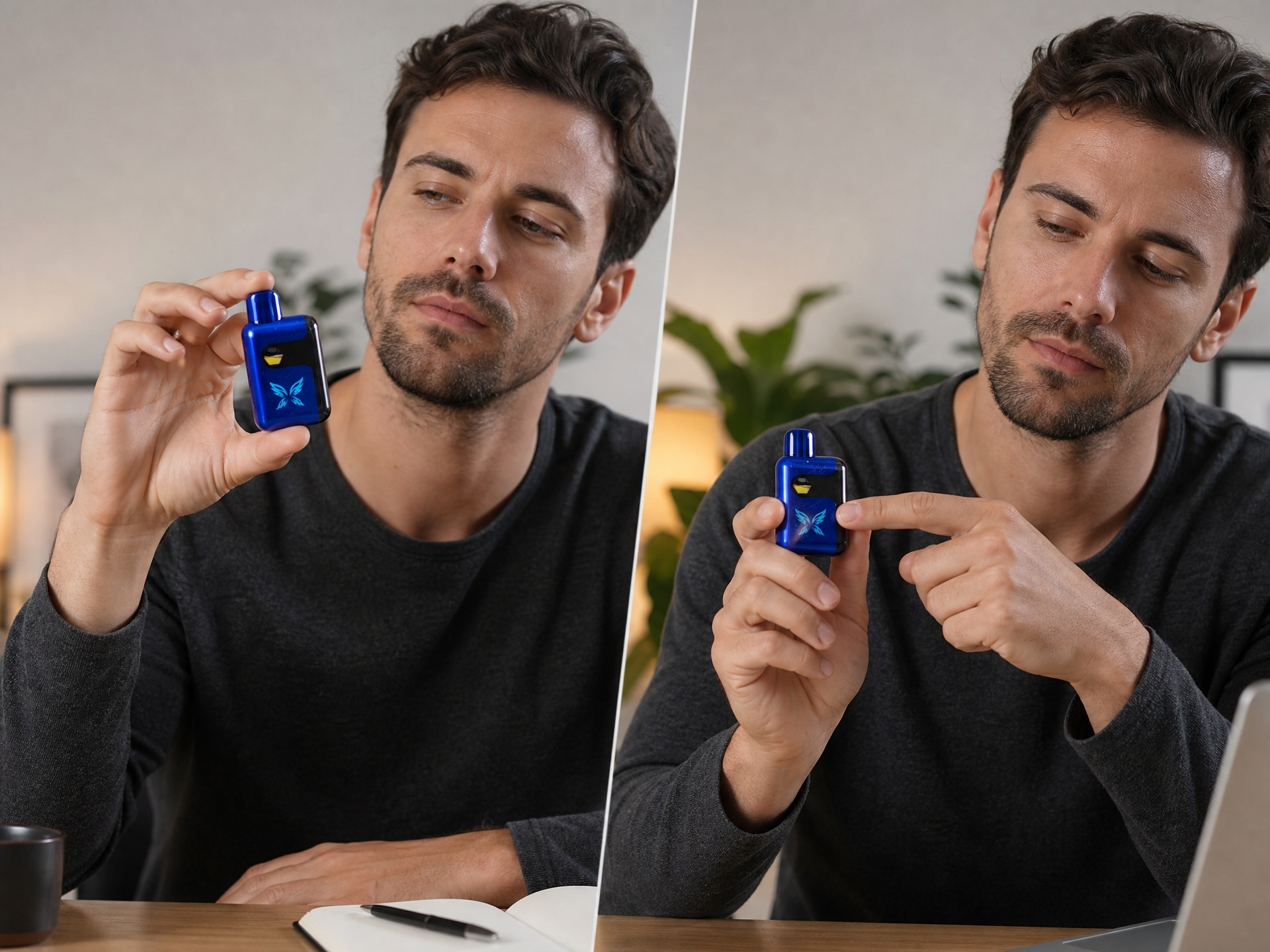
Button-fired devices use a physical switch. You press the button. The coil fires. You release the button. The coil stops. There is no sensor to degrade. There is no lag to account for. The experience is the same on day one and day 300, assuming the button mechanism itself holds up. Most do. The failure rate on a decent button switch is lower than the failure rate on an average pressure sensor by a meaningful margin.
The trade-off is accidental firing. A button can be pressed in your pocket. A button can be pressed in your bag. A button can be pressed by a curious child. This is why button-fired devices need lock functions, and why lock functions need to be used. The button gives you precision. The lock gives you safety. Use both.
Draw sensitivity is the final factor. Some draw-activated devices require a firm pull to trigger. Others are so sensitive that a gentle breeze activates them. There is no standard. You do not know how a device draws until you try it. Button-fired devices have no such variability. You press, it fires. Every time. That predictability is the real advantage.
Neither activation method is objectively better. But the trade-offs are clear: draw-activated is more intuitive but less reliable over time. Button-fired is more consistent but requires active locking. Pick the trade-off you can live with. This content is intended for adults 21 years of age or older. Nicotine is an addictive chemical. The information provided is for educational and informational purposes only and does not constitute medical or legal advice. If you are considering using vaping products as an alternative to smoking, consult with a qualified healthcare professional. Product reviews and recommendations are based on publicly available information and independent evaluation; Windbar makes no representation regarding the FDA marketing authorization status of any third-party products mentioned. This content is not a substitute for review by a licensed attorney.
© 2026 Windbar. All rights reserved.