
Morning
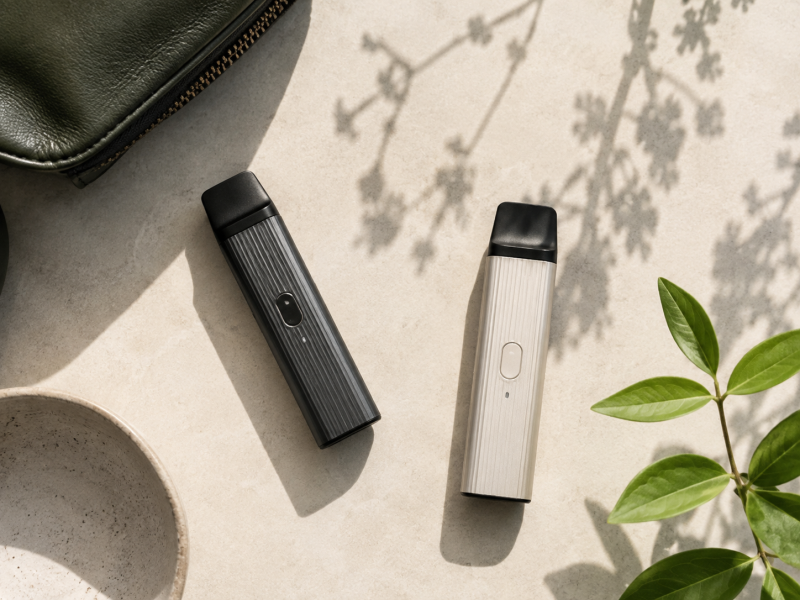
Your alarm goes off at 6:40. You've got a 7:30 flight, and the coffee is still brewing. This is where draw-activated hardware shines. With no buttons to fiddle with, you can take a quick puff while you're still half-asleep, then slide it into your shirt pocket or backpack side pouch. It's the kind of simplicity that disappears into your morning routine—no thinking required.
Button-activated devices aren't a dealbreaker here. If you're someone who likes to dial in a precise temperature before your first hit, the extra second or two feels intentional rather than annoying. But if you're rushing, that button can be one more thing to fumble with.
Midday
It's 1:15 PM, and you're between meetings. You've got ten minutes to decompress. Draw-activated hardware is perfect for this moment: one hand, no looking, no accidental button presses in your bag. It's also more discreet if you're stepping outside—just bring it to your lips, inhale, and it looks like you're sipping a drink.
Button-activated devices, on the other hand, give you more control over the hit. If you want a longer, slower draw at a lower temperature, you can hold the button and adjust. Some people find that consistency reassuring, especially if they're using the same cartridge all day. The trade-off is that you have to be deliberate about the button press—easy to skip if you're distracted.
Evening
After dinner, you're on the couch or packing for the next leg. This is where button-activated hardware can feel more satisfying. You can take your time, set the temperature, and enjoy a more controlled session. The ritual of pressing the button and waiting for the coil to heat adds a bit of ceremony that some users appreciate. It's also easier to gauge how much you're using, since each press is a conscious action.
Draw-activated devices are still fine here, but they can be a bit too automatic for a relaxed evening. You might find yourself taking more frequent hits without realizing it, which can drain your cartridge faster.
Travel day exception
Airports and border crossings change the game. If you're flying, you'll need to pack your device in your carry-on, and security might ask about it. Draw-activated hardware tends to look more like a tech gadget, which can be less conspicuous. Button-activated devices with screens and multiple buttons can invite more questions.
Also, consider the battery. Draw-activated devices often have smaller batteries because they're designed for portability, so you might need to charge them more often on a long trip. Button-activated models typically have larger batteries and may support USB-C fast charging, which is a plus if you're always on the move.
Another travel tip: keep your cartridge separate from the device when flying. Pressure changes can cause leaks, and that's true for both types. Store them in a zip-top bag to avoid mess.
What to prep the night before
Whether you choose draw or button, a little prep goes a long way. Charge your device fully the night before—nobody wants a dead battery at the gate. Clean the connection points with a cotton swab if you've been using it daily. And if you're carrying a spare cartridge, keep it upright in a protective case.
For button-activated devices, check your temperature settings before you head out. Set it to a lower wattage if you're new to the device, so you don't get a harsh hit when you're in a hurry. For draw-activated, just make sure the airflow isn't blocked and the mouthpiece is clean.
Which one should you pick?
If your days are packed with transitions—commutes, flights, meetings—draw-activated hardware will likely serve you better. It's the kind of device that gets out of your way. But if you're someone who likes to tinker with temperature and appreciate a more deliberate session, button-activated gives you that control.
Think about where you use it most: standing in line, walking between buildings, or sitting still at a desk. That'll tell you more than any spec sheet.
Related Windbar Resources
- Windbar Community — See how other travelers handle their hardware on the go, and swap tips on carry and maintenance.