
Mexico was the first country to write a vaping ban directly into its constitution, in January 2025. A reform to the General Health Law, published in the Federal Official Gazette and effective January 16, 2026, made the regime stricter still — and it's easy to find outdated or simply wrong information about what it means for travelers.
Travel Advisory: This article provides general information about vaping-related laws in foreign jurisdictions. Laws, customs regulations, and enforcement practices change frequently and may differ from the information provided. Windbar does not provide legal advice. Before traveling with vaping products, verify current regulations with official government sources for your destination country, including the U.S. State Department's travel advisory for Mexico. Windbar is not responsible for any legal consequences resulting from reliance on the information in this article.
What the 2026 reform actually says: manufacturing, importing, distributing, and selling e-cigarettes and "analogous devices" — with or without nicotine — is a federal offense, with penalties ranging from significant fines to one to eight years in prison for those found to be acting with commercial intent. The one narrow carve-out: using a device you already have, in a private space, isn't itself a crime.
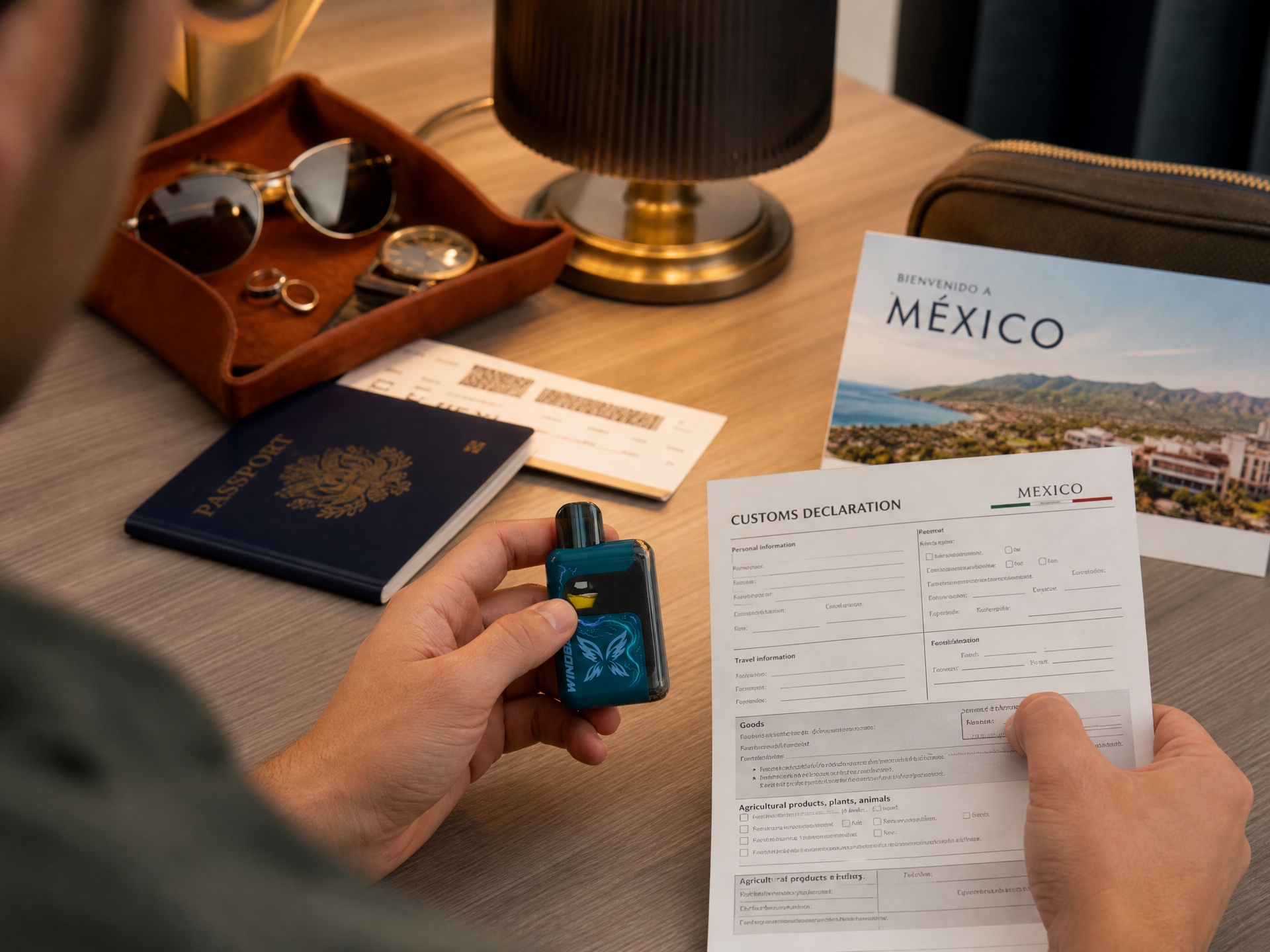
That carve-out does not cover getting the device into the country. Bringing a vape through Mexican customs, even a single device in your carry-on for personal use, is classified as illegal importation — a separate violation from simple possession. There is no traveler's exemption and no "it's just for personal use" defense. Current reporting puts on-the-spot fines in the $200–500 USD range per device, with confiscation the most likely outcome and steeper penalties possible if you're carrying multiple devices or pods, which customs may treat as evidence of commercial intent.
Practical advice: leave your vape at home. If you're already a nicotine user, plan for nicotine replacement therapy or your normal cigarettes for the trip instead. Don't count on airport wifi rumors about "under two devices" or "$400 max" — those numbers don't come from an official source, and the safest assumption is that any device you bring can be seized regardless of quantity. Public use is a separate issue on top of the import question: Mexico's smoke-free laws extend to vaping in most indoor public places and many outdoor ones, including hotel balconies and beaches in some areas.
This is a fast-moving area of law with real enforcement behind it, not a technicality. If you need to bring a device for a documented medical reason or unusual circumstance, verify directly with the Mexican embassy or consulate before you travel — don't rely on a blog post, including this one, as your final word.
This content is intended for adults 21 years of age or older. Nicotine is an addictive chemical. The information provided is for educational and informational purposes only and does not constitute medical or legal advice. If you are considering using vaping products as an alternative to smoking, consult with a qualified healthcare professional. Product reviews and recommendations are based on publicly available information and independent evaluation; Windbar makes no representation regarding the FDA marketing authorization status of any third-party products mentioned. This content is not a substitute for review by a licensed attorney.
© 2026 Windbar. All rights reserved.