
Compatible pairs
If you're sharing a kitchen, you need to know what plays nice with your BrewNova ceremonial matcha. The good news: it's a forgiving tea if you treat it right. The bad news: your roommate's coffee habit or your brother's protein shake routine can mess with it more than you'd think.
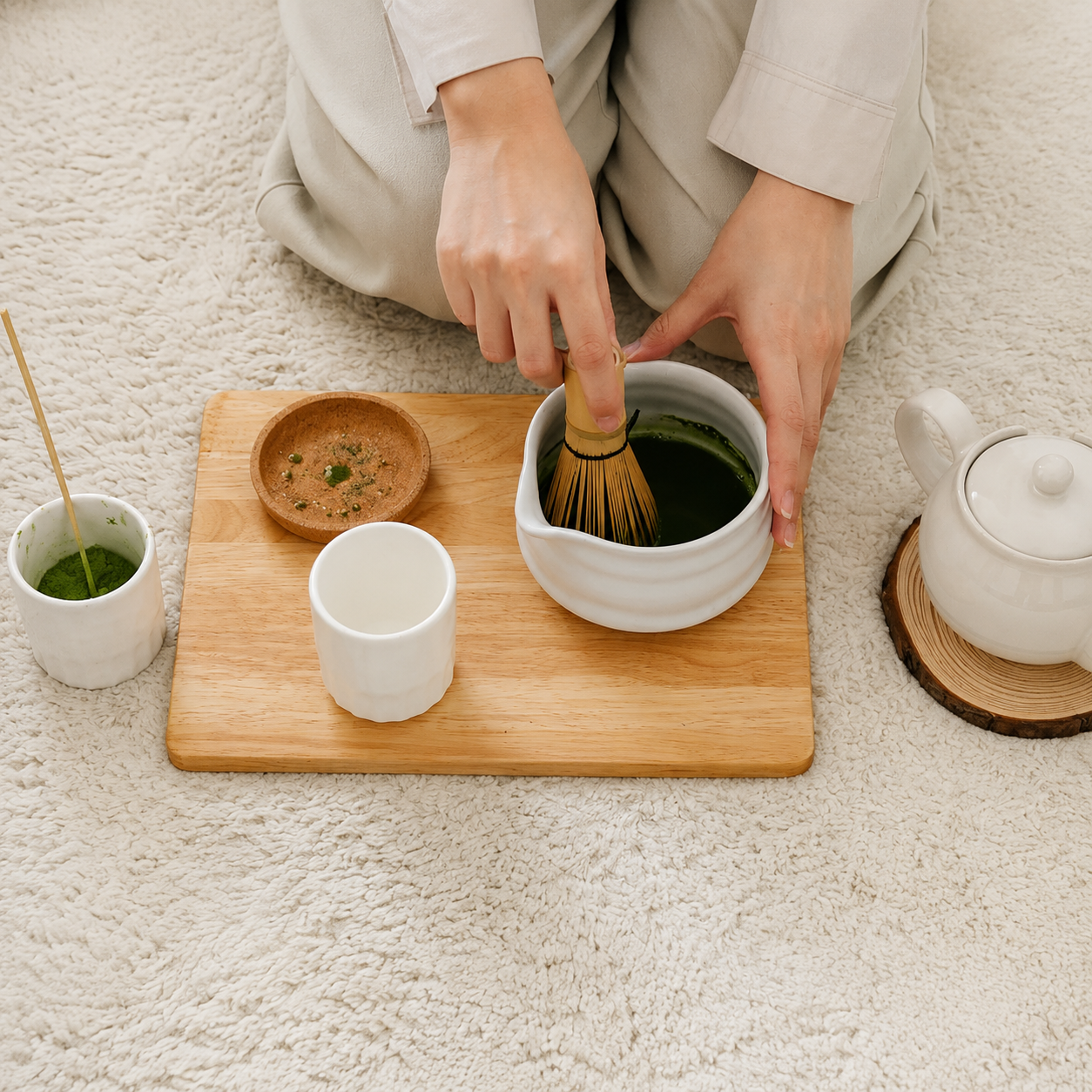
Start with the basics. BrewNova ceremonial matcha loves a wide, shallow bowl—a chawan, if you're fancy. That shape lets the whisk move freely and creates that frothy top layer. A narrow mug will work in a pinch, but you'll get more clumps and less foam. Pair it with a bamboo whisk (chasen) and a bamboo scoop (chashaku). The scoop measures about two grams per scoop, which is the right amount for a standard bowl.
Water is your other partner. Filtered water is best. If you're on well water or super hard tap water, the minerals can dull the flavor and make it taste chalky. That's a compatibility issue you can fix with a simple filter pitcher.
Temperature matters more than people think. Boiling water is the enemy. It scorches the delicate leaves and pulls out bitterness. Let your water cool to about 160–175°F (71–79°C). No thermometer? Boil, then wait three to five minutes. That's the sweet spot.
Soft incompatibilities
Some things don't ruin your matcha, but they knock it down a peg. Here's what to watch:
- Coffee residue: If you're using the same bowl you had coffee in, the leftover oils will cling to the sides and taint your matcha. Even after a rinse, those oils linger. Keep your matcha bowl separate or wash with a dedicated sponge.
- Soap residue: Soap leaves a film that kills the froth. Rinse your bowl and whisk with warm water only. If you must use soap, rinse thoroughly and dry with a clean cloth.
- Dairy milk: This isn't a hard no, but it changes the texture. Ceremonial matcha is meant to be sipped straight. If you add milk, you're masking the subtle sweetness of the tea. Plus, the whisk froth gets lost in the milk.
- Sweeteners: Same deal. A little honey is fine, but too much sugar covers up the grassy, umami notes that make BrewNova special.
These aren't deal-breakers, but they shift the experience. If you're sharing with someone who likes their matcha sweet and milky, just know it's a different drink.
Hard no-gos
Some things will ruin your matcha completely. Avoid these at all costs:
- Dishwasher: Never put your chawan or chasen in the dishwasher. The heat and detergent will warp the whisk and crack the bowl. Hand wash only.
- Boiling water: This is the number one mistake. It turns your matcha bitter and flat. Always cool the water first.
- Stale matcha: If your tin has been open for months, the leaves have oxidized and lost their flavor. BrewNova matcha is best within 30–60 days of opening. If it smells like grass clippings, it's past its prime.
- Cross-contamination: If someone uses your whisk to stir their instant coffee, that's game over. The whisk fibers will absorb the coffee oils, and no amount of rinsing will get them out. You'll need a new whisk.
These aren't negotiable. They're the difference between a bright, sweet cup and a sad, bitter one.
How to verify before buying
You're reading this because you're thinking about grabbing a tin of BrewNova ceremonial matcha for your household. Smart move. But before you hit checkout, here's how to make sure it'll work for your setup.
First, check the harvest date. Ceremonial grade matcha is best within a few months of harvest. Spring harvest (which is what we're talking about) is the freshest. Look for a 'picked in' date on the label. If it's more than six months old, skip it.
Second, check your water situation. If you're on hard water, you might want to invest in a filter. The minerals in hard water react with the matcha and make it taste flat.
Third, think about your tools. You need a whisk, a bowl, and a scoop. If you're sharing, get a set that's clearly yours. Label it with a piece of tape or a marker. That way, no one accidentally uses it for something else.
Fourth, consider storage. Matcha is sensitive to light, heat, and air. Keep it in an airtight tin in a cool, dark place. If you're sharing a pantry, make sure it's not next to the stove or above the coffee maker.
If you cover those bases, you're golden.
Upgrade compatibility
Once you've got the basics down, you can level up. BrewNova ceremonial matcha pairs beautifully with a few upgrades that make the whole ritual smoother.
- Electric kettle with temperature control: This is a game-changer. You set it to 170°F, and it's perfect every time. No more guessing.
- A dedicated whisk holder: These little ceramic stands keep your chasen's tines in shape. A bent whisk doesn't froth as well.
- A sifter: Sifting your matcha before whisking eliminates clumps. It takes an extra ten seconds, but the texture is noticeably smoother.
- A matcha tin with a built-in scoop: Some tins come with a flat scoop that fits under the lid. It keeps the powder dry and easy to measure.
These aren't necessary, but they make the process easier and more consistent. If you're sharing, a temp-controlled kettle is worth the investment—everyone gets the same great cup every time.
The bottom line
BrewNova ceremonial matcha is a treat, but it's fussy about its environment. Treat it right: cool water, clean tools, fresh powder. If you're sharing, claim your bowl and whisk, and label them. That's the difference between a bitter disappointment and a smooth, sweet ritual.
And hey, if you're new to matcha, don't stress. The first few bowls might be clumpy. That's normal. You'll get the hang of it in a week. Just remember: cool water, fresh powder, and your own tools. That's all it takes.
Compat FAQs
Q: Can I use a regular whisk if I don't have a bamboo chasen?
You can, but it won't give you the same froth. A bamboo whisk has many fine tines that aerate the matcha, creating a smooth, creamy foam. A wire whisk or fork will leave clumps and a thinner texture. If you're serious about matcha, get a chasen—they're cheap and make a big difference.
Q: What water temperature should I use for BrewNova ceremonial matcha?
Aim for 160–175°F (71–79°C). If you don't have a thermometer, let boiling water sit for 3–5 minutes. Water that's too hot will scorch the leaves and turn bitter. Cold water won't extract the flavors properly, so you'll get a weak, grassy cup.
Q: How do I clean my matcha bowl and whisk without leaving residue?
Rinse immediately with warm water, no soap—soap leaves a film that kills the flavor. Use a gentle bamboo whisk cleaner or just your fingers to remove any stuck bits. Dry the whisk by shaping it back to its original form and letting it air dry. Store it in a whisk holder to keep the tines from bending.
Q: Can I share my matcha tools with others in the household?
You can, but be ready for conflicts. If someone uses the whisk for coffee or tea, the flavors can transfer. That's why I recommend labeling your tools or keeping a separate set. It's not about being snobby—it's about keeping the matcha tasting clean.
Compat map
- BrewNova ceremonial matcha is a premium tea that works best with a dedicated bamboo whisk and a wide bowl; shared households need to manage heat, water hardness, and cleanliness to avoid bitter or weak cups. Checking your water temperature and whisk condition before brewing is the single best way to ensure a smooth, sweet result every time.
- Water temperature matters: 160–175°F (71–79°C) is the sweet spot; boiling water makes matcha bitter.
- A bamboo whisk (chasen) is essential for froth; a fork or spoon won't give you the same texture.
- Shared kitchens create conflicts: leftover coffee oils, soap residue, and hard water can ruin a bowl.
- Store BrewNova matcha in an airtight tin away from heat and light to keep it fresh for weeks.
- If you're sharing, label your whisk and bowl—cross-contamination is the top reason people think matcha tastes 'off'.