
You've probably seen that little slider or ring on your vape and wondered what it actually does. It's not just for looks. That's your airflow control, and it has a big say in how your vape tastes and feels. Get it right, and every puff is smooth and satisfying. Get it wrong, and you might be coughing or wondering why your liquid tastes like nothing.
Let's break down what a tight draw and an open draw really mean, and how to pick the right one for you.
What's a Tight Draw vs an Open Draw?
A tight draw means the air intake is small. You have to pull harder, like sipping a thick milkshake. This is the classic mouth-to-lung (MTL) style, where you draw vapor into your mouth first, then inhale it into your lungs. It feels a lot like smoking a cigarette, which is why many ex-smokers prefer it.
An open draw, on the other hand, lets in a lot of air. The pull is easy and airy, like breathing in fresh air. This suits a direct-to-lung (DTL) style, where you inhale the vapor straight to your lungs. It's the go-to for cloud chasers because it produces big, voluminous clouds.
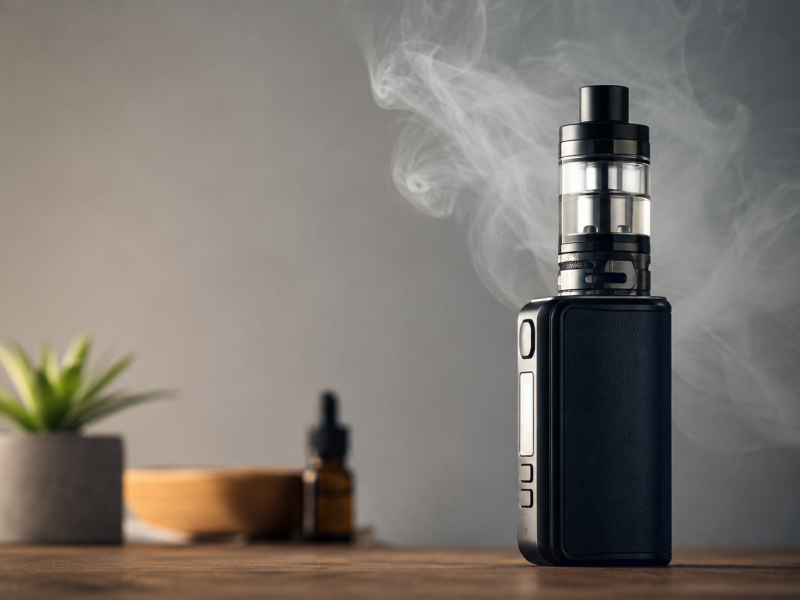
Most adjustable devices, including models like the VERTEX-VISTA and LINQ-PRO, let you slide between these two extremes. Some even have a range of clicks or stops so you can fine-tune the exact amount of air.
How Airflow Affects Flavor
Here's the simple science: more air means more dilution. When you open up the airflow, you're mixing more oxygen with the vapor, which makes the flavor lighter and the vapor cooler. Close it down, and the vapor becomes more concentrated, so you taste more of your e-liquid.
If you're after intense flavor, a tighter draw is usually the way to go. You'll get a stronger hit of your flavor profile, whether it's fruity, dessert, or tobacco. On the flip side, an open draw might mute the flavor a bit, but it gives you a smoother, less harsh throat hit.
Adjusting Your Airflow: Step-by-Step
- Know your inhale style. Are you a MTL or DTL person? If you're not sure, think about how you used to smoke or how you naturally inhale. MTL is a two-step inhale; DTL is one smooth, deep breath.
- Start with a middle ground. Set your airflow to a medium position and take a few puffs. See how it feels.
- Make small adjustments. If the vapor feels too hot or the draw is too tight, open the airflow a bit. If you're not getting enough flavor or throat hit, close it down slightly.
- Give it time. Your taste buds and lungs need a moment to adjust. Vape for a few minutes before you decide if it's right.
- Repeat until it's just right. It might take a few tries, but you'll land on a setting that feels natural and tastes great.
Common Mistakes to Avoid
- Cranking it wide open for flavor: That's not how it works. Open airflow gives you clouds, not flavor. If you want flavor, close it down.
- Tightening it too much: If you have to pull really hard and it feels like a workout, you've gone too far. You should feel a slight resistance, not a struggle.
- Ignoring your wattage: Airflow and power work together. Low wattage with wide airflow can feel weak. High wattage with tight airflow can get hot. Adjust both to find a balance.
- Forgetting to clean: Airflow holes can get gunked up with e-liquid residue. A quick wipe every now and then keeps the draw consistent.
Quick Recap Checklist
- [ ] Decide your inhale style: MTL (tight) or DTL (open).
- [ ] Start at a medium airflow setting.
- [ ] Adjust in small steps based on flavor and comfort.
- [ ] Pair airflow with appropriate wattage for your coil.
- [ ] Clean airflow vents regularly to maintain performance.
Choosing the right airflow isn't about what's "best"—it's about what feels right for you. Play around with it. Your perfect vape is waiting at a certain setting, and now you know how to find it.
Disclaimer: This content is for educational purposes only and is intended for adults 21+. Vaping products may contain nicotine, which is an addictive chemical. Always follow local laws and regulations.
Key Takeaways
- Adjustable airflow lets you control how much air mixes with vapor, which changes both flavor intensity and throat feel. A tighter draw (MTL) gives a stronger flavor hit and a sensation closer to a cigarette, while a more open draw (DTL) produces bigger clouds but a cooler, airier vape. Choosing the right airflow is about matching your personal comfort and how you like to inhale.
- Adjustable airflow changes flavor intensity and throat hit: a tighter draw concentrates flavor, while a more open draw cools the vapor.
- Mouth-to-lung (MTL) vaping uses a tight draw and is popular with former smokers, whereas direct-to-lung (DTL) uses an open draw for larger clouds.
- Most modern devices, including models like the VERTEX-VISTA and LINQ-PRO, offer adjustable airflow to fine-tune your experience.
- Start with the airflow setting that matches your inhale style, then adjust in small steps to find your sweet spot.
- If you get a sore throat or feel like you're not getting enough flavor, your airflow may be too open or too tight for your preference.
Frequently Asked Questions
Q: What is the difference between a tight draw and an open draw?
A tight draw restricts airflow, making you pull harder and often use a mouth-to-lung inhale. It mimics a cigarette and concentrates flavor. An open draw lets more air in, giving a smoother, airier hit that's usually used for direct-to-lung inhales and bigger clouds.
Q: How does airflow affect flavor?
Less air means more vapor per breath, which intensifies flavor. More air dilutes the vapor, so flavor feels lighter but the vapor is cooler and less harsh on the throat.
Q: Which airflow is better for beginners?
It depends on your background. If you're switching from smoking, start with a tight draw. If you're new to vaping entirely, try a medium setting and adjust from there—it's all about what feels comfortable.
Q: Can I change airflow on any vape device?
Not all devices have adjustable airflow. If it's a feature you want, look for models that list it, like the VERTEX-VISTA or LINQ-PRO. Many modern vapes have a slider or rotating ring to control it.
Q: What should I do if my vape feels too hot?
Open the airflow more to let in extra air, which cools the vapor. If it's still too hot, you might also lower your wattage or choose a coil with a higher resistance.