
Audit what you have
Grab everything you currently own—pens, pods, mods, disposables—and lay them out. For each one, note:
- When you last used it
- What you liked or didn't like
- What use case it serves (commute, home, travel, backup)
This isn't about judging your collection. It's about seeing patterns. You might realize you have three devices that all do the same thing: medium-sized, mid-wattage, no-nicotine. That's your sign you're covered for that scenario.
We see people who buy a new device because the packaging looks nice, only to leave it in a drawer. A quick inventory takes ten minutes and saves you from repeating that.
What still earns its place
Once you have your list, mark each device as keep, retire, or sell/donate. The keepers are the ones you reach for at least once a week. For example:
- Your small pod system for quick breaks outdoors
- The larger mod you use when you're relaxing at home
- A spare battery pack for emergencies
If a device is still functional and you use it, it earns its place. Don't feel pressured to declutter just for the sake of it. Some people like having options—that's fine. The goal is to know what each device does and why you have it.
A tip from our team: if you use a device only once a month, ask yourself if it's a backup or just clutter. Backups are fine if they're charged and working. Clutter is when you forgot you owned it.
What to retire
Anything that's broken, leaks, or has a battery that won't hold a charge should go. Continuing to use a damaged device isn't worth the risk. Check for:
- Cracks in the tank or mouthpiece
- Battery that drains fast or gets hot
- Leaks that happen regularly
If it's past its prime, recycle it properly. Many vape shops accept old devices. Don't throw lithium batteries in the trash—check local regulations for battery recycling.
Also retire devices that don't match your current nicotine strength or style. If you've moved to lower nicotine, that high-strength pod isn't doing you favors.
Gap list only
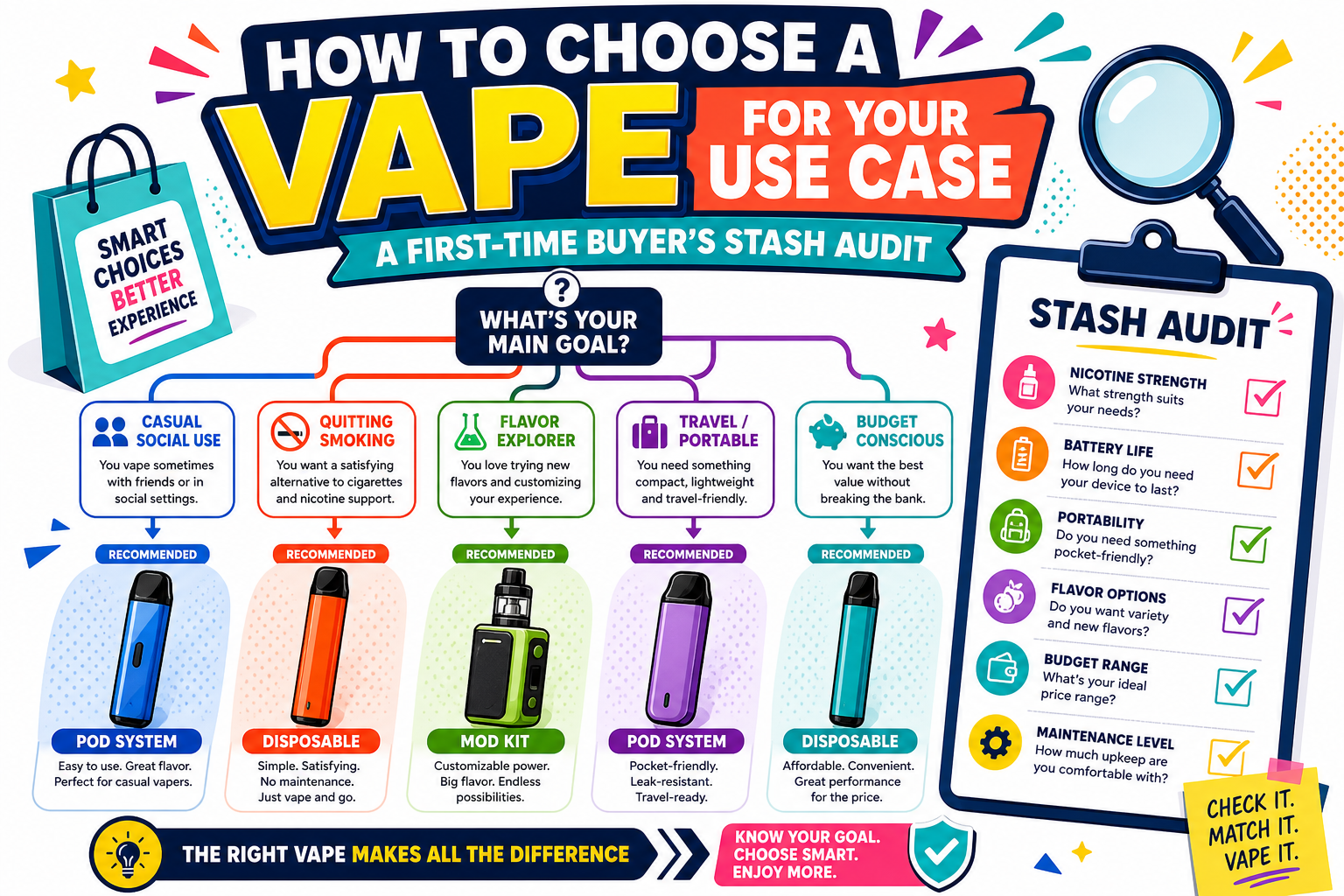
Now compare your keepers to your use cases. Let's say you identified two daily situations: commuting and evening at home. You already have a compact pod for commuting and a box mod for home. That means you're covered. If you also want something for travel that won't leak in your bag, that's a gap.
Only list gaps that show up more than once a week. Occasional wants (like a showpiece mod) are fine, but they shouldn't drive your buying decision.
For each gap, write what features would solve it. For travel, that might be: small, leak-resistant, internal battery, and enough capacity to last a day trip. Having a concrete list keeps you from impulse buying.
One more thing: consider your nicotine habits. If you're not sure what strength fits your new device, use our Nicotine Strength Calculator to avoid getting a device with the wrong setup.
Buy only for gaps
When you've confirmed a real gap, then look at new devices. Use your gap list as a filter:
- Does it match the size and battery life you need?
- Will it work with your liquid or prefer pods?
- Is the nicotine strength compatible?
If a product doesn't clearly fit your gap, it's not the one. This is how you avoid the classic mistake: buying a new device that's basically the same as what you already have.
Also, check for authenticity before you buy. Counterfeits are a real problem, and they don't perform like the real thing. Windbar's Vape Authenticity Checker can help you verify you're getting a genuine product.
Why this approach works
The stash audit method is simple: you already own most of what you need. The only reason to buy is a genuine gap in your routine. This saves money, reduces clutter, and ensures every device you own actually gets used.
If you're new to vaping, this approach also helps you learn what you like before spending more. Start with a versatile device like a pod system, then expand only if needed.
For a deeper dive on how different coils and resistance affect your experience, check out our guide: Vape Coils Explained: Types, Resistance, and When to Change Them. It'll help you understand what your current devices are doing and what to look for in a new one.
If you're a distributor or store owner, these same principles apply to your inventory. See Best-By-Use-Case Vape Buying Mistakes Distributors Make (and How to Fix Them) for a business-level look.
FAQ
How do I know which vape is right for my use case?
Start by listing your daily habits: where you vape, how often, and what you expect (throat hit, flavor, cloud size). Then match those to device types: pod systems for convenience, box mods for customization, disposables for travel. Our Best By Use Case guide can help.
What should I do with old vapes I don't use anymore?
Recycle them properly if they're electronic waste. Some parts like batteries can be recycled. If they still work but you don't use them, consider giving them to a friend who's 21+ and a responsible adult. Avoid holding onto devices that can't hold a charge safely.
Sources & Further Reading
The U.S. Food and Drug Administration (FDA) regulates tobacco products, including e-cigarettes. Their site is a reliable source for understanding product standards and safety. For coil and device maintenance, see our Vape Coils Explained guide. For authenticity checks, use the Windbar Vape Authenticity Checker tool.
In this topic cluster
- Best By Use Case articles
- Vape Coils Explained: Types, Resistance, and When to Change Them
- Best-By-Use-Case Vape Buying Mistakes Distributors Make (and How to Fix Them)
- Compact Device Architecture: What Engineers Need to Know Before You Order
Still stuck?
If you're still unsure what fits your routine, ask in the Windbar Community. Real users share what works for commuting, desk work, and weekends outside.