
Why this matters for online-only retailers
If you sell vapes online and ship to California, you're not off the hook just because you don't have a physical storefront. The FDA's PMTA process determines which products can legally be marketed. California adds its own licensing and flavor restrictions. Selling a product that isn't authorized—or that violates state rules—can lead to fines, seizure, and losing your ability to sell entirely. The good news is that most of the information you need is public. You just need a system for checking it.
Inputs you need
Before you start, gather these:
- A list of every SKU you plan to sell, including the brand name, product name, and any flavor variant.
- The FDA's Tobacco Product Search tool (search.tobacco.fda.gov).
- Your California Tobacco Retailer License number (if you have one) and your CDTFA account details.
- A record-keeping method—a spreadsheet or cloud doc works fine.
You'll also want to know your local county and city rules. Some places like San Francisco and Los Angeles have stricter flavor bans than the state. You can usually find these on your city or county's official website, or by calling your local business licensing office.
Procedure
Step 1: Check FDA authorization for each SKU
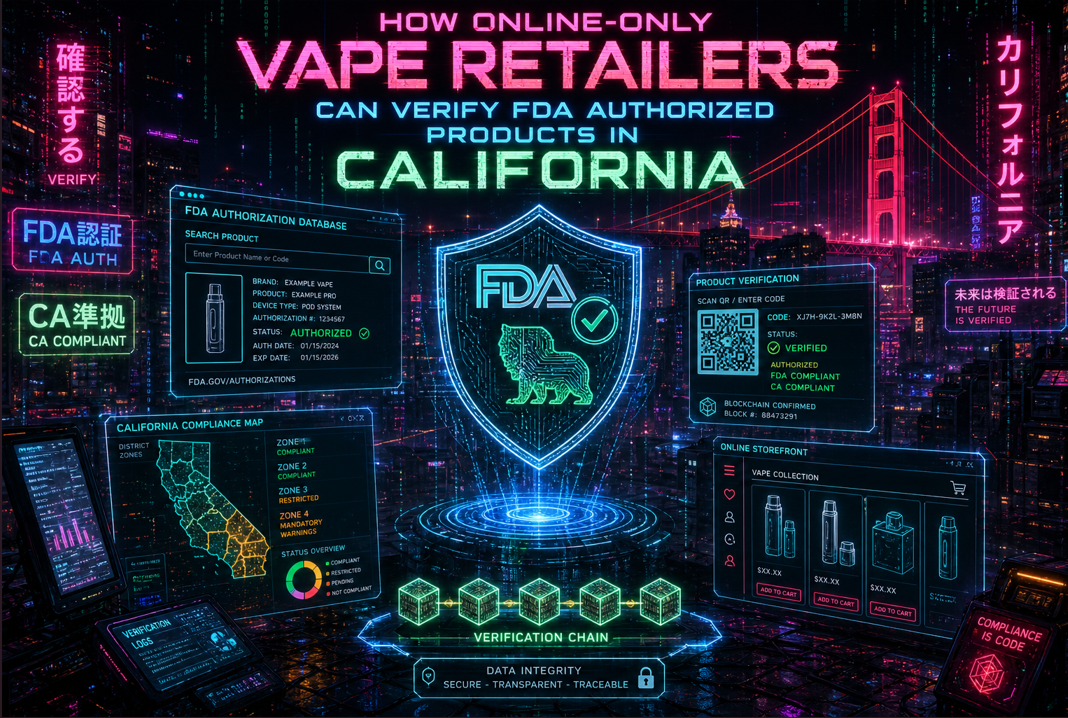
Go to the FDA's Tobacco Product Search tool. Enter the brand name or the exact product name. Look for the product's status—specifically whether it has a PMTA that's been granted, or if it's listed as 'marketed without authorization.'
Here's what to look for:
- PMTA (granted): This means the product has gone through FDA review and is authorized for sale in the U.S.
- Marketed without authorization: This means the FDA has determined the product does not have a marketing order and is illegal to sell.
Keep in mind that authorization is product-specific. A brand might have one flavor authorized and another not. So check each SKU individually, not just the brand.
Step 2: Verify your California tobacco retailer license
California requires any business selling tobacco products—including online-only—to hold a Tobacco Retailer License from the CDTFA. If you don't have one, apply before you start shipping. If you do have one, make sure it's active and that your business address is up to date.
Step 3: Cross-check with state and local rules
California's flavored tobacco ban (SB 793) prohibits the sale of most flavored tobacco products, including menthol. However, enforcement has been inconsistent, and some cities have their own rules. Check your local county and city ordinances to see if there are additional restrictions, such as higher licensing fees or outright bans on online sales.
Step 4: Document everything
Keep a log of every verification you run. Note the date, the SKU, the FDA status, and any state or local checks you did. This documentation is your best defense if a product is later delisted or if you're audited. It shows you made a good-faith effort to comply.
Outputs / success criteria
You're in good shape if:
- Every SKU you sell has a confirmed PMTA grant in the FDA database.
- You have a valid California Tobacco Retailer License.
- You've reviewed your local county and city rules, and you meet all requirements.
- You have a written record of your checks for each product, updated regularly.
If you can't confirm a product's status, don't sell it. It's that simple. The risk isn't worth it.
Exceptions and tricky cases
- Products with pending PMTAs: A pending application does not mean a product is authorized. The FDA allows enforcement discretion in some cases, but that's not the same as a grant. Treat pending as not authorized until you see a clear approval.
- Disposable vs. refillable: The same verification process applies, but disposables sometimes have different SKUs for flavor and nicotine strength. Check each one.
- Products sold before you started this process: If you've been selling products that might not be authorized, stop immediately and run the checks. If they fail, remove them from your site and contact your supplier.
For a deeper dive into what to check before sourcing products, see our guide on FDA PMTA buying decisions for e-commerce operators. And if you're evaluating which pod systems to carry, our list of best pod systems of 2026 can help you narrow down options that are more likely to have clean authorization status.
Frequently Asked Questions
How do I check if a vape product is FDA authorized?
Go to the FDA's Tobacco Products search tool, enter the product name or brand, and look for 'PMTA' in the status column. Note that some products may have 'marketed without authorization' status, which means they're not legal to sell. Always check the specific SKU, not just the brand.
What California-specific checks do online vape retailers need to do?
California requires a Tobacco Retailer License from the CDTFA, even for online sales. You must also check local county and city rules—some areas have flavor bans or stricter licensing. The state's flavor ban (SB 793) affects most flavored tobacco products, including vapes, though enforcement has varied. Always confirm current rules with official sources.
What should I do if a product I'm selling loses its FDA authorization?
Stop selling it immediately. Remove it from your website, and if you have inventory, you may need to destroy it or return it to the supplier. Document the date you became aware and the steps you took. Keeping a log of your verification checks helps show you acted in good faith.
Sources & Further Reading
- FDA Tobacco Product Search: search.tobacco.fda.gov
- California CDTFA Tobacco Licensing: cdtfa.ca.gov/tobacco/
- For more on product selection and compliance, read our FDA PMTA buying decisions guide.
This article is for educational purposes and is not legal advice. Always consult official regulations and a qualified attorney for your specific situation.
Ops summary
- For online-only vape retailers in California, verifying FDA authorization and state compliance requires a consistent, documented workflow. The FDA's public product search database is the primary source for PMTA status, but California adds layers of state and local requirements. A repeatable checklist—checking FDA status, California licensing, and local rules—reduces the risk of selling unauthorized products.
- FDA's public product database is the authoritative source for PMTA authorization status.
- California enforces its own licensing and flavor restrictions beyond FDA rules.
- Document every check you run—records protect you if a product is later delisted.
- Cross-reference SKUs, not just brand names—authorization applies to specific products.
In this topic cluster
- FDA PMTA articles
- FDA PMTA Buying Decisions: What E-Commerce Operators Should Check Before Sourcing Vapes
- Best Pod Systems of 2026: The Only 5 Worth Buying
Still stuck?
Join the Windbar Community to swap verification tips and stay updated on regulatory changes that affect online vape sales.