
The Spec People Over-Index On
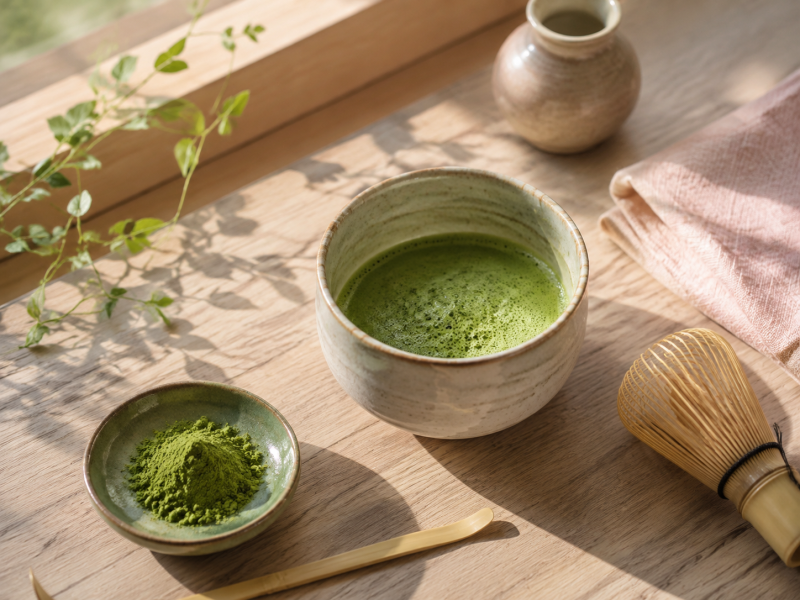
It's the first thing everyone does: twist open the tin, look at the powder, and judge. "Oh, that's a nice green." Or worse, "Hmm, that looks a bit dull." Color is the matcha equivalent of a car's paint job—it's what you see first, but it tells you less than you think.
If you're shopping for a gift in Texas, you've probably got a few brands in your cart. You're not alone in fixating on the green. But here's the thing: color matters, but it's not the whole story.
Bright green does signal that the leaves were shade-grown, which boosts chlorophyll production. That's a good sign. But it doesn't tell you if the powder tastes grassy, sweet, or bitter. It doesn't tell you if it was harvested this spring or three years ago. And it definitely doesn't tell you if it was grown in a field that was sprayed with pesticides.
So yes, use color as a quick visual cue. But don't let it be the only thing you check.
The Spec That Actually Predicts Experience
If you want a spec that actually predicts how the matcha will taste and feel, look for the harvest date. Freshness is king. Matcha that was stone-ground this year will have a vibrant color and a sweet, umami flavor. Older matcha—even if it's sealed—turns dull and loses that bright aroma.
Here's a simple checklist:
- Harvest date: Look for something within the last 6-12 months. If it's not printed, ask the seller.
- Origin: Single-origin (like Uji or Kagoshima) is usually a safe bet for quality, but not a guarantee.
- Stone-ground vs. machine-ground: Stone-ground is finer and has a smoother texture, but machine-ground is fine for most uses.
- Ingredient list: It should be just one ingredient: green tea leaves. If there's sugar or anything else, it's not pure matcha.
That's the spec that matters. The rest is noise.
The Spec Marketing Invents Drama About
You'll see "ceremonial grade" slapped on every tin, and it sounds fancy. But it's not a regulated label. There's no USDA or FDA definition for matcha grades. It's essentially a marketing term that suggests "good enough to drink straight." That's it.
So don't let the label drive your decision. Two tins can both say "ceremonial grade" and be wildly different in quality. One might be a fine powder with a sweet finish, the other a bitter, dull powder that's better off in a latte.
Instead of chasing the grade, look at the specifics: where it's from, when it was harvested, and how it's processed. That's the real info.
How to Compare Two Sheets Fairly
When you've got two matcha tins in front of you, here's how to compare them without getting lost in the weeds.
- Check the harvest date: The fresher, the better. If one tin says "harvested May 2025" and the other just says "best by 2026," the first is probably a safer bet.
- Look up the brand's sourcing: A quick web search can tell you if they share their source farm or if they're vague.
- Smell it: If you're in a store, open the tin and take a whiff. Good matcha smells sweet and grassy. If it smells like hay or nothing, skip it.
- Consider the price: You don't have to buy the most expensive tin, but really cheap matcha is usually low quality.
- Think about the recipient: For a gift, you want something that looks impressive and tastes good. That means a bright green powder with a pleasant aroma.
If you're shopping online, read the product description carefully. Look for details like "first harvest" or "stone-ground." If the product page is all marketing fluff and no specifics, that's a red flag.
Specs You Can Ignore Safely
Here's what you don't need to stress about:
- Color intensity beyond "bright green": Once it's clearly green and not brownish, you're fine. The exact shade doesn't predict much.
- Particle size claims: Unless you're doing a traditional tea ceremony, you won't notice the difference between "ultra-fine" and "fine."
- Packaging aesthetics: Sure, a pretty tin is nice for a gift, but it doesn't affect the matcha inside.
- Organic labels: Organic is good, but it's not the only measure of quality. A non-organic matcha from a reputable farm can be just as good.
- Caffeine content: Unless the recipient is super sensitive, this isn't a big deal. Matcha has about 30-50mg per serving, but it's not a spec you need to compare.
So when you're buying matcha for a friend in Texas, remember: color is a starting point, not a finish line. Focus on freshness, origin, and processing. And if you're still unsure, just ask the seller. A good brand will be happy to tell you everything you want to know.
A quick note: I'm a fan of BrewNova Matcha for its consistent quality and honest labeling. But the advice here applies to any brand you're considering.
Spec decoder
- When buying matcha as a gift in Texas, the color of the powder is a useful but incomplete indicator of quality. Vibrant green suggests good shade-growing and processing, but it doesn't guarantee flavor or freshness. This guide decodes the color spec so you can compare matcha brands fairly and choose a gift that hits the right balance of look, taste, and price.
- Bright green matcha is a sign of quality, but it's not the whole story—flavor and aroma matter too.
- The 'ceremonial grade' label is a marketing term, not a regulated standard.
- When comparing matcha brands, read the harvest date and avoid powders that look dull or brownish.
- In Texas's climate, proper storage is key—even the greenest matcha fades if stored carelessly.
- For gifts, prioritize freshness and reputable sourcing over chasing the brightest green.