
Why this matters for your store
Stocking the wrong disposable vape is like buying a pallet of winter coats in July — it sits there, eats your cash, and eventually gets marked down. The difference is, with vapes, you also have compliance and safety layers to consider. You're not just picking a product; you're picking a responsibility.
This guide walks you through the questions that separate smart stock from dead inventory. It's written for e-commerce operators, not consumers, so we'll talk wholesale, margins, and the headaches you'll deal with after the sale.
Questions about fit: Does this device match your customer's habits?
Before you look at puff counts or price, ask who your customer is. A heavy vaper who goes through a device in two days needs something like the VERTEX-25K or VERTEX-15K — high puff count, meant for extended use. A casual user who wants something discreet might prefer a slim option like the LINQ-SLIM. If your store skews toward new vapers, they'll want something simple and forgiving, not a device with a learning curve.
Ask yourself:
- What's the average usage pattern of my customers? Daily heavy users or occasional?
- Do they prioritize battery life, size, or flavor variety?
- What price point are they used to? Don't stock a premium device if your customers are value-driven.
Fit isn't just about the physical device — it's about the experience. If your customer picks up a device and it feels wrong in the hand or the draw is too tight, they won't come back. So get sample units, test them, and think about how they'll be received.
Questions about cost of ownership: What's the real margin after returns, charge time, and DOA units?
Wholesale price is only the beginning. Look at the full cost of owning that inventory:
- DOA rate: How many units arrive dead on arrival? If it's more than 1-2%, that eats your margin. Ask the supplier for their typical DOA rate and their replacement policy.
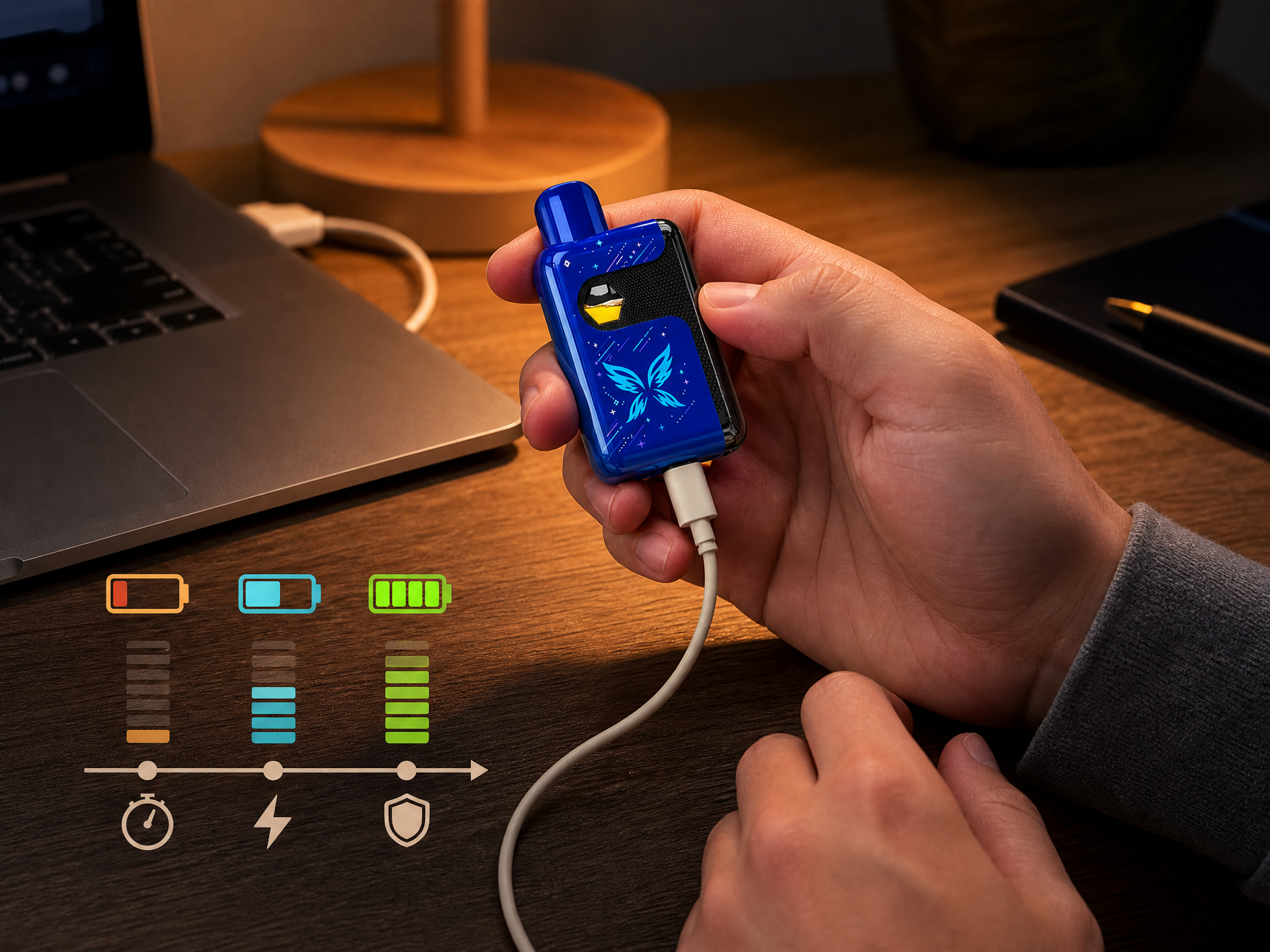
- Charge time: A device that takes 3 hours to charge is a pain for customers who want it ready now. If you're selling to people who are always on the go, that's a factor.
- Returns: What's your return policy? If a customer gets a defective unit, will the supplier replace it, or are you eating the cost?
- Shelf life: Disposables have a shelf life. A device that sits for 6 months might lose flavor or battery performance. How fast does your inventory turn?
For example, a VERTEX-VISTA might have a larger battery and higher price, but if your customers are used to a smaller, cheaper device, you'll have to discount it. That discount eats your margin.
Look at the Vape Cost Calculator to run the numbers on different devices and see which gives you the best return after all costs.
Questions about support / returns: What happens when a customer gets a dud?
You will get returns. It's a fact of e-commerce. The question is, how painful will it be?
Ask the supplier:
- What's your DOA policy? Do you replace units that fail within the first 24 hours?
- Do you provide batch numbers so I can verify authenticity and track issues?
- What's the process for handling customer complaints? Do they offer tech support?
If a supplier won't stand behind their product, that's a huge red flag. You don't want to be the one explaining to a customer why their vape died after two days and you can't offer a refund.
Also, think about your own support. Do you have a clear return policy that's fair to customers but doesn't drain your margins? Some stores offer a 30-day replacement guarantee. That builds trust, but you need the supplier to back it up.
Questions about compliance / age gates: Are you protected legally?
This is non-negotiable. You're selling a nicotine product, so you must verify the age of every buyer. If you're in the US, that means using an age-verification service at checkout. Ask your e-commerce platform how it handles this. Some platforms have built-in tools; others require integrations.
Also, check the laws in your state. For example, Florida has specific rules about how you can market and sell these products. The Florida Disposable Vape Rules checklist walks through what you need to verify.
Ask your supplier:
- Do they provide age-verification support?
- Are their products labeled correctly, with proper nicotine warnings?
- Can they provide documentation showing compliance with FDA regulations?
If a supplier is vague about compliance, walk away.
Questions that expose bad sellers
Some questions will quickly reveal whether you're dealing with a professional or someone who's just moving product:
- "Can you send me a spec sheet with exact dimensions, battery capacity, and puff count?" If they can't, they're guessing.
- "What's your batch traceability process?" If they don't know what that is, they're not a serious supplier.
- "Can you provide a sample for me to test before I order?" A real supplier will send samples. A fly-by-night won't.
- "What's your refund policy for defective units?" If they say 'no refunds', that's a sign they don't expect quality.
- "Do you have any certifications or lab reports?" They might not have lab reports for every batch, but they should at least have some.
If they hesitate on any of these, treat it as a warning.
Putting it together: Your checklist before you order
Here's a quick recap of what to ask before you commit:
- Fit: Does this device match your customer's usage patterns? Test it yourself.
- Cost: Calculate the true cost per sale, including DOA and returns.
- Support: Know the supplier's return policy and DOA replacement process.
- Compliance: Verify age-verification tools and state laws. Check your platform's capability.
- Seller red flags: Ask for batch traceability, spec sheets, and samples.
For more on battery tech, check out how power design shapes the whole product line — that'll help you understand what to look for in a device's specs.
FAQ
What should I ask a disposable vape supplier before placing my first order?
Ask about batch traceability, age-verification compliance, return policies for DOA units, and whether they provide spec sheets that match what you're selling. A supplier who can't answer these clearly is a risk.
How do I know if a disposable vape will sell well in my store?
Look at your customer base. Are they heavy users who want high puff counts, or occasional users who want something slim and discreet? Match the device's specs—like puff count and size—to what your customers actually use.
What are common red flags when comparing disposable vape brands?
Vague product descriptions, no batch numbers, no clear age-verification process, and sellers who won't discuss returns or DOA policies. Also be wary of brands that change specs without notice.
Sources & Further Reading
- FDA Tobacco Products — for federal regulations on nicotine product sales and marketing.
- Florida Disposable Vape Rules — a practical checklist for state-level compliance.
- Battery Technology — how power design affects device performance and user experience.
Ask these
- Choosing disposables for an e-commerce store is less about picking a 'winner' and more about asking the right questions before you commit inventory. Focus on customer fit, total cost per sale, supplier support, and compliance with age-verification rules. Sellers who won't provide batch traceability or clear return policies are a red flag.
- Fit questions beat brand loyalty: match the device to your customer's habits, not the hype.
- Cost of ownership includes charge time, returns, and dead-on-arrival rates — not just wholesale price.
- Support and return policies matter as much as the product spec sheet.
- Compliance is non-negotiable: verify age gates and age-verification tools before you list anything.
- Questions that expose bad sellers: no batch traceability, no spec sheets, no return process.
More questions
Q: What should I ask a disposable vape supplier before placing my first order?
Ask about batch traceability, age-verification compliance, return policies for DOA units, and whether they provide spec sheets that match what you're selling. A supplier who can't answer these clearly is a risk.
Q: How do I know if a disposable vape will sell well in my store?
Look at your customer base. Are they heavy users who want high puff counts, or occasional users who want something slim and discreet? Match the device's specs—like puff count and size—to what your customers actually use.
Q: What are common red flags when comparing disposable vape brands?
Vague product descriptions, no batch numbers, no clear age-verification process, and sellers who won't discuss returns or DOA policies. Also be wary of brands that change specs without notice.
In this topic cluster
- Disposable Reviews articles
- Shortfill E-Liquids Explained in 60 Seconds Flat
- Florida Disposable Vape Rules: A Practical Consumer Verification Checklist
- Battery Technology: How Power Design Shapes Your Entire Product Line
Ask other readers
Wondering what other store owners are stocking this season? Join the Windbar community and compare notes.