
The spec sheet arms race in vaping is out of control. Every new device ships with a bigger battery than the last. 1,200mAh. 1,500mAh. 2,000mAh. The marketing treats milliamp-hours like horsepower. More is always better. Except it is not. And the math proves it.
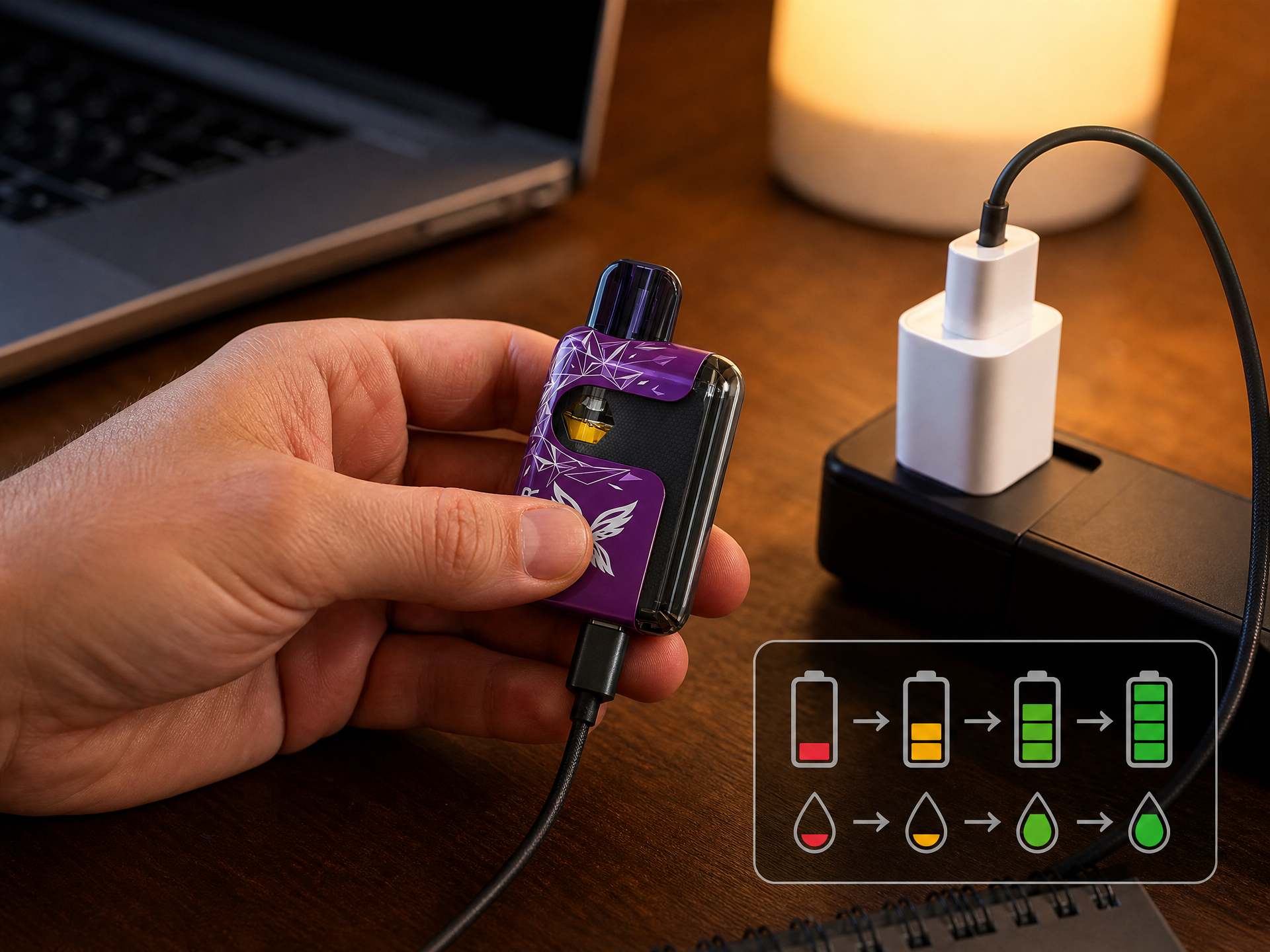
Here is the relationship that matters: a typical pod coil running at 12 watts draws roughly 3.3 amps. A 1,000mAh battery — a real 1,000mAh, not the optimistic number on the box — delivers about 300 charge cycles before degradation. At 10ml of liquid per week, you are recharging every 2-3 days. That 1,000mAh battery is more than enough. It lasts all day and then some.
Now bump to 1,500mAh. The device is heavier. The form factor is bigger. You are carrying a brick in your pocket for battery capacity you will never use in a single day. And you are paying for it. The 1,500mAh version of a device typically costs 15-20% more than the 1,000mAh version. For capacity you do not need.
The liquid-to-battery ratio is the real efficiency metric. A pod holds 2ml. At moderate usage, 2ml lasts most vapers 8-12 hours. A 1,000mAh battery lasts 10-14 hours at pod wattages. The battery and liquid run out at roughly the same time. That is good design. A 1,500mAh battery with a 2ml pod means the battery outlasts the liquid by 40%. You are carrying dead weight.
The exception is sub-ohm vaping. A 0.15-ohm coil at 70W draws 21 amps. A 2,000mAh battery lasts 2-3 hours of actual use. In that context, the bigger battery is not a luxury. It is a requirement. The device category determines the battery requirement. The spec sheet does not.
Here is the rule of thumb: for pod systems and MTL devices, 800-1,000mAh is the sweet spot. Anything above 1,200mAh adds cost, weight, and size without adding meaningful daily utility. For sub-ohm and DL devices, 1,800mAh minimum. The category drives the number.
Bigger is not better. Balanced is better. The spec sheet marketers want you to ignore that. Do not let them. This content is intended for adults 21 years of age or older. Nicotine is an addictive chemical. The information provided is for educational and informational purposes only and does not constitute medical or legal advice. If you are considering using vaping products as an alternative to smoking, consult with a qualified healthcare professional. Product reviews and recommendations are based on publicly available information and independent evaluation; Windbar makes no representation regarding the FDA marketing authorization status of any third-party products mentioned. This content is not a substitute for review by a licensed attorney.
© 2026 Windbar. All rights reserved.